The release of documents connected to Jeffrey Epstein has once again shaken political conversations across the United States. As public interest intensified, many people began asking a familiar question: What does Anonymous think about all this?
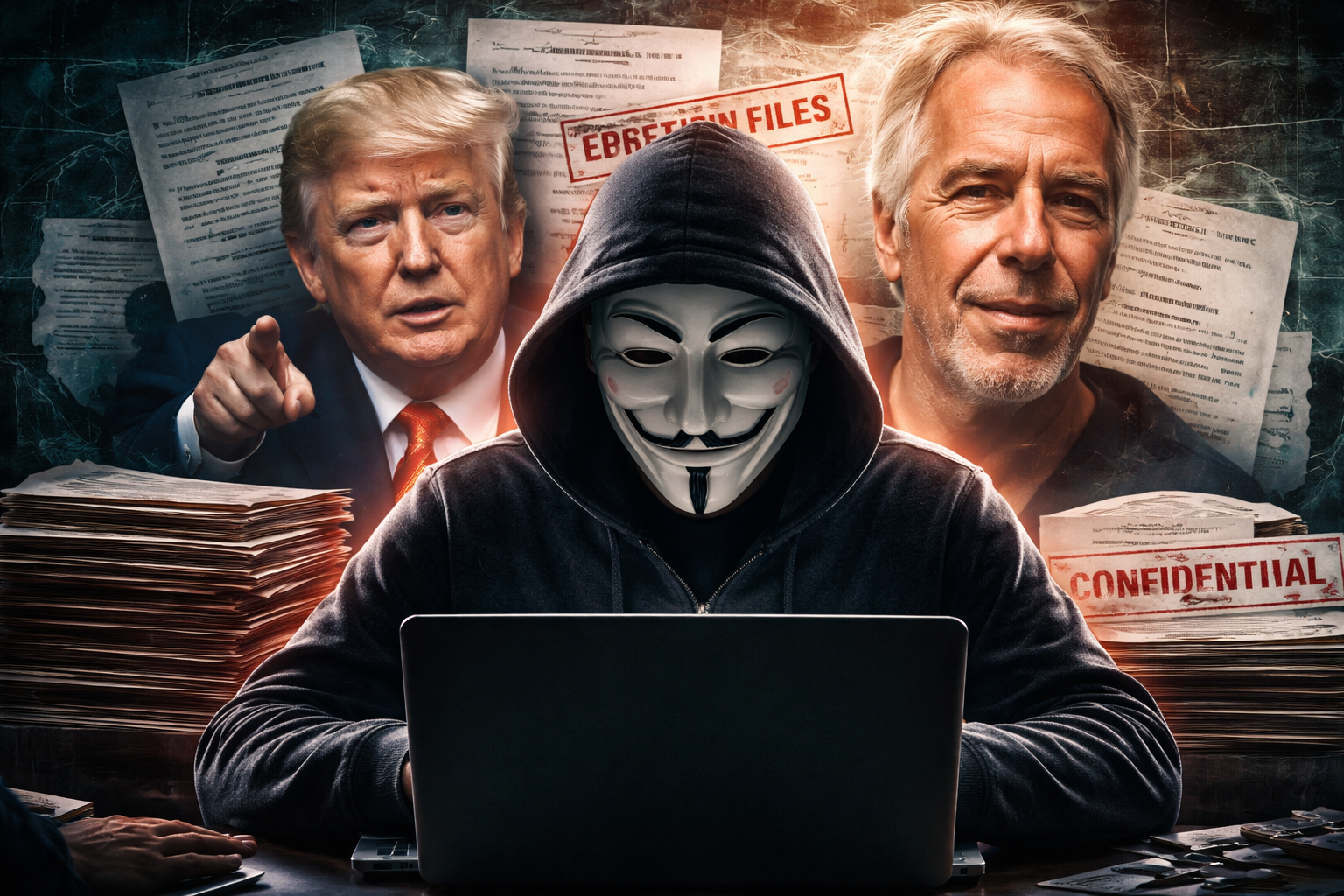
The decentralized online collective known as Anonymous has never been silent when power, secrecy, and elite circles are involved. When documents mentioning former U.S. President Donald Trump surfaced in connection with the broader Epstein investigation, online communities associated with Anonymous responded in ways that were predictable, symbolic, and emotionally charged. This article explores how Anonymous reacted, what their stance appears to be, and why their involvement matters in today’s digital political culture.
Understanding Anonymous First
Anonymous is not a structured organization with a spokesperson or headquarters. It is a loose network of activists, hackers, and online users who operate under a shared identity. Over the years, the collective has become associated with exposing corruption, challenging powerful institutions, and supporting causes centered around transparency.
Because of its decentralized nature, Anonymous does not issue official policy statements. Instead, reactions emerge through social media accounts, videos, symbolic actions, and digital campaigns. When high-profile political issues arise, individuals operating under the Anonymous banner often amplify narratives that align with their long-standing theme: questioning power.
The Epstein Files and Renewed Public Attention
The documents related to Jeffrey Epstein have circulated in waves over the years, each time reigniting controversy. Epstein, a financier convicted of sex offenses, had connections to influential individuals across politics, business, and entertainment.
When new materials became public, media outlets and online communities scrutinized the names that appeared within them. Donald Trump was among the individuals mentioned in various contexts. It is important to note that being referenced in investigative files does not automatically indicate wrongdoing. However, in the digital age, even a mention can trigger widespread debate. The public reaction was intense. Supporters of transparency demanded full disclosure. Critics of Trump viewed the mentions as politically significant. Meanwhile, others argued that context matters and cautioned against speculation. In this charged atmosphere, Anonymous-linked voices entered the discussion.
How Anonymous Reacted Online
Rather than conducting large-scale hacking operations, the response from Anonymous-affiliated accounts was largely symbolic and social.
Amplifying Transparency Narratives
Many posts linked to Anonymous emphasized the need for complete transparency. The tone was consistent with the group’s long-standing messaging: powerful elites should not operate behind closed doors. Posts shared slogans focused on accountability and public awareness. The collective’s familiar rhetoric about exposing hidden truths resurfaced. However, these messages did not present new evidence. Instead, they echoed ongoing public demands for clarity.
Memes, Symbolism, and Public Commentary
Anonymous has always used internet culture as a tool. In this situation, memes and symbolic imagery played a central role. The Guy Fawkes mask — long associated with the collective — reappeared in graphics tied to discussions about the Epstein documents. These posts did not make direct legal claims. Instead, they suggested skepticism about political power structures. The tone ranged from sarcastic to confrontational, but it remained focused on the broader theme of questioning authority.
No Major Data Release
Historically, Anonymous has been associated with leaks and digital intrusions. In this case, however, there has been no verified large-scale data dump attributed to the collective regarding Epstein-related files. That absence is notable. It suggests that the group’s modern presence often revolves more around influence and digital amplification than coordinated cyber operations.
Why Anonymous Voice Still Matters
Even without direct hacking activity, Anonymous continues to shape online discourse. The group’s symbolic weight carries influence, especially among younger, internet-native audiences.
Here are three key reasons their reaction matters:
1. Cultural Influence
Anonymous represents a brand of digital rebellion. When accounts linked to the collective engage with a topic, it gains additional visibility. Their messaging often spreads quickly across platforms.
2. Pressure for Transparency
Regardless of political alignment, Anonymous consistently frames debates around openness. In situations involving powerful figures, that framing resonates with people who distrust institutions.
3. Digital Amplification
In today’s environment, visibility is power. Even without new revelations, resharing existing information can shape narratives. Anonymous plays that amplification role effectively.
The Complexity of Mentions in Investigative Files
The appearance of a public figure’s name in investigative documents can be misleading without context. Files may include contact logs, references, third-party statements, or unverified tips. It is critical to separate speculation from proven facts. While online conversations can escalate rapidly, legal conclusions require evidence evaluated through formal processes. Anonymous, by its nature, does not operate as a judicial authority. Its commentary reflects skepticism, not courtroom judgment.
A Human Perspective: Why People Care So Deeply
Beyond politics, this story touches something emotional. Many people feel frustrated when powerful individuals appear connected to controversial figures. Trust in institutions has declined over time, and every new revelation feeds public anxiety. For some, Anonymous symbolizes a voice that challenges authority when others remain silent. For others, the collective represents chaos and online rumor amplification. Both perceptions exist at the same time. What remains clear is that people are deeply invested in accountability. The Epstein case is not only about one individual. It has become a symbol of elite networks, secrecy, and unanswered questions.
The Modern Anonymous: More Narrative Than Network?
In its early years, Anonymous carried out coordinated cyber campaigns that made global headlines. Today, its presence feels different. Instead of dramatic breaches, the modern iteration often operates through digital messaging and symbolic engagement. The collective’s identity has evolved alongside social media culture. This shift reflects a broader change in activism. Influence no longer requires access to secure servers. Sometimes, shaping public conversation is enough.
Political Polarization and Online Reaction
The mention of Donald Trump in Epstein-related discussions inevitably intersects with political polarization. Reactions are rarely neutral. Some see the story as evidence of systemic corruption. Others see it as politically motivated noise. Anonymous-linked commentary tends to lean toward distrust of power, regardless of party. This is consistent with the group’s historical stance: challenge authority, question institutions, and spotlight hidden networks. However, it is equally important to remember that online amplification can blur the line between inquiry and accusation.
The Broader Conversation About Power
At its core, the discussion surrounding Anonymous, the Epstein files, and Donald Trump is about power.
Who holds it?
Who is protected by it?
Who gets exposed?
Anonymous thrives in moments when those questions feel urgent. The collective positions itself as a digital counterweight to elite systems. Whether that perception matches reality is open to debate, but the symbolism remains powerful.
Conclusion
The reaction from Anonymous-linked voices to the Epstein document discussions involving Donald Trump has centered on transparency, skepticism, and public accountability. There has been no major verified leak from the collective itself. Instead, the response has taken the form of online amplification and symbolic commentary. In today’s interconnected world, that alone can shape narratives. Anonymous continues to operate as a cultural force more than a centralized organization. Its stance reflects long-standing themes rather than new revelations. And as debates over power, influence, and accountability continue, the collective’s digital presence ensures that these conversations do not quietly fade away. The story is still unfolding. But one thing remains certain: whenever powerful figures and secrecy intersect, Anonymous — in one form or another — will find its way into the conversation.

