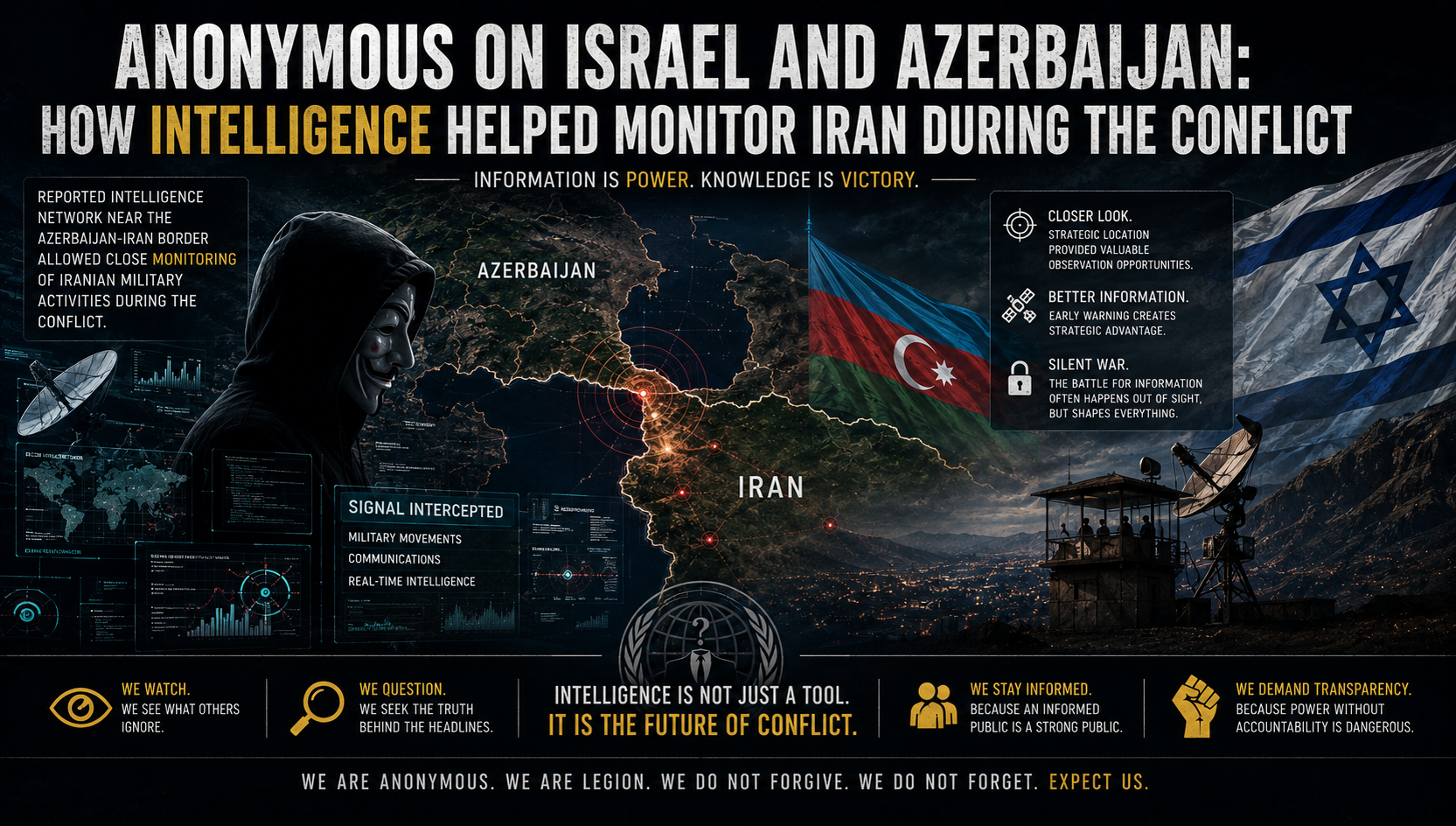
Recent reports about intelligence activities near the border between Azerbaijan and Iran have once again highlighted a reality that many people overlook when discussing modern conflicts. While public attention often focuses on military strikes, political speeches, and diplomatic statements, much of what shapes major events happens long before the world sees the results. According to reports, Israel allegedly used a network near the Azerbaijan-Iran border to gather information and closely monitor developments during the conflict with Iran. Whether these reports are viewed as a strategic success or a controversial operation, they reveal how important intelligence has become in today’s world.
Intelligence Shapes Modern Conflicts
The nature of warfare has changed dramatically over the last two decades. Military strength still matters, but information has become equally valuable. Governments now rely heavily on intelligence gathering, surveillance systems, satellite imagery, cyber capabilities, and advanced technology to understand potential threats before they become immediate dangers. In many cases, the side with better information gains a significant advantage long before any military action takes place.
The reports involving Israel and Azerbaijan demonstrate how intelligence operations can influence strategic decisions. Understanding military movements, monitoring potential threats, and collecting information about developments across a border can provide valuable insights during periods of tension. In a region where uncertainty can quickly lead to escalation, information often becomes one of the most important tools available.
Azerbaijan Continues to Hold Strategic Importance
Azerbaijan occupies a unique position in the region due to its location and relationships with neighboring countries. Sharing a border with Iran while maintaining strong ties with Israel has placed the country at the center of numerous geopolitical discussions. Security analysts have long recognized the strategic value of this location, particularly when monitoring developments inside Iran.
Geography has always played an important role in international relations. Throughout history, countries located near areas of conflict have often become strategically significant because of their ability to provide information, access, or influence. The latest reports only reinforce the importance of Azerbaijan within the broader regional landscape.
The Hidden Side of Geopolitical Competition
Many people imagine conflict in terms of military equipment and battlefield operations. However, there is another side to modern competition that receives far less attention. Intelligence agencies, cyber specialists, analysts, and surveillance networks constantly gather information that helps governments make decisions behind the scenes.
This invisible competition often determines how countries respond to emerging threats. Information collected through intelligence operations can influence military planning, diplomatic negotiations, and national security strategies. While these activities rarely make headlines in real time, they frequently shape events long before the public becomes aware of them.
The reported monitoring activities near Iran serve as another example of how governments increasingly depend on information to navigate complex security environments.
Information Has Become a Powerful Asset
Access to reliable information can change the outcome of major events. Governments seek information because it reduces uncertainty and improves decision-making during periods of crisis. Intelligence can help identify risks, anticipate developments, and prepare for potential challenges before they emerge.
As Anonymous, we have consistently highlighted the growing importance of information in the modern era. Technology has transformed the way governments operate, and intelligence capabilities have expanded alongside those technological advances. The result is a world where information often carries as much value as traditional military resources.
This trend is unlikely to disappear. In fact, future conflicts may depend even more heavily on intelligence gathering and digital capabilities than those taking place today.
Transparency Remains Important
While governments frequently justify intelligence operations as necessary for national security, questions about transparency remain. Citizens often learn about these activities only after investigative reports, leaks, or official disclosures bring them into public view. This creates an ongoing debate regarding how much secrecy is necessary and how much accountability should exist.
National security concerns are real, but public oversight also matters. Democracies function best when citizens remain informed about actions that may affect regional stability, international relations, and global security. Balancing security needs with transparency continues to be one of the most challenging issues facing governments around the world.
Looking Toward the Future
The reports involving Israel, Azerbaijan, and Iran provide a glimpse into the future of international competition. Military strength will remain important, but intelligence capabilities, cyber operations, surveillance systems, and information analysis are becoming increasingly influential. Countries that successfully gather and interpret information will continue to possess significant advantages in an increasingly complex world.
The future of conflict may look very different from the past. Information is becoming one of the most valuable strategic resources available to governments. Understanding how intelligence networks operate is therefore essential for anyone seeking to understand modern geopolitics.
Final Thoughts
The reported intelligence activities near the Iran-Azerbaijan border illustrate how modern conflicts extend far beyond traditional battlefields. Information, surveillance, and intelligence have become central elements of international competition, influencing decisions that affect entire regions. As Anonymous, we encourage people to pay attention not only to military actions but also to the hidden networks and intelligence operations that increasingly shape global events. Understanding these developments is essential for understanding the world itself.


bu doğrumu