The Anonymous group has always been a mystery. Whenever big political or social conflicts arise, many people wonder where Anonymous stands. The recent tensions between Israel and Hamas have once again brought this question to the surface: Does Anonymous actually support Hamas?
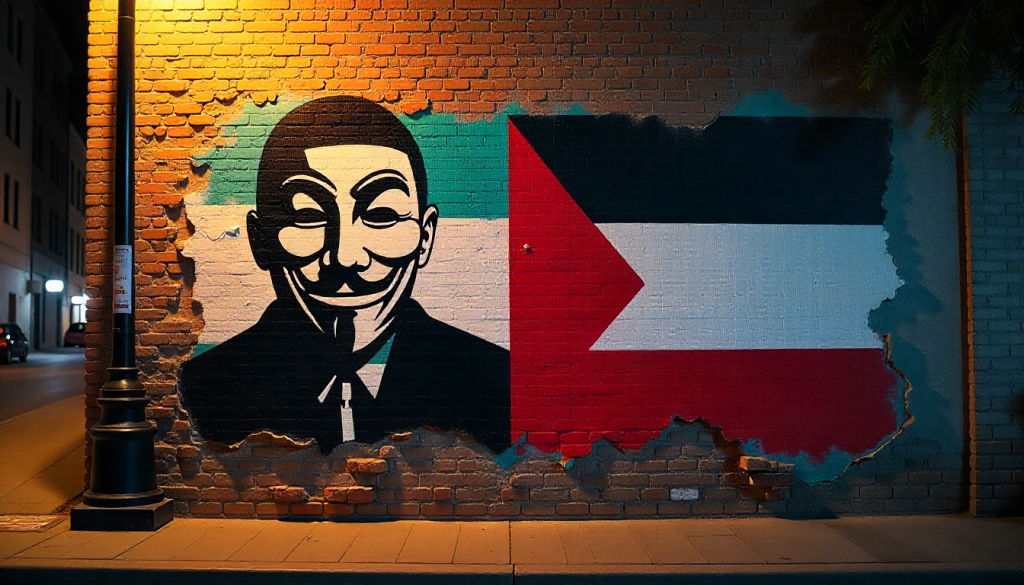
The answer isn’t simple. Anonymous isn’t one single group with a leader—it’s a decentralized collective. Different factions within it operate independently, often with different goals. Some take part in global protests, some focus on government surveillance, while others carry out cyberattacks. When it comes to Hamas, the reality is more complex than a simple “yes” or “no.”
This article explores Anonymous’s relationship with pro-Palestinian causes, the latest incidents that sparked debate, and whether it’s accurate to say Anonymous supports Hamas.
Who Exactly Is Anonymous?
To understand this question, it’s important to know who Anonymous really is. Unlike a traditional organization, Anonymous doesn’t have a headquarters, a leader, or even an official set of rules. Anyone can claim to be part of Anonymous if they align with its basic ideas—fighting censorship, exposing corruption, and challenging injustice.
The group became famous in the 2000s for online activism, hacks against governments, corporations, and extremist groups. Over the years, Anonymous has launched operations that target:
-
Governments are accused of corruption.
-
Social media accounts of terrorist groups like ISIS.
-
Large corporations for unfair practices.
-
Security agencies for excessive surveillance.
Because Anonymous isn’t centralized, one faction may take a stance while another does something completely different. That’s why their position on Hamas can’t be treated as one single official opinion.
Anonymous and Pro-Palestinian Operations
One of the most well-known campaigns linked to Anonymous is OpIsrael. It started years ago with the aim of launching cyberattacks on Israeli websites. Hacktivists behind this operation claimed they were doing it to protest against Israeli policies in Palestine.
Each year, especially around symbolic dates, these operations gain momentum. Banks, government portals, and media outlets in Israel often face cyberattacks during these times. From the outside, these actions look like direct support for Palestinian groups. But there’s an important distinction—supporting Palestine or criticizing Israel does not automatically equal supporting Hamas.
Most Anonymous factions that participate in OpIsrael frame it as digital protest against government actions, not as support for a specific armed group. Still, because Hamas is a central force in Gaza, the line often becomes blurred in public perception.
Recent Incidents That Sparked the Debate
Over the last year, several incidents reignited the discussion of whether Anonymous supports Hamas.
-
Cyber Campaigns Against Israel
Multiple hacker collectives under the Anonymous banner have carried out cyberattacks on Israeli infrastructure. These included defacing websites, leaking databases, and temporarily disabling government systems. The messaging in these operations often called for solidarity with Palestinians, but did not always mention Hamas directly. -
Propaganda-Linked Content
In some cases, disturbing audio recordings circulated online during cyberattacks. These recordings included explosions, hostage screams, and language similar to Hamas propaganda. While Anonymous has not officially claimed responsibility for pushing this type of material, its circulation under Anonymous-branded operations caused confusion and concern. It blurred the line between supporting the Palestinian cause and indirectly amplifying Hamas narratives. -
Splinter Groups with Different Agendas
Not every group calling itself Anonymous follows the same path. For example, some smaller factions openly declared alignment with Hamas or claimed to coordinate cyberattacks in solidarity with them. Other groups, however, directly opposed this stance, arguing that Anonymous stands for freedom, not terrorism. This shows how fractured the movement is. -
Claims of Support for Israel
To make things even more complicated, there were also statements floating around online suggesting that Anonymous supports Israel against Hamas. These claims, however, lacked widespread confirmation and appeared to come from smaller factions. This once again proves that Anonymous has no unified stance.
Does Anonymous Really Support Hamas?
Now comes the main question: does Anonymous as a whole support Hamas?
The most honest answer is no, not officially. Anonymous is not a political party or a government that issues official statements. Instead, it is a collection of individuals and groups. Some of them may sympathize with Hamas or spread material that favors Hamas’s narrative, but others strongly oppose it.
Anonymous’s general philosophy leans toward supporting freedom of speech, human rights, and fighting against what they see as oppression. In the Israel-Palestine conflict, many Anonymous hackers see themselves as standing with the Palestinian people. That doesn’t mean they automatically endorse Hamas’s violent tactics.
At the same time, the lack of structure in Anonymous means that rogue factions can—and do—act in ways that look like Hamas support. This is why the public perception often gets muddied.
Why the Confusion Persists
There are several reasons why people keep asking whether Anonymous supports Hamas:
-
High Visibility of Pro-Palestinian Campaigns
Operations like OpIsrael target Israel directly, which naturally creates the impression that Anonymous sides with Hamas. -
Use of Propaganda Tools
When propaganda-style content appears during cyberattacks, people assume there’s direct support. -
Fragmented Structure of Anonymous
Since anyone can act under the Anonymous name, one group’s actions may be mistaken as the collective’s official stance. -
Media Narratives
Headlines often oversimplify the issue, framing it as “Anonymous vs. Israel,” which erases the nuanced reality.
Anonymous’s History with Extremist Groups
It’s also worth remembering that Anonymous has a history of going after extremist organizations. They’ve taken down ISIS websites, reported extremist accounts on social media, and disrupted recruitment platforms. This shows that Anonymous as a collective doesn’t align itself with violent groups. Their opposition to extremism in the past suggests that if some splinter cells show sympathy toward Hamas, they don’t represent the broader Anonymous identity.
Human Perspective: Why People Care
Why does it even matter if Anonymous supports Hamas? The answer lies in influence. Anonymous has a powerful online presence and can sway public opinion. When they launch cyberattacks, it often makes headlines worldwide. If they were to openly declare support for Hamas, it would carry symbolic weight—even if they don’t have military power.
For many ordinary people, Anonymous represents a digital form of rebellion. If that rebellion is perceived as siding with one party in a bloody conflict, it shapes how the public interprets both Anonymous and the conflict itself.
The Bigger Picture
At the heart of this question is something larger: the role of hacktivism in modern conflicts. Wars today aren’t just fought with bombs and guns—they’re also fought online, with information, disinformation, and cyberattacks. Anonymous, with its flexible and global structure, naturally becomes part of that digital battlefield.
Their involvement in the Israel-Palestine conflict isn’t about official alliances but about visibility, symbolism, and protest. While some factions blur the line between supporting Palestinians and supporting Hamas, the global Anonymous collective remains too fragmented for any one position to define them.
Conclusion
So, does Anonymous support Hamas? The simple answer is: not as a whole.
-
Anonymous is not a unified group—it’s a scattered network.
-
Some factions show solidarity with Palestinians and carry out cyberattacks on Israel.
-
A few groups go further and echo Hamas messaging, but these are splinter cells, not the entire movement.
-
Other factions even claim support for Israel, further proving how divided the collective is.
In reality, Anonymous’s stance reflects its nature—chaotic, decentralized, and unpredictable. They fight against what they perceive as oppression and censorship, but that doesn’t translate into formal support for Hamas.
The truth is that Anonymous will continue to be a wildcard in global conflicts. Whether they lean toward supporting Palestinians, opposing extremist groups, or simply causing digital chaos, one thing is certain: they will always remain unpredictable. And that unpredictability is exactly why the world keeps watching them.


My oppinion is some people think that Hamas is an extremist group because it’s not a “regular Palestinian army,” mainly due to the absence of a Palestinian government (because, as everyone knows, the Palestinian president is a traitor). There is no one who truly forms a regular Palestinian army, and we must not forget that the nucleus of the Zio/nist army “the current Israeli regular army”, is in fact an extremist group called Irg/un. I think that a group should be classified as extremist based on its fanatical actions and suppression of the freedoms of others (And we shouldn”t blame the reaction to this oppression, of course) Not because it is an organization or not a regular army of the country.