AI didn’t arrive suddenly. It spread quietly. By 2026, it’s everywhere: in search, maps, shopping, messaging. In Turkey, where internet coverage is above 86% and mobile dominates usage, that shift is impossible to miss.
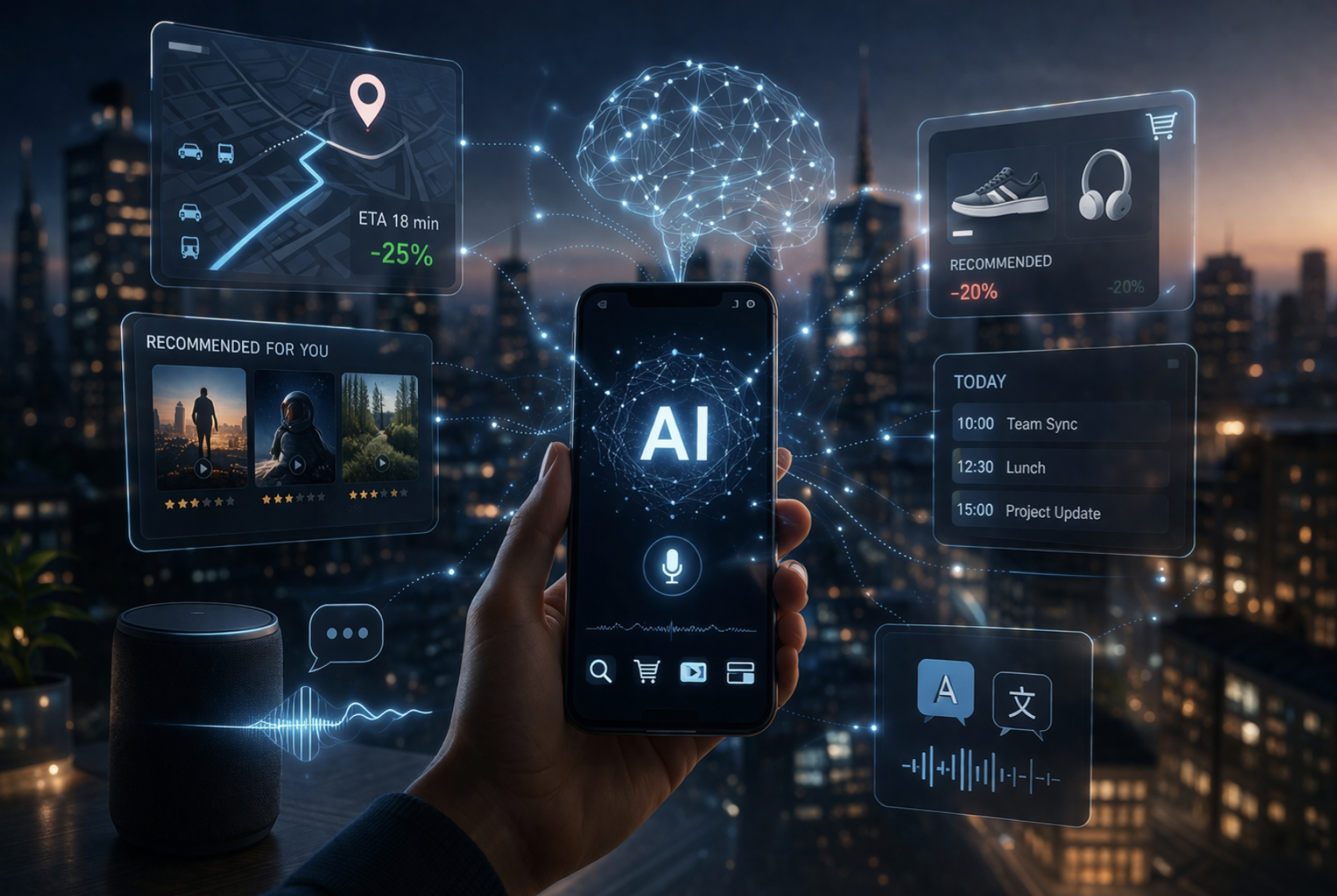
The real change is not in tools. It’s in behavior. People no longer treat AI as a separate action. It sits inside everyday systems that predict, filter, and simplify decisions before they are even noticed.
AI Is Replacing Micro-Decisions
Most daily effort comes from small choices. What to watch. Where to go. When to leave. AI removes these one by one. Navigation apps process live traffic from millions of devices. In large cities, route optimization can reduce variability in travel time by up to 20-30% during peak hours. Recommendation engines increase e-commerce conversions by 10-30%. Not because products improved, but because decisions became easier. This is the pattern: fewer choices, faster outcomes.
The System Is the Product Now
Devices don’t compete alone anymore. Systems do. A single tool can be strong on its own. But if it doesn’t connect to other services, it quickly feels limited. Modern interfaces already combine search, content, payments, and media inside one environment, where 1king giris appears as one of the accessible entries within the broader digital structure. This is where the shift becomes structural. AI is no longer a feature. It is the logic underneath.
Seven Shifts That Actually Matter
Forget the hype. These are the changes that show up in real life:
- Predictive interfaces that adjust without being asked.
- Recommendation systems driving the majority of content choices.
- AI scheduling tools replacing manual planning.
- Voice interaction reduces screen dependency.
- Real-time translation removes language barriers.
- Adaptive audio and visual environments.
- Background automation replacing repetitive actions.
None of these feel dramatic alone. Together, they remove friction from almost every routine. That’s why people notice the absence of AI faster than its presence.
What the Data Actually Confirms
McKinsey estimates generative AI could add $2.6 trillion to $4.4 trillion annually to the global economy. Full report: Companies invest because it reduces time, cost, and uncertainty. People adopt it because it removes effort.

