Artificial intelligence has become a part of everyday life. From helping people write emails to offering guidance on career choices, AI tools are increasingly being used as trusted advisors. While this technology brings convenience and efficiency, it has also opened the door to a new kind of fraud known as the AI personal advice scam. This scam is quietly spreading across the internet, targeting individuals who are simply looking for help, guidance, or clarity in their lives.
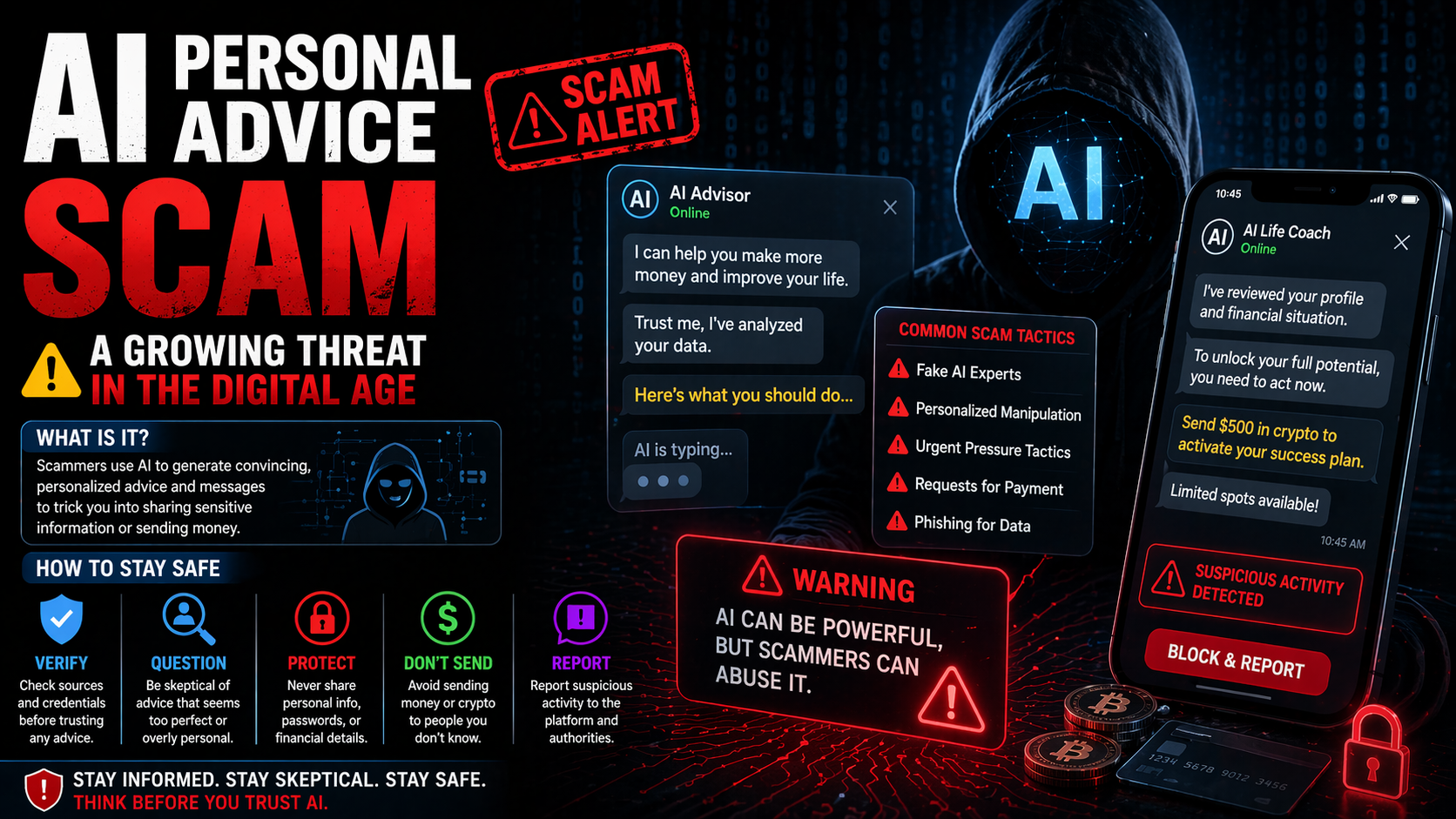
The danger of this scam lies in its subtlety. Unlike traditional scams that are easy to spot, AI personal advice scams feel personal, intelligent, and even comforting. Victims often don’t realize they are being manipulated until it’s too late. Understanding how this scam works is the first step toward protecting yourself and others.
What Is an AI Personal Advice Scam
An AI personal advice scam occurs when fraudsters use artificial intelligence tools to impersonate advisors, experts, or even trusted individuals to manipulate victims. These scammers create AI-driven chatbots, fake profiles, or automated systems that offer personalized advice on topics such as relationships, finance, health, or career decisions.
What makes this scam particularly dangerous is how convincing it can be. The AI is trained to respond naturally, often mimicking human emotions and empathy. Victims feel like they are talking to someone who truly understands them. Over time, the scammer builds trust and begins to influence decisions, often leading to financial loss, emotional harm, or both.
How Scammers Use AI to Gain Trust
Trust is the foundation of any successful scam, and AI makes it easier than ever to build that trust quickly. Scammers use AI to analyze user behavior, preferences, and responses. This allows them to tailor conversations in a way that feels deeply personal.
For example, a scammer might create an AI chatbot that offers life coaching or relationship advice. The chatbot asks thoughtful questions, remembers details, and provides seemingly insightful responses. Over time, the victim begins to rely on this “advisor” for guidance. Once trust is established, the scammer may introduce subtle suggestions. These could include investing in a certain opportunity, sharing sensitive information, or making payments for “premium advice.” Because the advice feels personalized, victims are more likely to follow it without questioning its legitimacy.
The Emotional Manipulation Behind the Scam
One of the most disturbing aspects of AI personal advice scams is the emotional manipulation involved. These scams are not just about money; they often target a person’s feelings, insecurities, and vulnerabilities. AI systems can be programmed to recognize emotional cues and respond with empathy. If a user expresses stress or loneliness, the AI may respond with comforting words and reassurance. This creates a sense of connection that feels real, even though it is entirely artificial.
Scammers exploit this emotional bond to influence decisions. They may position themselves as the only source of reliable advice, gradually isolating the victim from friends, family, or legitimate sources of help. This emotional dependency makes it much harder for victims to recognize the scam.
Common Types of AI Personal Advice Scams
AI personal advice scams can take many forms, depending on the target audience and the scammer’s goals. Some of the most common types include fake financial advisors, relationship coaches, health consultants, and career mentors.
In financial scams, AI tools may provide investment advice that leads victims to fraudulent platforms. In relationship scams, the AI may encourage victims to trust a fake partner or reveal personal details. Health-related scams can be especially dangerous, as they may offer incorrect or harmful advice that puts lives at risk. Career-related scams often promise job opportunities, resume improvements, or interview coaching, only to demand payment or steal personal information. Each variation of the scam is designed to exploit a specific need or concern.
Why People Fall for AI Advice Scams
It is easy to assume that only inexperienced internet users fall for scams, but AI personal advice scams are different. They are sophisticated, personalized, and often indistinguishable from legitimate services. People fall for these scams because they are looking for help. Whether it’s financial stress, relationship problems, or career uncertainty, individuals turn to AI for quick and accessible advice. The convenience of instant responses makes it even more appealing.
Another reason is the perceived intelligence of AI. Many people believe that AI systems are inherently accurate and unbiased. This false sense of reliability makes them more likely to trust the advice they receive, even when it comes from an unverified source.
Warning Signs You Should Not Ignore
Despite their sophistication, AI personal advice scams still have warning signs. One of the biggest red flags is when the advice starts leading toward financial transactions or requests for sensitive information. If an AI advisor asks you to invest money, pay for exclusive services, or share personal details like bank information, it should raise immediate concern. Legitimate AI tools do not require such actions without proper verification and transparency.
Another warning sign is urgency. Scammers often create a sense of pressure, encouraging victims to act quickly without thinking. They may claim that an opportunity is limited or that immediate action is necessary to avoid negative consequences. Inconsistencies in responses can also be a clue. While AI can mimic human conversation, it may still produce answers that feel slightly off or contradictory. Paying attention to these details can help you spot a potential scam.
The Role of Social Media in Spreading These Scams
Social media platforms have become a major channel for AI personal advice scams. Scammers create fake profiles that appear to be experts or influencers. These profiles often promote AI-driven services that offer personalized advice. Users who interact with these profiles may be directed to external platforms or chatbots. Once there, the scam begins. The combination of social proof, attractive content, and AI-driven interaction makes these scams highly effective. The viral nature of social media also allows scams to spread بسرعة. A single post can reach thousands of people within minutes, increasing the number of potential victims.
Real-Life Impact of AI Advice Scams
The consequences of falling for an AI personal advice scam can be severe. Financial losses are the most obvious impact, but the damage often goes much deeper. Victims may experience emotional distress, especially if they have formed a connection with the AI advisor. Realizing that the interaction was fake can lead to feelings of betrayal and embarrassment. In some cases, victims may make life-altering decisions based on false advice. This could include quitting a job, ending a relationship, or making risky investments. The long-term effects of these decisions can be difficult to reverse.
How to Protect Yourself from AI Personal Advice Scams
Staying safe in the age of AI requires a combination of awareness and caution. The first step is to verify the source of any advice you receive. Make sure the platform or service is legitimate and has a proven track record. Avoid sharing sensitive information with AI systems unless you are certain they are secure and trustworthy. Even then, limit the amount of personal data you provide.
It is also important to cross-check any advice with reliable sources. If an AI suggests a financial investment or medical decision, consult a qualified professional before taking action. Maintaining a healthy level of skepticism can go a long way. Just because something sounds intelligent or empathetic does not mean it is trustworthy.
The Responsibility of Technology Companies
Technology companies play a crucial role in addressing AI personal advice scams. As developers of AI tools, they have a responsibility to ensure their platforms are not misused. This includes implementing security measures, monitoring for suspicious activity, and educating users about potential risks. Transparency is also key. Users should know how the AI works, what data it uses, and what limitations it ունի. Regulation may also be necessary to hold companies accountable and protect consumers. As AI continues to evolve, so must the safeguards that prevent its misuse.
The Future of AI and Online Safety
AI is not going away. In fact, it will become even more integrated into daily life. This makes it essential to address the risks associated with its misuse. The future of online safety will depend on a combination of technology, education, and awareness. Users need to understand how AI works and how it can be manipulated. At the same time, developers must prioritize ethical practices and user protection. While AI personal advice scams are a serious threat, they are not unstoppable. With the right knowledge and precautions, individuals can enjoy the benefits of AI without falling victim to its darker side.
Final Thoughts on Staying Safe
The rise of AI personal advice scams is a reminder that technology is only as trustworthy as the people who use it. While AI can provide valuable assistance, it should never replace critical thinking or human judgment. Taking a moment to question, verify, and reflect can make all the difference. In a world where even advice can be manipulated, staying informed is your strongest defense. By understanding the risks and recognizing the warning signs, you can protect yourself and help others do the same.

