The rise of digital content has transformed how people create, share, and earn online. Platforms like YouTube have given millions the opportunity to build audiences and income streams. However, with this growth comes an increasing number of scams targeting creators. One of the most serious among them is the YouTube copyright scam, which is becoming more advanced and harder to detect.
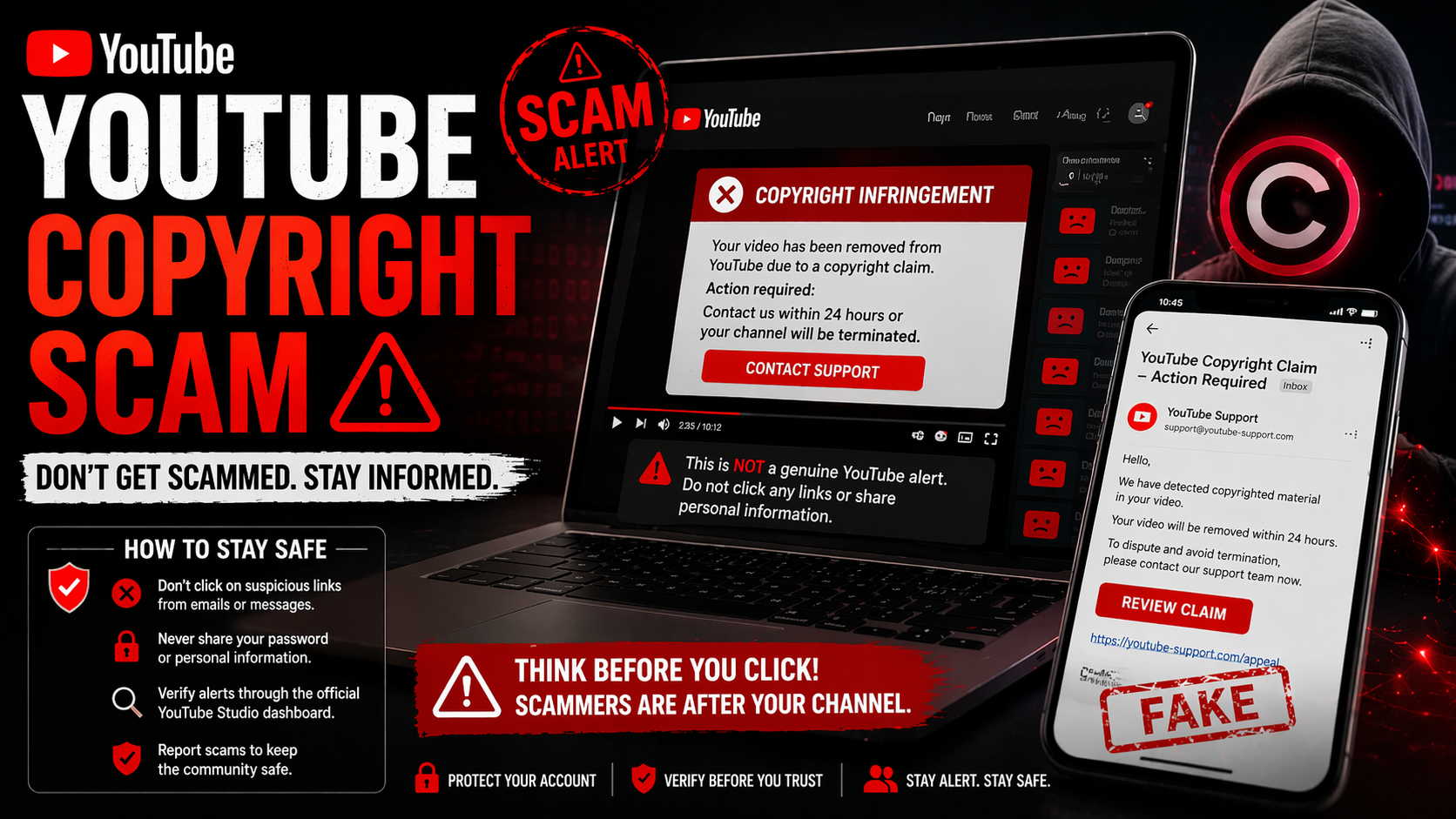
This issue affects not only large creators but also smaller channels that may not fully understand how copyright systems work. Scammers take advantage of this gap in knowledge, making awareness the first and most important line of defense.
What Is a YouTube Copyright Scam
A YouTube copyright scam occurs when someone falsely claims ownership of your content or pretends to represent YouTube or a legitimate copyright holder. These scams are designed to trick creators into giving away money, account access, or sensitive information. What makes them dangerous is that they often look real. Since YouTube has an official copyright system, scammers imitate it closely. This makes it difficult for creators to distinguish between genuine claims and fraudulent ones.
Why These Scams Are Increasing
The rapid growth of content creation has created more opportunities for scammers. As more people upload videos, the number of potential targets increases. Many new creators are not fully aware of copyright rules, making them easier to manipulate. At the same time, scammers are becoming more skilled. They use better design, more convincing language, and even real policy references to make their messages appear legitimate. This combination has led to a noticeable rise in copyright-related scams.
How Fake Copyright Strike Emails Work
One of the most common tactics involves sending fake emails that appear to be from YouTube. These messages often claim that your channel has received a copyright strike and is at risk of being deleted. The email usually creates a sense of urgency, pushing you to act quickly. It may include a link that directs you to a fake website designed to look like YouTube. Once you enter your login details, scammers gain access to your account.
Abuse of Content ID Claims
Another method involves misuse of YouTube’s Content ID system. Scammers may falsely claim ownership of your videos, even if they have no rights to the content. When this happens, they can redirect ad revenue from your videos to themselves or limit where your content can be viewed. This can significantly impact creators who rely on YouTube for income and visibility.
Impersonation and Fake Authorities
Scammers often pretend to be YouTube support staff, legal representatives, or copyright agencies. They contact creators through email or social media, claiming there is a copyright issue that needs immediate attention. These messages may look professional and include official logos or references. However, they usually involve requests for payment or sensitive information, which is a clear sign of fraud.
Blackmail and Extortion Tactics
In some cases, scammers take a more aggressive approach. They threaten to issue multiple copyright strikes against a channel, which could lead to its removal. To avoid this, they demand payment. This form of blackmail can be very stressful, especially for creators who depend on their channel for income or business growth.
How to Identify a Scam
Recognizing a scam is key to avoiding it. Suspicious email addresses are often the first warning sign. Official YouTube communication comes from verified domains, not random or personal email accounts. Another sign is the use of urgent or threatening language. Messages that push you to act immediately without verification are often scams. Requests for payment outside official platforms are also a major red flag.
Difference Between Real and Fake Claims
Real copyright claims appear inside YouTube Studio and include clear details about the content owner. They provide an official process for disputes and do not require payment. Fake claims, on the other hand, are usually sent through external messages. They often lack proper documentation and ask for actions outside YouTube’s official system, making them easier to identify if you know what to look for.
Risks of Falling for a Scam
The consequences of falling for a YouTube copyright scam can be serious. One of the biggest risks is losing access to your account. Once scammers gain control, they may change your login details and take over your channel. Financial loss is another major concern. Some creators end up paying money to resolve issues that do not exist. There is also the risk of personal data being exposed, which can lead to further problems such as identity theft.
How to Protect Your YouTube Channel
Protecting your channel requires a combination of awareness and security measures. Enabling two-factor authentication is one of the most effective ways to prevent unauthorized access. It is also important to always use official channels when dealing with copyright issues. Instead of clicking on links in emails, log in directly to YouTube and check for notifications there. Keeping your devices updated and secure also reduces the risk of attacks.
What to Do If You Receive a Suspicious Message
If you receive a message that seems suspicious, the first step is to stay calm. Avoid clicking on any links or downloading attachments. Instead, verify the claim by logging into YouTube directly. If the message is indeed a scam, report it and remove it from your inbox. Taking these steps can help protect not only you but also other creators who might be targeted.
Steps to Take If You Have Been Scammed
If you believe you have already fallen victim to a scam, immediate action is necessary. Changing your passwords should be your first priority, followed by enabling additional security features. Contacting YouTube support can help you recover your account if access has been lost. It is also important to check your financial accounts and scan your device for any malware that may have been installed.
Why Small Creators Are Easy Targets
Smaller creators are often targeted because scammers assume they have less experience with copyright rules and platform systems. This makes them more likely to panic and respond quickly to threats. Building awareness early and understanding how YouTube works can greatly reduce the chances of falling victim to these scams.
YouTube’s Efforts to Combat Scams
YouTube continues to improve its systems to reduce scams and protect creators. This includes better detection of fraudulent claims, stronger security features, and educational resources. However, no system is perfect. Scammers constantly adapt, which is why personal vigilance remains essential.
Final Thoughts
The YouTube copyright scam is a serious and growing issue that every creator should be aware of. It relies on fear, confusion, and quick reactions to succeed. By staying informed and cautious, you can protect your channel, your content, and your income. Always verify before taking action, avoid sharing sensitive information, and rely only on official platforms. Your channel is more than just videos. It represents your time, creativity, and effort. Protecting it should always be a top priority.

