Building projects become far more interesting once modpacks enter the picture. A simple road can gain sidewalks, traffic signs, benches, trees, decorative lighting, and realistic building materials without much extra effort. Add furniture mods together with NPC systems and suddenly every neighborhood starts feeling occupied rather than abandoned. It’s these small details that often make the biggest difference when creating a Minecraft city players actually want to explore.
But all of that detail has a cost. Hosting optimized for large modpacks is the difference between a city that runs smoothly and one where players experience lag spikes every time they move through a populated district.
Why Minecraft City Builds Stress Servers
A huge minecraft city isn’t just a lot of blocks. It’s a lot of loaded chunks, each containing many block entities, decoration objects, and potentially NPCs or villagers. In vanilla, minecraft city houses built from standard blocks are lightweight. In modded play, those same houses might contain custom furniture blocks (each a block entity), lighting mods with dynamic light sources, and NPC mods running pathfinding logic for residents.
That combination — block entities, dynamic lighting calculations, and NPC AI — creates sustained server load that scales directly with how detailed and populated the city is. The Minecraft Wiki notes that block entities (chests, furnaces, and their modded equivalents) are processed differently from regular blocks, requiring per-tick updates. Cities with heavy use of modded furniture and storage blocks have high block entity counts per loaded chunk.
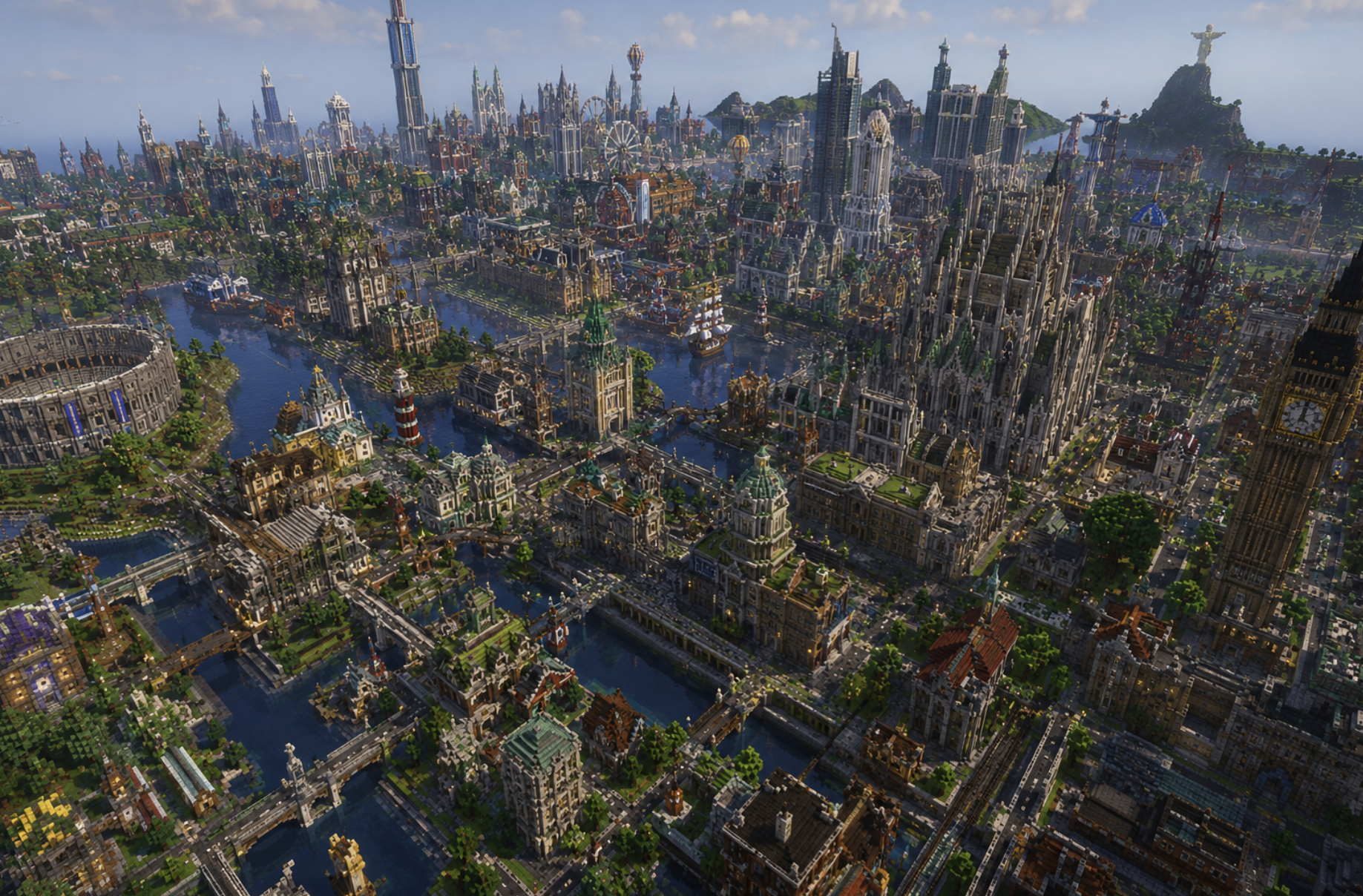
Minecraft Village City: Villager AI at Scale
A minecraft village city with active villagers is particularly demanding. Vanilla villager pathfinding is already one of Minecraft’s most server-intensive systems. Mods that add custom villager types, trading behaviors, or scheduled routines multiply that load.
Community server admin and builder Keralis has documented in multiple city-build series that villager density is the single largest performance variable in large city projects. Keeping villager counts manageable per district is essential for maintaining playable TPS.
According to testing shared on r/admincraft, each active vanilla villager with a claimed workstation adds approximately 0.3–0.5ms to server tick time. In a city with 200 villagers, that’s 60–100ms of overhead before any mods are factored in. Another thing people sometimes forget is how much movement happens inside a big city. Players are constantly walking between neighborhoods, using rail systems, visiting shops, or exploring new districts. Every trip means more chunk loading and more active areas for the server to manage. On busy multiplayer servers, that extra work can become just as demanding as the mods themselves.
What Optimized Hosting for City Builds Provides
For large modded city projects, hosting needs:
- High-clock CPU — city chunk processing is sequential and benefits from clock speed
- 16+ GB RAM — large cities with multiple loaded districts fill memory quickly
- Fast chunk loading — players moving between city districts trigger chunk loads constantly
- View distance tuning — server panels that let you reduce view distance without full restarts
- Performance monitoring tools — to identify which districts are most expensive
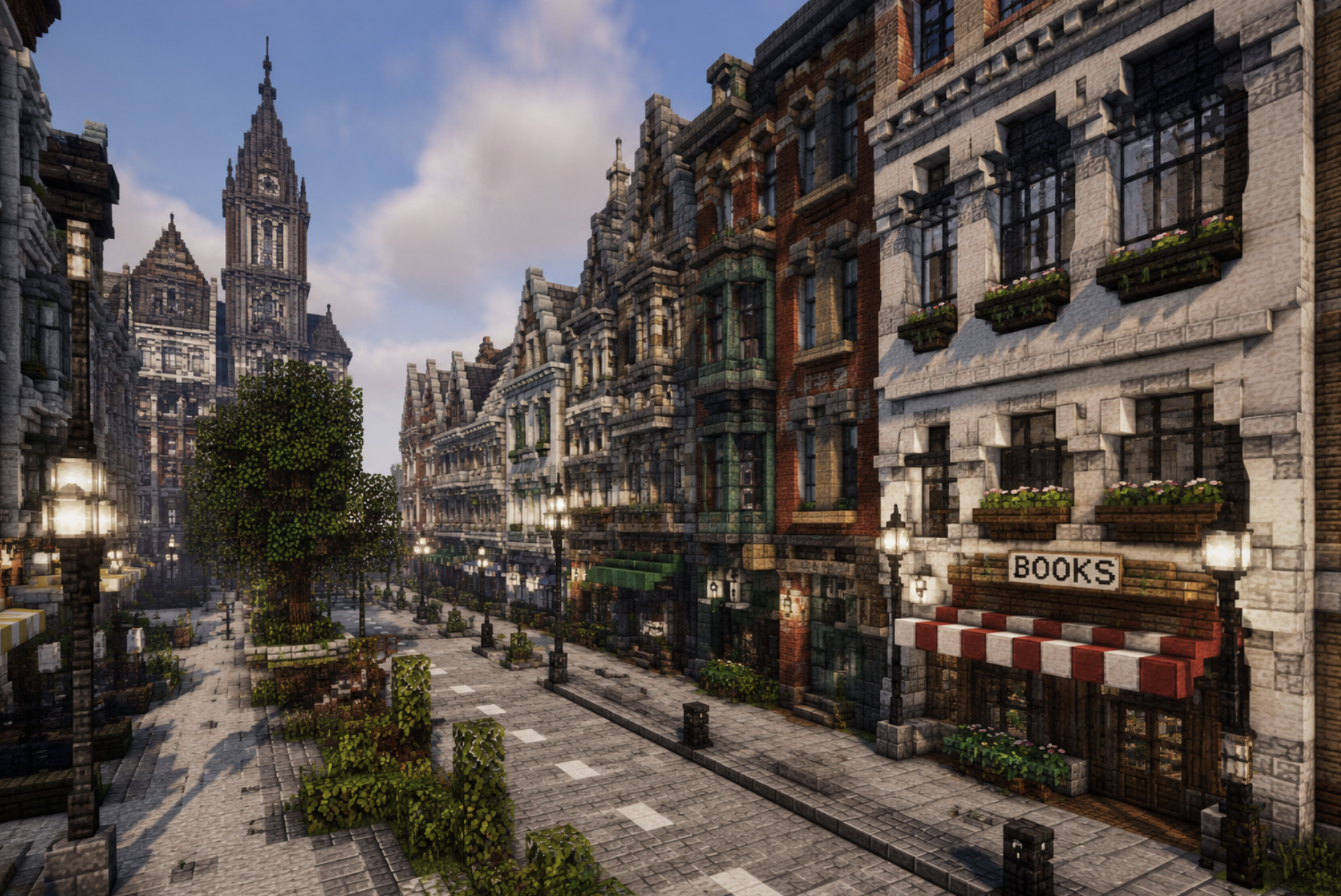
Hardware is only part of the equation. Cities usually run better when they’re built with performance in mind from the beginning. Keeping districts separated, avoiding excessive chunk loading, and limiting complicated interiors to places players actually spend time in can save plenty of server resources. This approach preserves the visual scale of the city without sacrificing overall server performance.
Cities That Last
The best modded city servers aren’t just impressive at launch. They stay playable as the city grows and more players join. Hosting optimized for large modpacks gives city builders the headroom to keep adding detail without hitting a performance wall that forces redesign.

