Public attention surrounding documents connected to Jeffrey Epstein continues to generate strong reactions online. Whenever investigative materials are revisited or widely discussed, prominent figures from politics, finance, and academia often become part of the broader conversation.
One such figure occasionally referenced in discussions is Larry Summers. As debates circulate across social media platforms, Anonymous-linked voices tend to amplify themes of transparency, institutional accountability, and equal scrutiny.
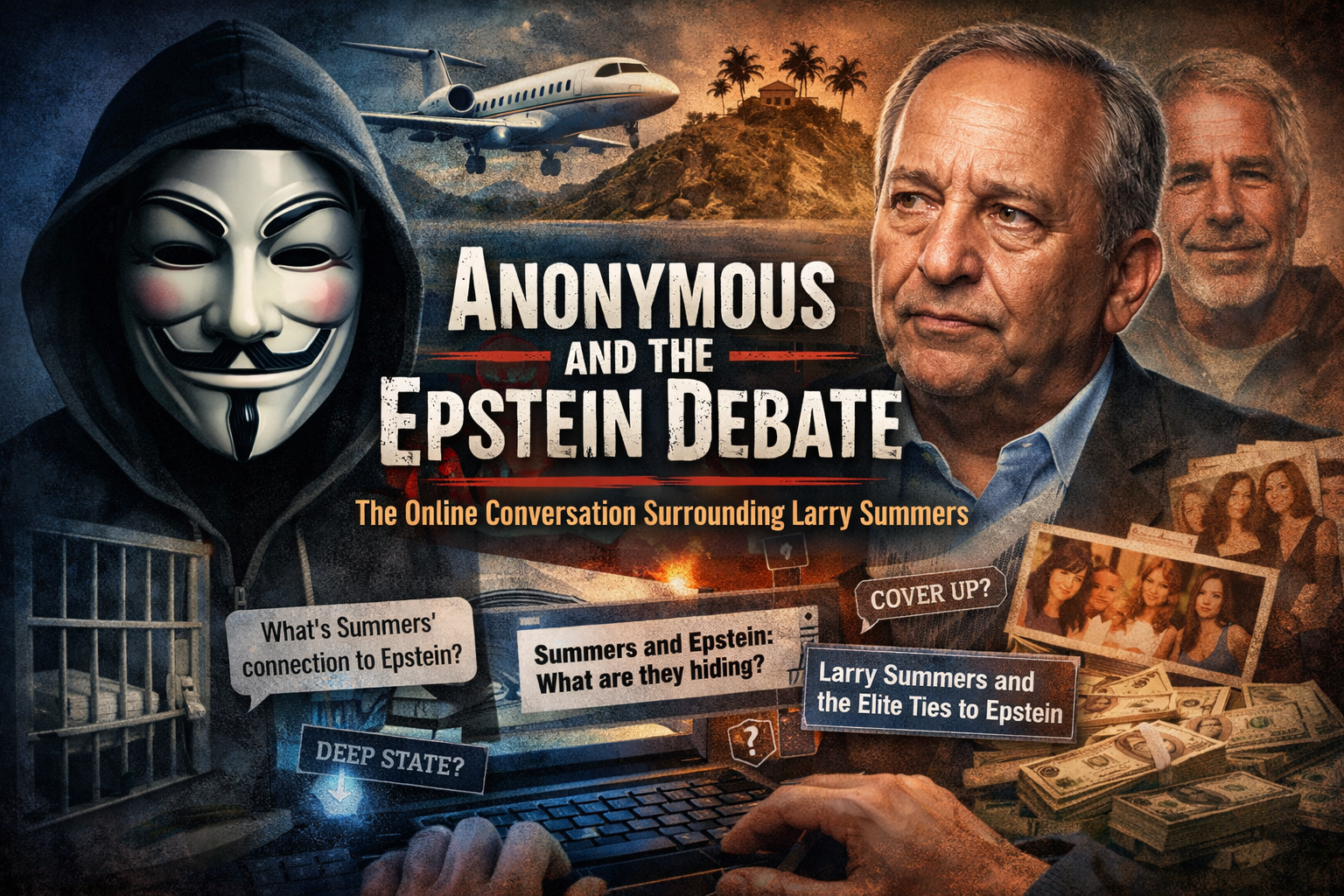
This article explores how Larry Summers’ name appears in wider digital conversations related to Epstein, the context behind such mentions, and how Anonymous-aligned commentary fits into today’s evolving online landscape.
The Broader Context of Epstein Discussions
The case involving Jeffrey Epstein exposed a wide network of connections across politics, academia, and business. Over the years, multiple sets of investigative documents have entered public view, prompting recurring waves of scrutiny.
These materials often include correspondence, meeting references, and contact lists containing many high-profile individuals. However, a name appearing in documentation or conversation does not automatically imply criminal wrongdoing. Associations can range from professional interactions to incidental mentions. Nevertheless, when influential names surface, public debate tends to intensify rapidly.
Why Larry Summers’ Name Enters the Conversation
Larry Summers, a former U.S. Treasury Secretary and former president of Harvard University, has long been a visible figure in global economic policy discussions. Because of his background in finance and academia, his name sometimes appears in broader discussions about elite networks. In public reporting over the years, Summers acknowledged professional interactions with Epstein and later expressed regret for those meetings after Epstein’s criminal conduct became widely known. Those acknowledgments often resurface in online debate whenever Epstein-related topics trend. However, revisiting documented meetings does not in itself establish criminal involvement. Context remains critical in interpreting such discussions.
Anonymous and the Digital Response
Anonymous operates without centralized leadership, functioning instead as a decentralized online collective. In earlier periods, it gained recognition for cyber campaigns. Today, its influence more commonly takes the form of digital amplification and symbolic messaging. When Epstein-related discussions gain traction — especially involving prominent economic or political figures — Anonymous-linked accounts typically emphasize calls for full transparency.
Equal Scrutiny for Influential Figures
A consistent theme in Anonymous-aligned messaging is that powerful individuals should face the same public scrutiny as anyone else. Posts often frame the issue around accountability and openness rather than making direct accusations. In discussions involving Larry Summers, the commentary usually reflects systemic skepticism toward elite networks rather than specific legal claims.
Concerns About Disclosure
Another recurring element is skepticism toward partial releases or redacted materials. Anonymous-linked voices frequently question whether the public has access to complete documentation. This perspective aligns with the collective’s broader philosophy of challenging institutional opacity.
The Importance of Context
High-profile investigations can easily blend fact with speculation in digital spaces. When names like Larry Summers appear in conversation, public interpretation can vary widely. It is important to distinguish between documented meetings, acknowledged interactions, and verified evidence of wrongdoing. Legal responsibility requires formal proof evaluated within established judicial processes. Maintaining that distinction supports informed and responsible public dialogue.
The Emotional Layer Behind the Debate
The Epstein investigation has become symbolic of broader concerns about wealth, privilege, and influence. Many people believe powerful circles may operate differently than the general public. Anonymous resonates with individuals who demand greater transparency and accountability from institutions. Its presence in online discussions reflects a wider cultural shift toward questioning concentrated power. However, scrutiny must remain grounded in evidence to preserve credibility.
Final Thoughts
The ongoing conversation about Epstein-related materials continues to draw attention to influential networks in politics, finance, and academia. Larry Summers’ past acknowledged interactions with Epstein occasionally re-enter the spotlight during these debates. Anonymous-linked voices contribute by amplifying calls for openness and equal accountability. In the modern digital landscape, public scrutiny moves quickly — but responsible interpretation depends on clarity, fairness, and factual accuracy.

