When Russia launched its full-scale invasion of Ukraine in February 2022, the conflict immediately extended beyond physical battlefields into cyberspace. Alongside state-sponsored cyber units, intelligence agencies, and criminal hacking groups, a familiar name resurfaced with unusual intensity: Anonymous. Known for its decentralized structure and symbolic Guy Fawkes mask, Anonymous declared what it called a “cyber war” against the Russian government within days of the invasion. This declaration marked one of the most visible moments in the group’s history, placing hacktivism squarely in the context of a modern interstate war.
Unlike previous Anonymous operations that focused on corporations, extremist groups, or isolated political events, the Russian-Ukraine cyber campaign unfolded during an active military conflict with global consequences. It raised difficult questions about legitimacy, effectiveness, and risk. Was Anonymous meaningfully disrupting Russian state operations, or merely conducting symbolic attacks? Did these actions help Ukraine, or did they complicate an already volatile cyber environment? To understand this campaign, it is necessary to examine what Anonymous actually did, how those actions fit into the broader cyber conflict, and what this episode reveals about the future of digital warfare.
Background of Anonymous as a Hacktivist Collective
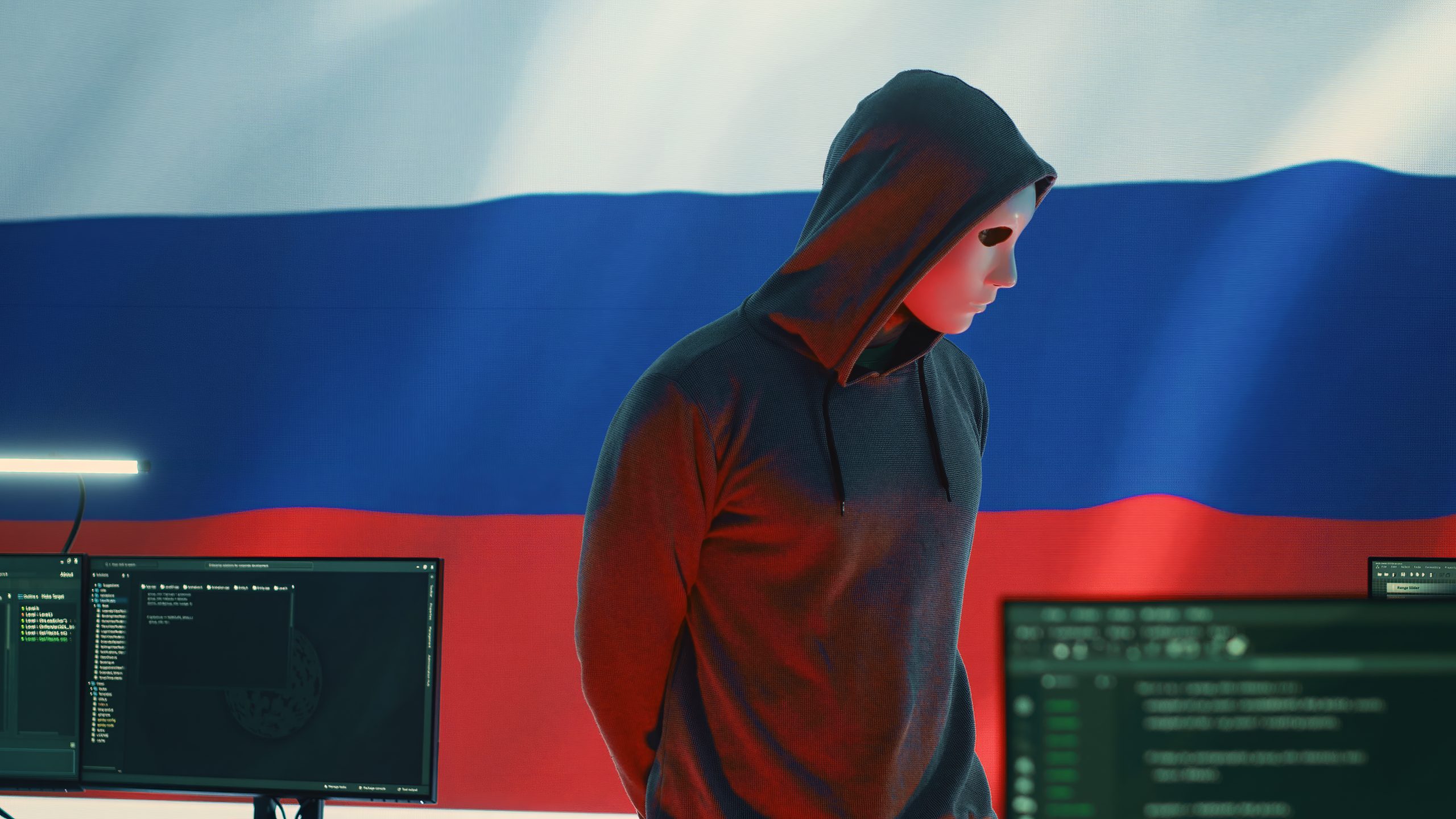
Anonymous is not a single organization with leadership, membership lists, or a unified strategy. It is a loose collective of individuals and smaller groups who share a general ideology centered on opposition to censorship, authoritarianism, and perceived injustice. Anyone can act “as Anonymous,” which makes attribution difficult and internal coordination inconsistent. This structure has allowed the name to persist for more than a decade, but it also means that operations vary widely in quality, intent, and impact.
Historically, Anonymous has relied on tactics such as distributed denial-of-service attacks, website defacements, data leaks, and social media campaigns. These actions are usually designed to embarrass targets, disrupt online services, or draw public attention rather than cause lasting technical damage. Before the Ukraine war, Anonymous had targeted entities ranging from the Church of Scientology to ISIS propaganda networks and government agencies accused of corruption. The Russian-Ukraine conflict, however, represented a scale and geopolitical seriousness that was largely unprecedented for the collective.
Declaration of Cyber War Against Russia
Shortly after the invasion began, social media accounts associated with Anonymous announced that the collective was officially engaged in cyber operations against the Russian Federation. This declaration was symbolic, but it also served as a rallying call for hackers worldwide to focus their efforts on Russian government institutions, state-owned companies, and propaganda outlets. The language used framed the campaign as a response to aggression, censorship, and attacks on Ukrainian sovereignty.
This announcement mattered not because it had legal standing, but because it attracted attention and participation. Thousands of individuals, ranging from experienced hackers to inexperienced sympathizers, attempted to take part. The result was a chaotic but persistent stream of attacks that coincided with Ukraine’s own defensive cyber efforts and with Russian offensive cyber operations. The line between activism, cybercrime, and warfare became increasingly blurred as Anonymous-branded actions unfolded alongside state-level cyber conflict.
Major Cyber Operations Attributed to Anonymous
One of the earliest and most visible tactics used by Anonymous during the campaign was distributed denial-of-service attacks against Russian government websites. Sites associated with the Kremlin, the State Duma, and various ministries were intermittently taken offline. While these disruptions were usually temporary, they carried symbolic weight by demonstrating that Russian digital infrastructure was not untouchable. In an environment where information control is central to state power, even brief outages attracted international attention.
Anonymous also claimed responsibility for defacing Russian websites and replacing official messaging with anti-war statements or Ukrainian symbols. In some cases, hackers reportedly gained access to poorly secured databases and leaked user information, internal documents, or contact lists. State-owned media outlets were targeted as well, with some broadcasts briefly replaced by images of the war or messages condemning the invasion. These actions were intended to counter Russian propaganda by injecting alternative narratives directly into controlled information channels.
Targeting of Russian State Media and Information Channels
Information warfare was a central focus of Anonymous’ campaign. Russia has long relied on state-controlled media to shape public perception, both domestically and internationally. Anonymous attempted to undermine this system by hacking streaming services, television networks, and radio broadcasts. In several reported incidents, Russian viewers briefly saw footage of Ukrainian suffering or heard messages urging resistance to the war.
While the technical sophistication of these intrusions varied, their psychological impact was arguably more important than their duration. Even short disruptions challenged the image of total information control and suggested that alternative viewpoints could penetrate state media. At the same time, these attacks highlighted the vulnerability of civilian information systems in wartime, raising ethical concerns about whether such actions risked unintended harm or escalation.
Data Leaks and Exposure Campaigns
Another significant component of Anonymous’ activity involved data leaks. Hackers claiming affiliation with the collective released large datasets allegedly obtained from Russian government agencies, contractors, and corporations. These leaks included emails, internal documents, and user databases, often shared publicly on file-hosting platforms. Supporters argued that exposing corruption, disorganization, or internal dissent served the public interest and weakened the Russian war effort.
However, the accuracy and significance of some leaked data were disputed. Cybersecurity analysts noted that not all datasets were verified, and some appeared to be recycled from earlier breaches unrelated to the war. This raised concerns about misinformation and exaggeration, both of which can undermine credibility. Still, the volume of leaked material contributed to an environment of uncertainty and pressure for Russian institutions already strained by sanctions and international isolation.
Relationship With Ukraine’s Official Cyber Efforts
The Ukrainian government openly called on global hackers to support its cyber defense, creating what some described as an “IT army.” This invitation blurred the line between civilian participation and state-directed cyber operations. While Anonymous was not formally integrated into Ukraine’s cyber command, its actions often aligned with Ukrainian interests. Attacks tended to focus on Russian targets rather than Ukrainian defense or intelligence gathering.
This informal alignment created strategic advantages and risks. On one hand, the sheer volume of low-level attacks may have forced Russian defenders to divert resources. On the other hand, uncoordinated actions risked interfering with professional cyber operations or provoking retaliation. The Anonymous campaign demonstrated how decentralized hacktivism can complement state efforts without being directly controlled by them, a dynamic that is likely to recur in future conflicts.
Effectiveness and Limitations of the Campaign
Assessing the effectiveness of Anonymous’ cyber campaign is complex. From a technical perspective, most attacks did not cause lasting damage to critical infrastructure or military systems. Russian command-and-control networks, energy grids, and battlefield communications largely remained intact. This suggests that Anonymous lacked the access, resources, or coordination required for strategic cyber disruption.
However, effectiveness should not be measured solely in technical terms. The campaign succeeded in drawing global attention, sustaining media coverage, and reinforcing narratives of resistance. It also exposed weaknesses in Russian digital hygiene and highlighted the role of non-state actors in cyber conflict. At the same time, exaggerated claims and unverifiable leaks sometimes undermined credibility, reminding observers that visibility does not always equate to impact.
Legal, Ethical, and Strategic Controversies
The Anonymous campaign sparked significant debate among legal scholars and cybersecurity experts. Hacktivist attacks on state systems during wartime raise questions about civilian participation in hostilities. Individuals acting independently may inadvertently make themselves legitimate targets under international law, even if they see themselves as activists rather than combatants.
Ethically, the targeting of media outlets and civilian-facing services remains controversial. While supporters argue that countering propaganda is justified, critics warn that such actions risk harming ordinary citizens or escalating conflict. Strategically, the involvement of loosely organized hackers complicates attribution and response, increasing the risk of miscalculation. The Russian-Ukraine cyber campaign thus highlighted unresolved issues at the intersection of activism, warfare, and law.
Conclusion
Anonymous’ involvement in the Russian-Ukraine cyber campaign marked a defining moment in the evolution of hacktivism. For the first time, a decentralized online collective played a highly visible role in an active, large-scale international conflict. While its technical impact on the war was limited, its symbolic and informational influence was significant. The campaign demonstrated how digital activism can intersect with geopolitical struggle, amplifying narratives and applying pressure outside traditional military channels.
At the same time, the episode exposed the limitations and risks of such involvement. Lack of coordination, questionable data authenticity, and ethical concerns all complicated the narrative of cyber resistance. As future conflicts increasingly unfold in both physical and digital domains, the Anonymous campaign against Russia will be studied as an early example of how non-state actors can shape, but not control, the cyber dimension of war.

