If you’ve been around the internet long enough, chances are you’ve come across the name Anonymous — the mysterious hacktivist collective famous for its Guy Fawkes mask, digital protests, and sometimes controversial cyber-operations. But where did this group come from? How did a bunch of seemingly faceless individuals become one of the most talked-about movements in internet history? Let’s take a journey back to their origins and see how it all started.
The Early Days of Internet Culture
To understand Anonymous, we first need to rewind to the mid-2000s — a time when the internet was a bit like the Wild West. Social media was still new, online communities were booming, and platforms like 4chan were at the heart of internet culture. 4chan, an imageboard site created in 2003, allowed users to post and comment anonymously. There were no usernames, no profiles — just pure, unfiltered interaction. This gave rise to a culture where people didn’t care about personal identity; instead, ideas, jokes, and memes took center stage. On these boards, if multiple people posted without a name, they were all simply labeled as “Anonymous.” Over time, “Anonymous” became a shared identity — anyone could be Anonymous, and everyone was.
From Jokes to Collective Action
At first, Anonymous wasn’t an organized group at all. It was more of a cultural phenomenon — a swarm of random internet users joining forces for pranks, meme wars, and internet humor. They would “raid” chatrooms, flood online games with funny content, and pull off elaborate online jokes just for the fun of it. But as internet culture matured, some members began to realize that anonymity and mass coordination could be used for more than just jokes. They could use it to fight for causes, challenge authority, and expose corruption. This shift from harmless trolling to political activism would change everything.
Project Chanology – The Turning Point
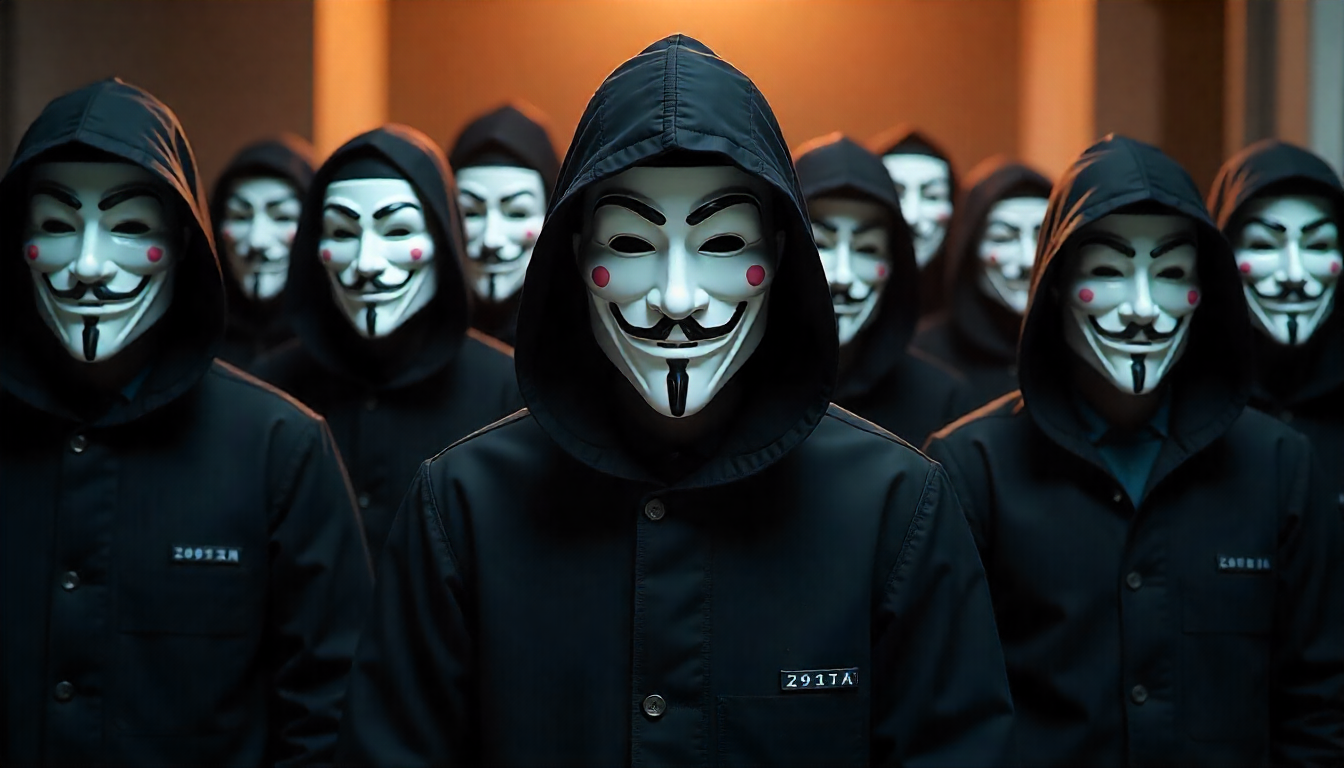
The moment most people first heard about Anonymous was Project Chanology in 2008. It all started when the Church of Scientology tried to remove a leaked video of Tom Cruise enthusiastically talking about Scientology from the internet. To many online, this looked like censorship — something that went against the free, open nature of the web. Anonymous decided to fight back. They launched an online campaign involving DDoS attacks (which overwhelm a website with traffic), prank calls, and protests outside Scientology centers. The now-iconic Guy Fawkes mask — inspired by the movie V for Vendetta — became their public symbol during these street demonstrations. This was a turning point. Anonymous had transformed from a loose group of pranksters into a recognizable force for online activism, or “hacktivism.”
The Philosophy Behind Anonymous
What makes Anonymous unique is that it’s leaderless. There is no official member list, no headquarters, and no one in charge. Anyone can act in the name of Anonymous if they follow the basic principles — which often revolve around freedom of speech, opposition to censorship, and fighting against what they see as injustice. Their famous tagline, “We are Anonymous. We are Legion. We do not forgive. We do not forget. Expect us.”, captures their mysterious and collective nature. Because there’s no hierarchy, operations are usually organized spontaneously through online chatrooms, forums, and later, encrypted platforms. This also means their actions vary widely — from exposing corruption to simply pulling off a massive internet prank.
Major Operations and Global Recognition
After Project Chanology, Anonymous began taking part in global political events:
-
Arab Spring (2010–2012): Anonymous provided tools and support to protesters in countries like Tunisia and Egypt, helping them bypass government internet censorship.
-
Operation Payback: Launched in response to companies cutting off services to WikiLeaks, Anonymous targeted sites like PayPal and MasterCard with cyberattacks.
-
Ops Against Governments: They’ve conducted cyber operations against various government websites to protest laws seen as restricting internet freedom.
These activities brought them worldwide fame — and sometimes controversy. Depending on who you ask, Anonymous are either internet heroes fighting for the people or cybercriminals breaking the law.
The Mask and the Media
The Guy Fawkes mask, popularized by V for Vendetta, became the face of Anonymous. It’s now instantly recognizable in protests and demonstrations. The mask represents rebellion against oppression and the idea that “behind this mask, we are all the same.” The media loved the image of masked protesters taking on powerful institutions. This attention helped Anonymous grow from a small online movement into a global cultural icon.
Criticism and Challenges
Not everyone supports Anonymous. Critics argue that because it’s so decentralized, anyone can claim to be part of the group, even if their motives aren’t aligned with its original spirit. This lack of control sometimes leads to actions that are controversial or even harmful. Governments and law enforcement agencies have also cracked down on members involved in illegal hacking. Several individuals connected to Anonymous operations have been arrested over the years. Still, the group’s mystique remains. The fact that no one can truly “shut down” Anonymous is both their greatest strength and their biggest challenge.
How Anonymous Changed Internet Activism
Before Anonymous, activism usually meant rallies, petitions, or formal campaigns. Anonymous introduced a new form of digital activism — one that could mobilize thousands of people in hours without leaders or organizations. They also blurred the lines between online and offline protest. A tweet could lead to a DDoS attack, which could lead to masked protesters showing up outside an office the next day. Today, countless online movements borrow tactics from Anonymous — from using memes as protest tools to organizing through encrypted chat rooms.
The Legacy of Anonymous
Whether you see them as heroes, vigilantes, or troublemakers, there’s no denying that Anonymous changed the way people think about collective action online. They showed that ordinary internet users could stand up to powerful organizations and governments — and sometimes win. Anonymous is still around, though less active than in their peak years. They tend to reappear when global events spark outrage, reminding the world of their presence with the simple message: “Expect us.”
Final Thoughts
The origin of Anonymous is a fascinating mix of internet culture, shared identity, and evolving purpose. What started as a group of pranksters on an imageboard became one of the most famous hacktivist movements in the world. Their story is a reminder that the internet is more than just websites and apps — it’s a living, breathing space where ideas can spread, people can unite, and sometimes, revolutions can begin. And perhaps that’s the most “Anonymous” thing of all — the idea that anyone, anywhere, can become part of something bigger without ever revealing their name.

