When you hear the name Anonymous, what comes to mind? For some, it is a shadowy group of hackers hiding behind the iconic Guy Fawkes mask. For others, it is a symbol of online rebellion, justice, or even chaos. The mainstream media has played a huge role in shaping this image—sometimes portraying Anonymous as digital heroes, other times as dangerous cybercriminals. But how accurate is this picture?
In this article, we will explore how the media portrays Anonymous, where these portrayals come from, and whether they reflect the reality of what Anonymous truly is.
Understanding Anonymous
Before diving into media depictions, it’s important to understand what Anonymous really is. Contrary to the way it is often portrayed, Anonymous is not a single group with leaders, rules, or official membership. Instead, it is a loosely connected movement of individuals across the world who use the same name and imagery when engaging in online activism or hacktivism.
Anonymous operates under a simple idea: anyone can be Anonymous if they choose to be. This makes it both powerful and confusing to outsiders, because its actions can vary widely. One day, Anonymous might launch cyberattacks against governments, and the next, it might defend human rights activists or fight against censorship. This flexibility makes the media’s job harder—how do you describe something that has no single identity?
The Early Media Image of Anonymous
The first major wave of media attention came in the mid-to-late 2000s. During this period, Anonymous was largely associated with internet pranks and trolling. News outlets described them as mischievous troublemakers from sites like 4chan, targeting individuals or companies for fun rather than for politics.
Headlines during this time often included words like “cyber pranksters,” “online trolls,” and “internet vandals.” This framing painted Anonymous as something like an unruly online gang—disruptive, but not taken too seriously. However, this perception began to shift when Anonymous moved from trolling to political hacktivism.
Operation Chanology and a Turning Point
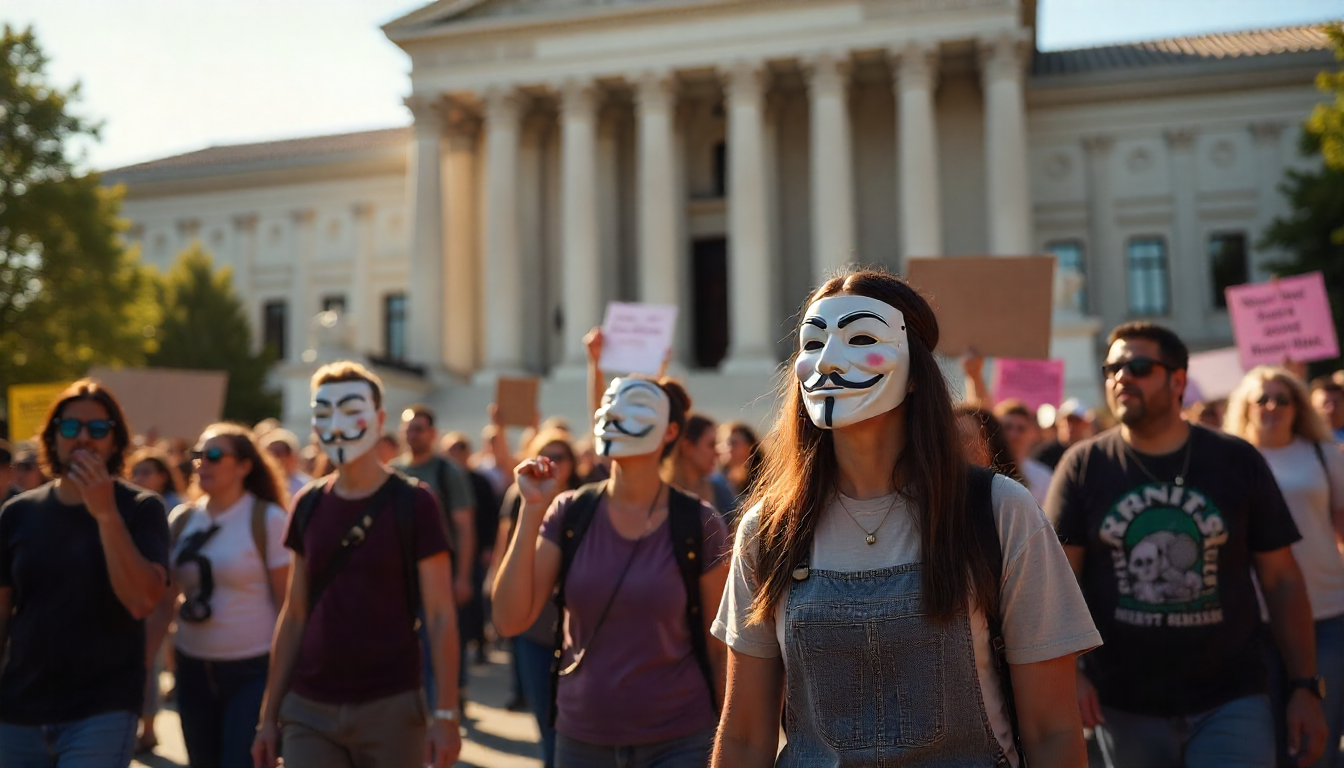
In 2008, Anonymous launched Operation Chanology against the Church of Scientology. Members protested both online and offline, wearing Guy Fawkes masks and releasing videos. This marked the first time Anonymous was widely covered as a political force rather than just a group of internet pranksters.
Media outlets like CNN and BBC showed images of masked protesters in the streets, making Anonymous appear more like an activist movement than mere hackers.
From this point on, the media narrative split:
-
The Vigilante Hero Narrative – portraying Anonymous as digital freedom fighters standing up against powerful institutions.
-
The Cybercriminal Narrative – portraying them as a dangerous hacking syndicate threatening global security.
How the Media Portrays Anonymous as Heroes
Certain outlets often describe Anonymous in almost Robin Hood-like terms. They highlight operations where Anonymous fought censorship, defended free speech, or supported movements like the Arab Spring.
For example:
-
When Anonymous attacked Tunisian and Egyptian government websites during the Arab Spring, many articles framed them as supporters of democracy.
-
During operations against ISIS propaganda accounts, Anonymous was depicted as a digital army against terrorism.
-
When Anonymous stood against companies accused of corruption, some journalists portrayed them as modern-day whistleblowers.
This heroic image appeals to readers because it simplifies Anonymous into an easy-to-understand role: the underdog fighting against powerful villains.
How the Media Portrays Anonymous as Criminals
On the other hand, many news reports take a darker view. Governments and law enforcement often describe Anonymous as a threat to cybersecurity and a criminal network. These descriptions are then repeated by the media.
Examples include:
-
DDoS attacks on PayPal, Mastercard, and Visa in defense of WikiLeaks. Media headlines at the time often used terms like “cybercrime” or “illegal attacks on financial institutions.”
-
Leaks of government data from the FBI, CIA, or other organizations. Here, Anonymous was framed as a national security risk.
-
Arrests of Anonymous members were often covered in ways that suggested the group was a coordinated criminal organization, even though Anonymous has no central leadership.
This framing creates fear and positions Anonymous as a threat, rather than as activists.
The Role of the Guy Fawkes Mask
The Guy Fawkes mask, popularized by the movie V for Vendetta, became the unofficial symbol of Anonymous. Media outlets love using this image because it is visually striking and instantly recognizable.
Whenever a news story about Anonymous is published, you will almost always see the mask—sometimes in protest photos, sometimes as a dramatic graphic.
The downside is that the mask creates a sense of mystery and menace. It makes Anonymous seem like a secret cult or underground army, rather than a loose movement of individuals online. The media leans heavily on this imagery to attract readers, but it often oversimplifies what Anonymous actually is.
Why the Media Struggles With Accuracy
The difficulty in accurately portraying Anonymous comes from a few key factors:
-
No Central Leadership
-
Journalists often want a spokesperson or leader to interview. With Anonymous, there is none. This forces the media to rely on leaked statements, tweets, or videos that may or may not represent the majority of Anonymous participants.
-
-
Variety of Actions
-
Anonymous can be chaotic. One operation may target oppressive governments, while another may launch attacks that hurt innocent users. Media outlets sometimes choose to highlight only one side, depending on the story they want to tell.
-
-
Government and Corporate Influence
-
Governments have a vested interest in framing Anonymous as a threat. Media outlets often amplify this framing without questioning it.
-
-
Simplification for Audiences
-
To make the story digestible, journalists reduce Anonymous to simple labels like hackers or activists, leaving out the complexity of the movement.
-
Is the Media’s Portrayal Accurate?
The short answer: partially, but not fully.
-
Yes, Anonymous engages in hacking. Many of their tactics, such as DDoS attacks and data leaks, are illegal under most laws.
-
Yes, they have supported activist causes. Their involvement in political protests, anti-censorship campaigns, and operations against authoritarian governments are well-documented.
-
But no, they are not a single unified organization. The media often exaggerates their coordination and power. Anonymous is more like a banner that anyone can use, and not all who use it share the same goals or values.
In other words, the media often gets the facts of operations right but fails to capture the nuance of what Anonymous really is.
The Impact of Media Portrayal
How Anonymous is depicted in the media has real-world consequences.
-
Public Perception
-
People who see Anonymous only through headlines may either glorify them as heroes or fear them as criminals. Very few get the full picture.
-
-
Government Response
-
Negative portrayals help justify arrests, surveillance, and stricter cybersecurity laws.
-
-
Anonymous’ Own Identity
-
Interestingly, Anonymous sometimes embraces the media image. The mysterious, masked figure portrayed in news reports has become part of their mythos, helping them spread their message.
-
Examples of Misrepresentation
To see how the media oversimplifies Anonymous, consider these examples:
-
When Anonymous attacked financial companies supporting government censorship, some articles ignored the political motivation and only described them as cybercriminals.
-
During the Arab Spring, some outlets portrayed Anonymous as singlehandedly enabling revolutions, which overstated their role.
-
In cases where individuals used the Anonymous name for personal gain or unrelated attacks, media often reported it as an official Anonymous operation, even though the movement has no way to claim or deny responsibility.
These examples show that the media tends to choose a narrative of good or evil, rather than the messy reality in between.
How Readers Should Approach Media Reports on Anonymous
Since media depictions are not always accurate, how should the public approach news about Anonymous?
-
Question the Source – Is the report based on official government statements, or does it include perspectives from digital rights activists?
-
Look for Patterns – One operation may seem criminal, another may seem heroic. Together, they reflect the chaotic nature of Anonymous.
-
Understand the Symbolism – The Guy Fawkes mask and dramatic headlines are meant to attract attention, but they don’t necessarily explain reality.
-
Recognize the Decentralization – Remember that Anonymous is not a single entity but a collection of individuals who may not agree with one another.
The Future of Media and Anonymous
As technology evolves, so will the media’s coverage of Anonymous. Cybersecurity threats, digital activism, and online privacy debates are becoming central issues in global politics. Anonymous will likely continue to appear in headlines, and the media will continue struggling to define them.
The key question is: will journalists learn to portray Anonymous with nuance, or will they keep relying on simplified labels? If the past is any guide, the dramatic and mysterious image of Anonymous is too appealing for the media to resist. This means future coverage will probably continue the same cycle—sometimes heroic, sometimes villainous, but rarely fully accurate.
Conclusion
The media has painted Anonymous in many different ways—hackers, vigilantes, criminals, activists, pranksters, and revolutionaries. The truth is more complicated. Anonymous is not one thing, but many things at once: a decentralized, unpredictable movement shaped by whoever chooses to act under its name.
The media’s portrayals capture fragments of this reality but often miss the bigger picture. They oversimplify a messy, evolving phenomenon into neat headlines. So, is the media depiction accurate? Not entirely. Anonymous is both more ordinary and more complex than the media suggests. To understand them, one must look beyond the masks and the headlines, and recognize that Anonymous is not just what the media says it is—it is also what individuals around the world decide to make of it.

