Across the world, governments invest heavily in armies, intelligence agencies, surveillance systems, and cyber defense units. Yet one name, with no leaders, no offices, and no official structure, continues to make governments uncomfortable: Anonymous. The fear surrounding Anonymous is not just about hacking. It is deeper than that. It is about unpredictability, loss of control, public exposure, and the power of ordinary people acting together without revealing who they are. To understand why governments fear Anonymous, we must look beyond the mask and explore what Anonymous represents in the modern digital age.
Anonymous Challenges Traditional Power
Governments are built on structure. They rely on hierarchy, authority, and clear chains of command. Anonymous operates in the exact opposite way. It has no central leadership and no formal membership. Anyone can act under the name Anonymous, and no one can stop them. This makes Anonymous difficult to control or negotiate with. Governments are used to dealing with organizations, parties, or movements that have leaders. With Anonymous, there is no one to arrest or silence to make the movement disappear. Even if some participants are identified, the idea survives. This lack of structure creates uncertainty, and uncertainty is something governments fear deeply.
Anonymity Removes Fear of Authority
One of the biggest reasons governments fear Anonymous is anonymity itself. When people act without revealing their identities, traditional tools of intimidation lose power. Threats, warnings, and public pressure become less effective. Anonymous allows individuals to speak and act without fear of immediate consequences. This encourages bold actions that many people would never attempt under their real names. When authority cannot easily identify or punish individuals, it weakens its ability to maintain control. From a government’s perspective, anonymity disrupts the balance of power.
Exposure Is More Dangerous Than Attack
Anonymous is often associated with cyber attacks, but what truly worries governments is exposure. Anonymous operations have, in the past, focused on leaking documents, revealing private communications, or highlighting internal failures. These exposures can damage public trust far more than physical attacks. When citizens see corruption, surveillance, or misuse of power revealed online, confidence in institutions drops. Governments rely heavily on public trust to function effectively. Even the possibility of exposure forces governments to act cautiously. The fear of embarrassment can be as powerful as the fear of disruption.
Anonymous Amplifies Public Anger
Anonymous rarely acts in isolation. Its actions often align with existing public anger or dissatisfaction. When people are already upset about censorship, injustice, or abuse of power, Anonymous becomes a catalyst. By giving a voice to these frustrations, Anonymous amplifies them. A single message or operation can draw global attention to a local issue. Governments fear this amplification because it can turn small protests into international discussions within hours. Once attention spreads online, controlling the narrative becomes almost impossible.
No Borders, No Jurisdiction
Governments operate within borders. Laws, police forces, and courts are limited by geography. Anonymous operates globally. Participants can be anywhere in the world, using tools that hide their locations. This borderless nature makes enforcement extremely difficult. Even if one country takes action, others may not cooperate. Legal systems struggle to respond quickly to decentralized online activity. From a government standpoint, this creates a constant challenge. Threats can come from anywhere, at any time, without warning.
The Symbolic Power of Anonymous
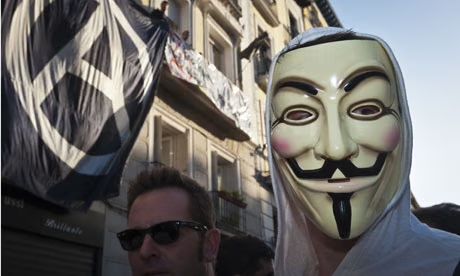
The image associated with Anonymous has become a global symbol of resistance. It represents defiance, rebellion, and speaking truth to power. Symbols are powerful because they spread faster than facts. When people see this symbol during protests or online campaigns, it sends a message that authority is being questioned. Governments fear symbols because they inspire others. They turn individual actions into collective movements. Even when Anonymous is inactive, the symbol alone can spark concern.
Media Attention Magnifies the Threat
Anonymous understands how the media works. Its messages are dramatic, carefully worded, and designed to attract attention. This ensures coverage, which multiplies the impact of even small actions. Governments fear this media amplification. A minor incident can become a global headline if Anonymous is involved. This creates pressure to respond publicly, sometimes before full information is available. In the digital age, perception matters as much as reality. Anonymous knows this, and governments know it too.
Internal Security Weaknesses Get Exposed
No government system is perfect. Mistakes happen. Security gaps exist. Anonymous thrives on finding and highlighting these weaknesses. Even when no serious damage occurs, the revelation itself is harmful. Exposed vulnerabilities raise questions about competence and preparedness. Citizens may lose confidence in their government’s ability to protect data and infrastructure. This reputational damage can have long-lasting effects. Governments fear being seen as vulnerable in an increasingly digital world.
Anonymous Cannot Be Easily Controlled
Traditional threats can be negotiated with, monitored, or eliminated. Anonymous cannot. There is no negotiation table. No agreement guarantees that actions will stop. This lack of control frustrates authorities. Even increased surveillance does not fully solve the problem, as Anonymous adapts quickly. New platforms, tools, and methods appear constantly. The inability to predict or control Anonymous keeps governments on edge.
Fear of Inspiration, Not Just Action
Perhaps the greatest fear is not what Anonymous does, but what it inspires. Anonymous shows that individuals can challenge powerful systems using digital tools. This idea spreads easily. Governments worry that this inspiration could encourage others to question authority, bypass controls, or engage in digital activism. Once people believe they can act without identity, the dynamics of power change. Anonymous represents a shift in how resistance works in the modern world.
The Human Element Governments Cannot Control
Anonymous is made up of people, not machines. People are emotional, reactive, and unpredictable. They respond to events quickly and passionately. This makes Anonymous difficult to anticipate. Governments prefer predictable opponents. Anonymous is anything but predictable. It can disappear for months and then suddenly reappear during a crisis. This irregular behavior increases anxiety and uncertainty. Human unpredictability is one of Anonymous’s strongest weapons.
Myth and Reality Combined
Some fear surrounding Anonymous is exaggerated. It is not a single powerful organization controlling global events. Many operations fail or have limited impact. However, the fear is not entirely a myth. Anonymous has proven that it can disrupt narratives, expose issues, and mobilize attention. Governments cannot ignore that history. Even the possibility of action forces defensive measures. Fear grows not from constant activity, but from potential.
Final Thoughts
Governments fear Anonymous because it represents a new kind of challenge. Not an army, not a political party, and not a traditional enemy. Anonymous is an idea powered by anonymity, technology, and collective belief. It threatens control, exposes weaknesses, and amplifies public anger. It operates without borders, without leaders, and without predictable patterns. Most importantly, it reminds governments that power in the digital age is no longer held by institutions alone. As long as people feel unheard, watched, or controlled, the idea of Anonymous will continue to exist. And as long as that idea exists, governments will continue to fear what it might do next.

