The dark web marketplace ecosystem continues to evolve rapidly in 2025, shaped by law enforcement crackdowns, shifting criminal strategies, and advances in digital privacy tools. Once dominated by a few large centralised platforms, today’s underground economy is far more fragmented, cautious, and technically sophisticated. While some marketplaces are expanding their influence, others are collapsing under pressure from exit scams, seizures, and loss of user trust.
Dark web marketplaces function as underground hubs where illicit goods, stolen data, hacking tools, and illegal services are traded anonymously. These platforms rely on encryption, privacy-focused browsers, and cryptocurrency payments to operate beyond the reach of conventional surveillance. In 2025, the balance of power within this ecosystem is changing, revealing clear winners and losers.
This article examines the top dark web marketplaces in 2025, highlighting which platforms are rising, which are falling, and what these shifts reveal about the future of cybercrime.
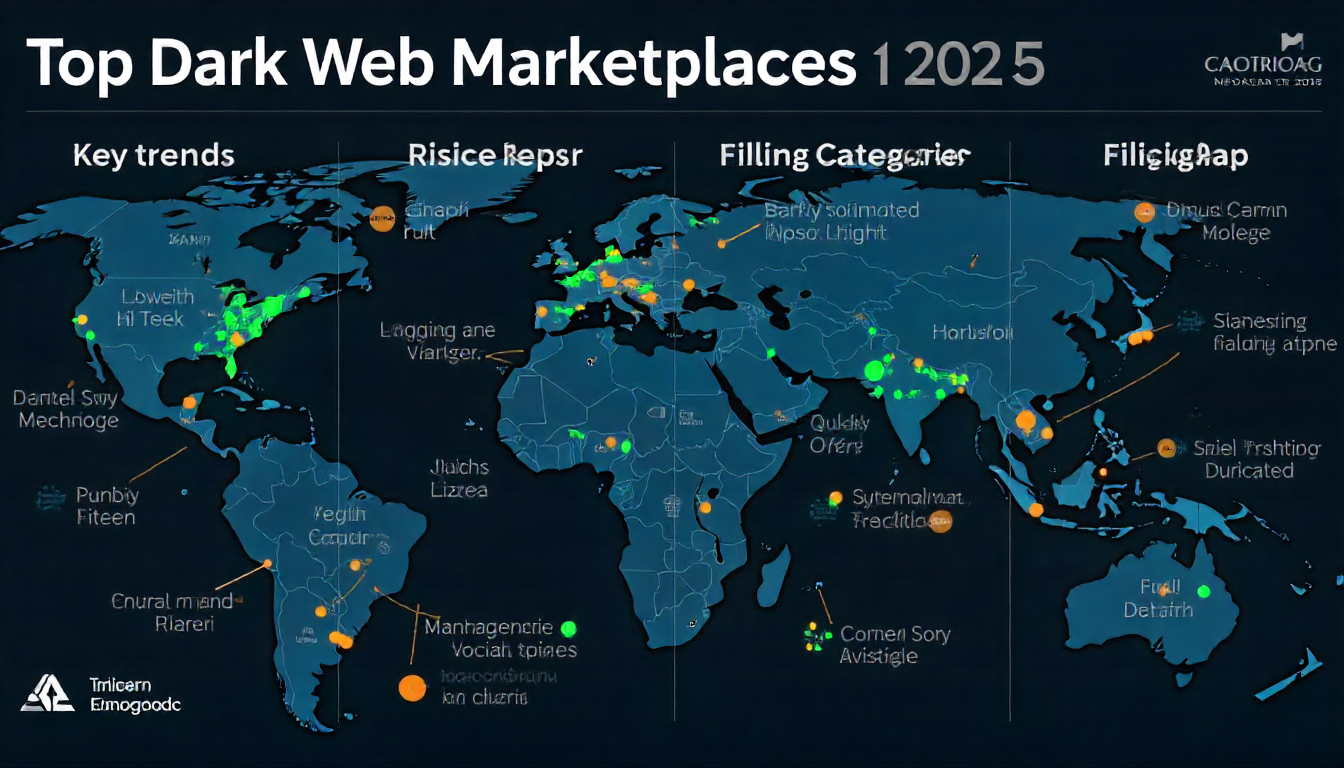
How Dark Web Marketplaces Operate
Top Dark Web Marketplaces in 2025: What’s Rising and What’s Falling. Dark web marketplaces operate similarly to legitimate e-commerce platforms but with stricter anonymity requirements. Vendors create listings, buyers leave reviews, and escrow systems manage payments to reduce fraud. Communication is typically encrypted, and access often requires private invitations or proof of credibility.
Cryptocurrencies remain the primary payment method, though many platforms now encourage privacy-focused coins over traceable alternatives. This shift reflects growing concerns about blockchain analysis and law enforcement monitoring.
Marketplaces rise or fall based on trust. Once a platform is suspected of cooperating with authorities, suffering security flaws, or planning an exit scam, users quickly migrate elsewhere. Reputation, uptime, and security practices are critical to survival.
Key Trends Shaping Marketplaces in 2025
Several trends are reshaping the dark web marketplace landscape this year. First is decentralisation. Rather than relying on massive centralised markets, users are spreading activity across smaller platforms to reduce risk exposure.
Second is specialisation. General marketplaces are losing ground to niche platforms focused on specific categories such as stolen credentials, ransomware tools, or digital fraud services. These specialised markets attract experienced users willing to pay premium prices.
Third is operational security. Marketplaces now emphasise encrypted messaging, multi-signature escrow, and limited data retention. Platforms that fail to adopt these measures struggle to maintain user trust.
Rising Dark Web Marketplaces in 2025
The marketplaces gaining traction in 2025 share common characteristics. They prioritise security, minimize data collection, and enforce strict vendor verification. Many operate on invite-only models, reducing infiltration risks.
Rising platforms tend to avoid hosting physical goods, focusing instead on digital products like breached databases, phishing kits, malware loaders, and fraud tutorials. This shift lowers logistical risks and makes operations more scalable.
Another factor driving growth is community governance. Some markets allow trusted users to participate in dispute resolution or platform decisions. This creates a sense of shared ownership and stability that attracts long-term participants.
Additionally, emerging marketplaces are quick to adapt to changing conditions. When law enforcement seizes a rival platform, these markets absorb displaced vendors and buyers, accelerating growth almost overnight.
Marketplaces Dominating Digital Crime
In 2025, digital crime-focused marketplaces are outperforming traditional multi-category platforms. Markets dedicated to data leaks, ransomware services, and account takeovers are seeing high activity.
These platforms thrive because demand for digital assets continues to rise. Stolen credentials fuel fraud, ransomware operations, and corporate espionage. As long as breached data holds value, marketplaces supplying it will remain profitable.
Some platforms have also integrated automated delivery systems. Buyers receive digital goods instantly after payment, reducing disputes and increasing efficiency. This professionalism mirrors legitimate SaaS models, making these markets especially attractive.
Falling Dark Web Marketplaces
While some platforms rise, many established marketplaces are in decline. The most common cause is loss of trust. Exit scams, where administrators disappear with escrow funds, remain a persistent problem.
Law enforcement takedowns also play a major role. Seized infrastructure, arrested administrators, and exposed vendor identities create fear across user bases. Even rumors of compromise can trigger mass departures.
Another reason for the decline is failure to innovate. Platforms that rely on outdated security practices or slow dispute resolution struggle to compete. In an environment where alternatives are plentiful, users are quick to abandon weak markets.
Markets that continue to host high-risk physical goods are especially vulnerable. Shipping logistics leave trails, making vendors and administrators to be identified. As a result, many such platforms are shrinking or shutting down entirely.
The Role of Trust and Reputation
Trust remains the most valuable currency on the dark web. Marketplaces invest heavily in building reputations through transparency, uptime reliability, and consistent communication.
Vendor reputation systems play a critical role. Buyers rely on reviews, transaction history, and verification badges to avoid scams. Platforms that fail to moderate fake reviews or fraudulent vendors lose credibility quickly.
Some rising marketplaces now require vendors to stake funds as collateral. This discourages scams and aligns incentives. While controversial, this approach has proven effective in maintaining quality standards.
Payment Evolution and Privacy
Payment methods are another key factor separating rising and falling markets. In 2025, privacy expectations are higher than ever. Marketplaces encouraging traceable payment methods face scepticism.
Many platforms now support multiple privacy-focused cryptocurrencies and discourage address reuse. Some integrate coin mixing or off-platform payment verification to enhance anonymity.
Markets that fail to adapt to these expectations see declining transaction volumes. Users increasingly view payment privacy as non-negotiable.
Impact of Law Enforcement Pressure
Global cooperation among law enforcement agencies has intensified in recent years. Coordinated operations targeting infrastructure, hosting providers, and cryptocurrency exchanges have disrupted several major markets.
This pressure has forced marketplaces to become more cautious. Shorter uptime periods, frequent domain changes, and minimal data storage are now common. While these tactics increase resilience, they also create usability challenges.
Rising platforms strike a balance between security and accessibility. Falling platforms often lean too far in one direction, either becoming too risky or too difficult to use.
What These Shifts Mean for Cybersecurity
The evolution of dark web marketplaces has direct implications for cybersecurity professionals. Fragmentation makes monitoring more complex, as threats are spread across many smaller platforms.
Specialisation also means faster innovation among criminals. Tools and techniques evolve rapidly when markets focus on specific attack vectors. This shortens the window for defensive adaptation.
However, fragmentation can also weaken criminal ecosystems. Smaller platforms are harder to coordinate and easier to disrupt individually. Understanding these dynamics is critical for effective threat intelligence.
The Future of Dark Web Marketplaces
Looking ahead, dark web marketplaces in 2025 are likely to continue fragmenting and specialising. Temporary markets, private deal-making, and encrypted community channels may replace large public platforms.
Trust-based networks will become more important than brand names. Reputation will follow individuals rather than marketplaces, changing how underground economies function.
While enforcement efforts will continue, total elimination of dark web marketplaces remains unlikely. Instead, the ecosystem will adapt, evolving alongside technology and regulation.
Conclusion
The dark web marketplace landscape in 2025 reveals a clear pattern of rise and fall driven by trust, security, and adaptability. Platforms that prioritise operational security, specialise in digital crime, and respond quickly to threats are gaining ground. Those plagued by exit scams, seizures, or stagnation are rapidly losing relevance.
For researchers, businesses, and cybersecurity professionals, understanding these shifts is essential. Dark web marketplaces are not static entities but living systems reflecting broader trends in technology and crime. Watching which platforms rise and which fall offers valuable insight into the future of the underground economy.


[email protected]
please message me to proton mail we needed Escrow