The Iran war in 2026 has quickly become one of the most talked-about global conflicts, not just in political circles but across the internet. Social media platforms, forums, and online communities are filled with debates, theories, and emotional reactions. Among these voices, Anonymous has once again stepped into the spotlight, offering its own perspective on what’s really happening behind the scenes.
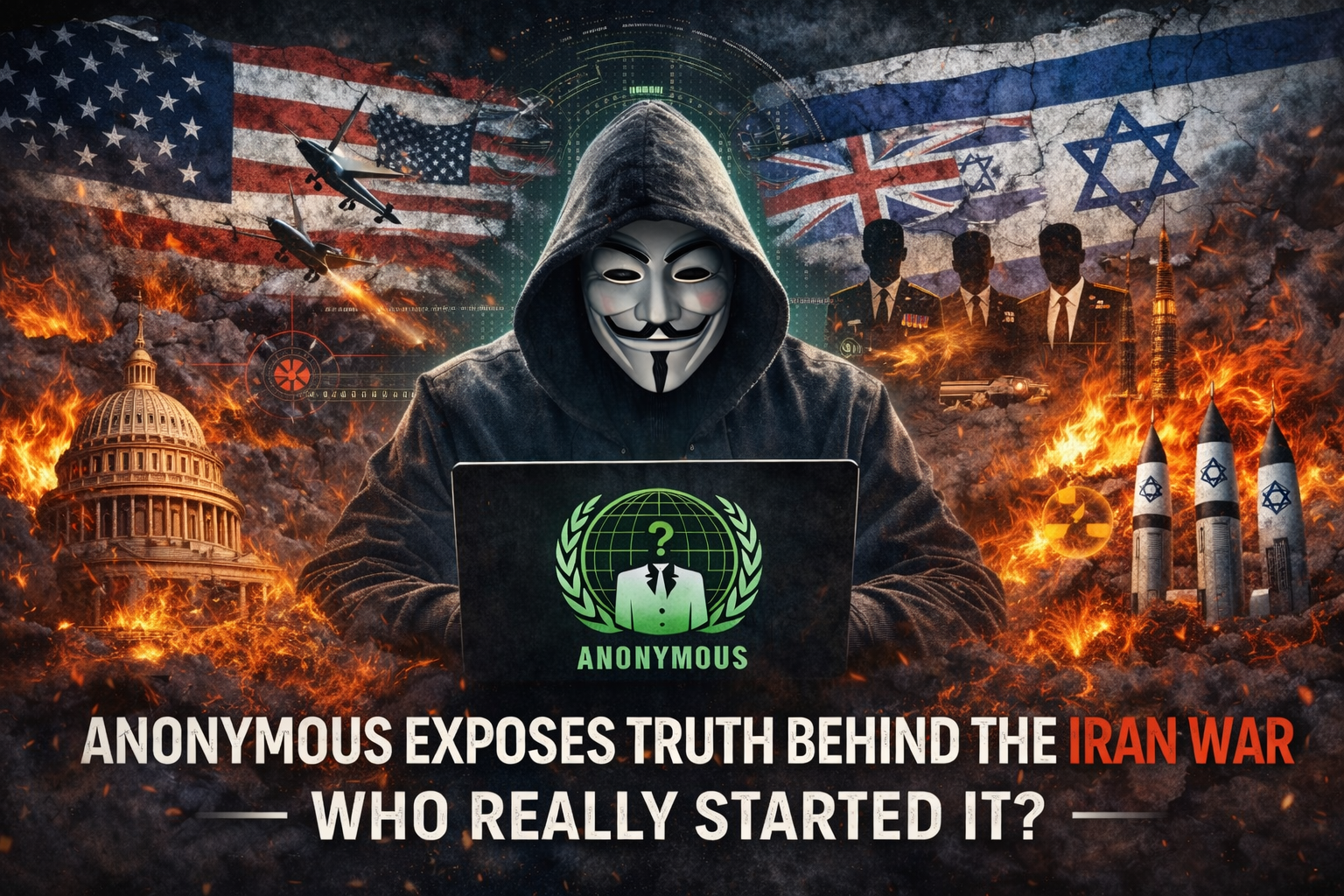
At the center of the conversation is one powerful question: who actually started this war? This article takes a deeper, simplified look at the situation, blending real-world developments with the kind of viewpoint often shared by Anonymous supporters—focused on questioning narratives, looking beyond headlines, and understanding the bigger picture.
A Sudden Beginning That Shocked the World
The conflict didn’t begin slowly. It erupted in a way that caught global attention almost instantly. A series of coordinated airstrikes targeted key locations inside Iran, including military facilities and high-level leadership. These attacks marked the moment when tensions turned into full-scale war. The speed and scale of the strikes made it clear that this was not a minor escalation—it was a decisive move. For many watching around the world, the immediate reaction was confusion. Was this a necessary action taken to prevent something bigger, or was it the opening move in a larger geopolitical strategy? This is where the narrative begins to split.
Anonymous Perspective: Question the First Move
Anonymous, known for challenging authority and official narratives, has taken a clear stance online. Their messaging focuses heavily on one key idea:
the first major attack matters.
From this perspective, the war did not begin as a response—it began as an action taken by powerful forces. Supporters of this view argue that labeling something as “preventive” or “defensive” does not automatically make it so.
Instead, they encourage people to ask deeper questions:
-
What evidence justified the attack?
-
Was there an immediate threat?
-
Who benefits from the conflict starting now?
This approach doesn’t always provide clear answers, but it shifts the focus from surface-level explanations to critical thinking.
Years of Tension Behind the Explosion
While the war itself started suddenly, the conditions leading up to it were anything but sudden. For years, tensions in the region had been building. Disagreements over nuclear development, regional influence, and political ideology created a constant state of pressure. Smaller confrontations, indirect conflicts, and diplomatic breakdowns added fuel to the fire. From a broader view, the war can be seen as the result of a long chain of events rather than a single decision. Anonymous-aligned voices often highlight this timeline, suggesting that conflicts like this are rarely accidental. Instead, they develop gradually, shaped by repeated actions, policies, and power struggles over time.
The Response That Escalated Everything
Following the initial strikes, Iran responded quickly. Missiles and drones were launched toward multiple targets, expanding the conflict beyond a single country. This response changed the scale of the situation. What began as targeted attacks turned into a wider regional confrontation. The impact spread across borders, affecting nearby nations, trade routes, and global markets. Here again, perspectives differ.
Some see this as escalation driven by retaliation. Others argue that once the first strike occurred, a response was inevitable. In that sense, the reaction becomes part of the chain—but not necessarily the beginning.
A Divided Global Reaction
One of the most interesting aspects of this conflict is how divided global opinion has been. Not every country or leader agrees on how the war started or whether it was justified. Some support the actions taken, viewing them as necessary for security. Others question the timing, reasoning, and consequences. This lack of agreement creates uncertainty. When even powerful nations cannot align on a single narrative, it becomes harder for the public to understand what is truly happening. Anonymous supporters often point to this division as proof that the full story may not be as simple as it appears.
Media Narratives and Public Perception
In times of war, information becomes just as powerful as weapons. Different media outlets present the conflict in different ways. Some focus on threats and security concerns. Others highlight the human cost and the initial actions that triggered the war. This creates multiple versions of the same story, each shaped by perspective, priorities, and sometimes political influence. Anonymous frequently challenges this system, encouraging people to look beyond headlines and question how information is presented. Their message is not always about providing an alternative answer—it is about pushing people to think independently.
Targeting Leadership and Strategic Control
As the conflict continues, the focus has shifted beyond military bases to high-level individuals. Targeting leadership sends a strong signal about the nature of the war. It suggests that the goal is not only to weaken military strength but also to disrupt decision-making and control. This kind of strategy often leads to deeper instability, making resolution more difficult. From a critical viewpoint, these actions raise concerns about how far the conflict might go and what the long-term consequences could be.
The Human Cost That Cannot Be Ignored
Amid all the analysis and debate, one reality remains constant: ordinary people are the ones who suffer the most. Families are displaced. Cities are damaged. Daily life is disrupted in ways that cannot be fully captured in headlines. Beyond the immediate region, the effects ripple outward, influencing economies, fuel prices, and global stability. This human side of the story is often what gets lost in political discussions. Yet it is the most important part. Anonymous messaging often brings attention back to this reality, reminding people that behind every decision and every narrative are real lives being affected.
So, Who Really Started the War?
Answering this question depends on how you define “starting.”
If you focus on the first major military action, the answer points to the initial airstrikes that triggered the conflict. If you look at the bigger picture, the answer becomes more complex. Years of tension, rivalry, and unresolved issues all played a role in creating the conditions for war. And if you follow the perspective often shared by Anonymous, the focus shifts again. It becomes less about a single moment and more about the systems, decisions, and power dynamics that made that moment possible.
Why This Question Matters
Understanding how a war begins is not just about assigning blame. It is about learning how conflicts develop and how they can be prevented in the future. In today’s digital world, information spreads faster than ever. Narratives can shape opinions within minutes. Groups like Anonymous play a unique role in this environment by challenging official explanations and encouraging deeper thinking. Whether you agree with their views or not, their presence adds another layer to the conversation—one that pushes people to look beyond the obvious.
Final Thoughts
The Iran war in 2026 is not a simple story with a clear beginning. It is a complex event shaped by history, strategy, and competing perspectives. Some see it as a necessary action. Others see it as the result of aggressive decision-making. And many are still trying to understand where the truth lies. What makes this situation different is not just the conflict itself, but the way it is being discussed. The battle is not only happening on the ground—it is also happening online, in the way people interpret, question, and share information. In the end, the answer to who started the war may never feel completely settled. But the willingness to question, analyze, and seek a deeper understanding—that is what keeps the conversation alive.

