The global conflict involving Iran has entered a new and unexpected phase—one where the battlefield is no longer limited to land, air, or sea. Instead, a significant part of the struggle is unfolding online. In this evolving digital war, groups associated with Anonymous are being linked to cyber support for Iran, adding a new layer of complexity to an already tense situation.
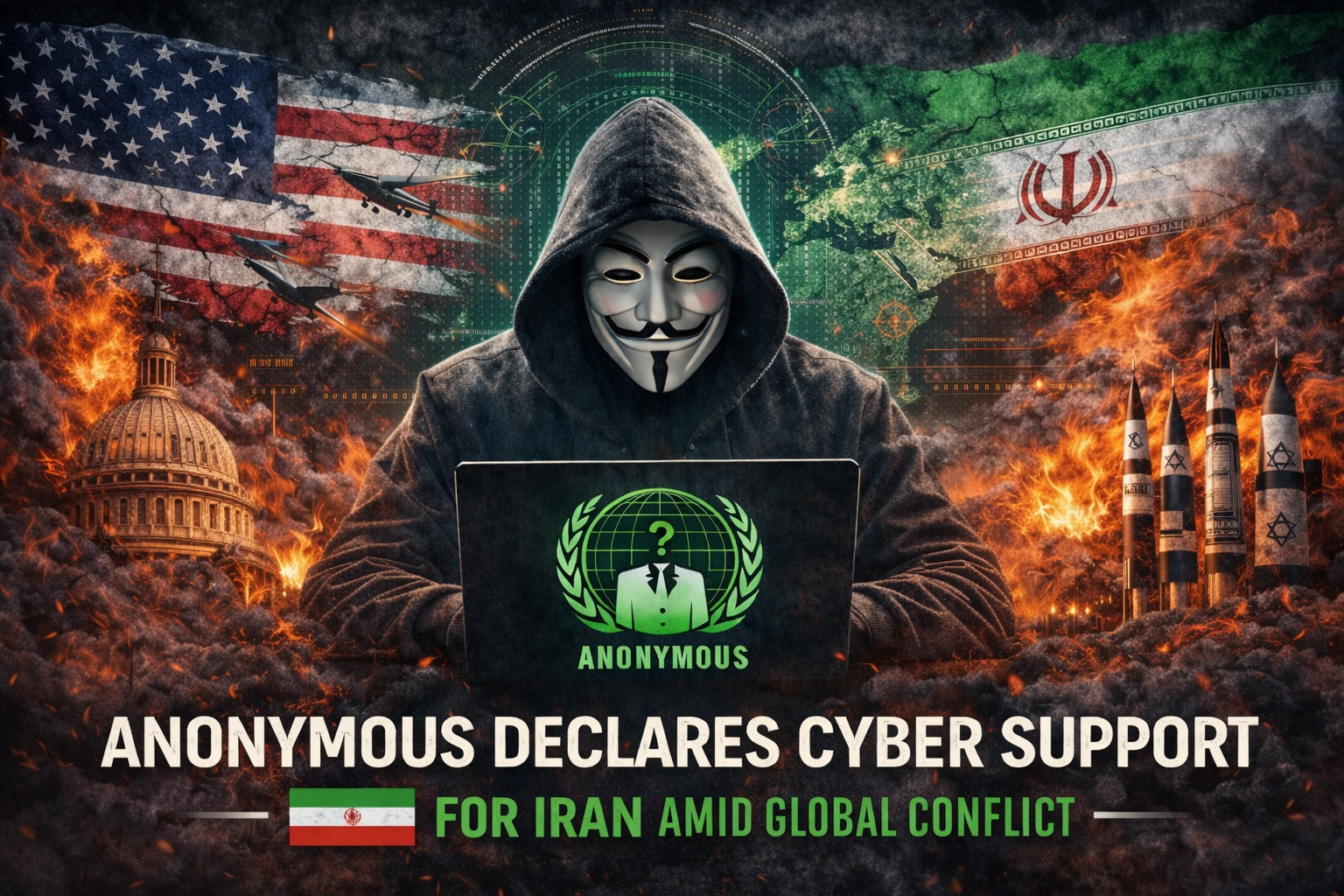
This development highlights how modern conflicts are no longer fought only by governments. Today, decentralized online communities can influence events in ways that were once unimaginable.
A New Kind of War Is Taking Shape
As tensions escalated in early 2026, military actions between major global powers and Iran quickly expanded beyond traditional warfare. Alongside physical operations, cyberattacks began targeting critical infrastructure, communication systems, and major organizations. What makes this conflict different is the speed and scale of digital involvement. Within days, multiple hacker groups became active, launching attacks, sharing data, and spreading narratives across the internet. The result is a hybrid war—one that blends physical force with digital disruption.
Understanding Anonymous and Its Influence
Anonymous is not a single group with clear leadership. It is a decentralized collective of individuals who operate under a shared identity. Anyone can claim to act in its name, which makes it both powerful and unpredictable. Over the years, Anonymous has been involved in various global movements, often supporting causes related to freedom, transparency, and resistance against authority. Their methods typically include:
-
Disrupting websites through coordinated traffic attacks
-
Leaking sensitive information
-
Exposing organizations or governments
-
Using social platforms to spread awareness
Because there is no central command, actions linked to Anonymous can vary widely in intent and scale.
Growing Signs of Digital Support for Iran
In the current conflict, several hacker groups with connections or similarities to Anonymous have been observed aligning themselves with Iran. These groups are not always officially connected, but they often operate with similar motivations and tactics. There has been a noticeable increase in cyber activities targeting organizations perceived to be aligned against Iran. This includes attempts to disrupt services, expose data, and challenge digital systems. What stands out is the level of coordination. Multiple groups appear to be acting simultaneously, suggesting a shared narrative or common goal—even if they are not directly working together.
The Role of Regional Hacker Networks
While Anonymous-linked actors play a visible role, regional hacker groups are carrying out much of the direct activity. These groups often focus on specific targets and use more structured methods.
Some of their actions include:
-
Attacking large companies connected to defense or logistics
-
Extracting and releasing internal data
-
Interrupting operations of key services
In many cases, these groups present themselves as independent activists. However, their level of sophistication has led some observers to believe they may have indirect support or alignment with larger national interests. This mix of independent and potentially state-aligned activity makes the situation difficult to fully understand.
Information Control and the Digital Narrative
Beyond cyberattacks, the conflict is also being shaped by control over information. Restrictions on internet access within Iran have created gaps in communication. This has made it harder for people inside the country to share real-time updates, while external voices continue to shape global perception. Anonymous and similar groups often step into this space, using online platforms to spread their version of events. They aim to influence public opinion, challenge official narratives, and draw attention to their cause. In this way, the conflict is not just about physical damage—it is also about who controls the story.
Why Anonymous May Be Supporting Iran
Anonymous has a history of aligning with causes that challenge powerful governments or dominant narratives. In many cases, members of the collective support what they perceive as the underdog. In the context of this conflict, some individuals associated with Anonymous may view Iran as being unfairly targeted. This perception can lead to digital support in the form of cyber operations or online campaigns. However, it is important to understand that Anonymous is not united in its views. Different participants may have completely different opinions about the same situation.
The Rise of Hacktivism in Global Conflicts
The involvement of Anonymous highlights a larger shift in global dynamics. Hacktivism—once seen as a fringe activity—is now playing a central role in major geopolitical events.
Today’s hacktivists are capable of:
-
Reaching global audiences instantly
-
Disrupting large-scale systems
-
Exposing sensitive information
-
Supporting or opposing governments
This level of influence was once limited to nation-states. Now, it is accessible to decentralized online groups.
The Hidden Risks of Cyber Involvement
While cyber operations may seem less destructive than traditional warfare, they can have serious real-world consequences.
A successful cyberattack can:
-
Interrupt healthcare systems
-
Disrupt power and water supply
-
Affect financial transactions
-
Create panic among civilians
As more groups join the digital battlefield, the risk of unintended consequences increases. A single attack can escalate tensions and trigger wider responses.
Where Activism Meets Conflict
One of the most challenging aspects of this situation is the blurred line between activism and warfare. From the perspective of Anonymous, cyber actions may be seen as a form of protest or resistance. But from the viewpoint of governments, the same actions can be interpreted as hostile attacks. This difference in perception creates uncertainty. Without clear rules or boundaries, it becomes harder to control how far these activities might go.
What Lies Ahead
The involvement of Anonymous in supporting Iran signals a shift in how conflicts will be fought in the future.
Several trends are becoming clear:
-
Online groups will continue to influence global events
-
Cyber warfare will grow alongside traditional military actions
-
Information will become a key weapon
-
Decentralized actors will play a larger role in conflicts
This new reality means that future wars may be just as much about data and networks as they are about territory.
Conclusion
The emergence of Anonymous-linked support for Iran reflects the changing nature of global conflict. What was once a space dominated by governments and armies is now being shaped by individuals operating behind screens. The digital world has become a powerful arena where influence, disruption, and narrative control can shape real-world outcomes. As this situation continues to unfold, one thing is certain—the internet is no longer just a place for communication. It is a battlefield of its own, and groups like Anonymous are proving that even without a formal structure, they can have a significant impact on global events.

