The 2026 Middle East war is not only unfolding on the ground but also across the digital world. While governments are taking positions through military and political actions, a different kind of influence is rising online. Hacktivist movements, especially Anonymous, have become part of the conversation—and their stance is drawing global attention.
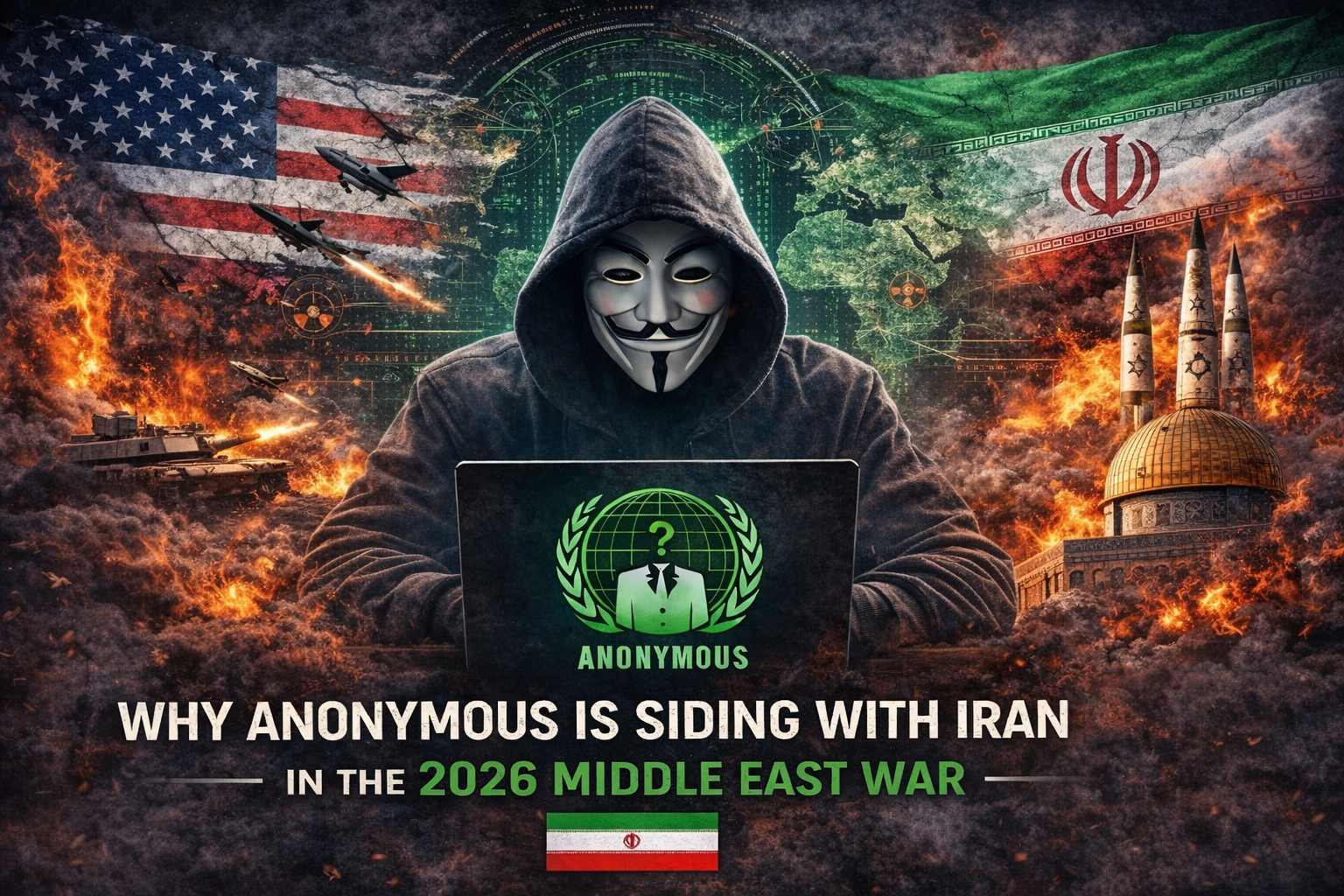
Many online voices linked to Anonymous appear to be leaning toward Iran. This has sparked curiosity and debate. Why would a decentralized hacker collective support a country often portrayed negatively in global politics? To understand this, we need to go deeper than headlines and explore the mindset behind their actions.
A Conflict Driven by Narratives
Today’s wars are no longer just about weapons and soldiers. They are also about stories, perception, and influence. In the current conflict, multiple narratives are competing for global attention. Images and reports circulating online show heavy damage inside Iran. Civilian areas have been affected, and many ordinary people are struggling to cope with the impact of ongoing attacks. Families are facing uncertainty, fear, and disruption to their daily lives. At the same time, many online observers feel that global coverage is not balanced. Some believe that the human cost inside Iran is not being highlighted enough compared to political messaging. Anonymous has always positioned itself as a challenger of dominant narratives. From their perspective, supporting Iran may not mean supporting its government—it may mean drawing attention to what they see as ignored realities.
The Humanitarian Angle
One of the biggest factors influencing Anonymous’ stance is the situation of civilians.
As the conflict intensified, stories began to surface about damaged homes, displaced families, and shortages of basic resources. Electricity cuts, limited access to food, and disruptions in daily life have become part of the reality for many people. Another major concern is communication. Internet access within Iran has been restricted during the conflict, making it difficult for people to share their experiences with the outside world. This creates a situation where real voices are limited, and information becomes controlled or incomplete.
For Anonymous, this is a serious issue. The group has long supported free access to information. When communication is restricted, they often step in to amplify voices they believe are being silenced.
The Digital Battlefield
The 2026 war is not only physical—it is deeply digital.
Cyberattacks, data leaks, and online campaigns are happening alongside military operations. Various groups have become active in this space, targeting systems, spreading messages, and trying to influence public opinion.
Anonymous is no stranger to this kind of activity. As a decentralized network, it often participates in cyber campaigns that align with its values. However, their actions are not based on traditional alliances. They do not follow governments or treaties. Instead, they act based on what they see as right or wrong. In this case, their actions seem to be driven by a belief that power imbalances are shaping the conflict.
Understanding Anonymous’ Mindset
To understand why Anonymous appears to support Iran, it’s important to understand how the group operates.
Anonymous is not a single organization. It has no central leadership. It is made up of individuals who share similar ideas, such as freedom of speech, anti-censorship, and resistance to authority.
Over the years, Anonymous has taken action against many different governments—including Iran itself. During times of internal protests, they have supported Iranian citizens against their own authorities.
So why the shift now?
The answer lies in context.
Anonymous does not follow a fixed side. Their position changes depending on the situation. When a government suppresses its people, they oppose it. When a country faces external pressure or attack, they may shift focus toward opposing that external force.
This flexibility is a defining feature of Anonymous. Their loyalty is not to countries—it is to causes.
Internet Restrictions and Information Control
One of the key elements shaping this situation is the restriction of internet access.
During the conflict, connectivity inside Iran has been reduced, limiting the flow of information. People are unable to share updates freely, and outside audiences receive only partial insights into what is happening. This creates an environment where narratives can be shaped more easily, as fewer firsthand accounts are available. In such cases, external voices begin to dominate the conversation. Opinions, assumptions, and interpretations fill the gaps left by missing information.
Anonymous often steps into these situations. By sharing content, launching campaigns, or spreading alternative viewpoints, they attempt to challenge what they see as incomplete or one-sided narratives.
Distrust of Global Power Structures
Another major factor influencing Anonymous’ stance is a long-standing distrust of powerful governments. Anonymous has historically criticized military interventions, especially in regions like the Middle East. Many within the movement believe that past interventions have created instability rather than long-term solutions.
There is a growing perception online that similar patterns are repeating. Some see the current conflict as another example of powerful nations shaping events in ways that may not benefit local populations. Because of this, certain voices within Anonymous view Iran not necessarily as an aggressor, but as a country under pressure. This perspective is not universally accepted, but it plays a significant role in shaping online narratives.
Information Warfare and Online Influence
Every modern conflict includes an information battle. Social media platforms are filled with content from different sides, each trying to influence global opinion. Some of this content is genuine, while other parts may be exaggerated or misleading.
Campaigns are being run to promote certain viewpoints, often using coordinated messaging and digital strategies. Anonymous operates within this same environment. However, they often claim their goal is to expose manipulation rather than contribute to it. Whether they succeed in doing so is debated, but their presence adds another layer to the already complex information landscape.
Changing Public Sentiment Inside Iran
Another important aspect to consider is how public opinion within Iran has evolved. Before the conflict, many citizens were openly critical of their government. Protests and dissatisfaction were visible, and there were clear divisions within society. However, the start of external attacks has shifted priorities for many people. In times of conflict, national identity often becomes stronger. Even those who disagree with their leadership may feel the need to stand together in the face of outside threats. Fear of instability, economic collapse, or long-term damage has led to a more unified response among parts of the population. Anonymous appears to recognize this shift. Their messaging often focuses on the people rather than political leadership.
A Familiar Pattern
If we look at Anonymous’ past actions, a clear pattern emerges.
They tend to:
Support citizens during internal struggles
Oppose governments during censorship
Speak against external military interventions
This pattern is visible in multiple global events over the years. In the current conflict, their stance follows the same logic. Their support appears to be directed toward what they see as the affected population rather than political systems.
The Larger Perspective
At a deeper level, this situation is not just about Iran. It is about control over information and influence. Governments rely on traditional tools like diplomacy, military strength, and official communication. Hacktivist groups rely on digital tools—information sharing, leaks, and online campaigns. Anonymous operates entirely in this digital space. By aligning with Iran in this context, they are not simply choosing a side. They are challenging the dominant narrative and trying to reshape how people view the conflict.
Conclusion
The question of why Anonymous is siding with Iran in the 2026 Middle East war does not have a single answer. It is shaped by multiple factors—civilian impact, restricted communication, distrust of powerful nations, and the rise of digital warfare. Anonymous is driven by ideology rather than loyalty. Their actions reflect a broader belief in challenging authority, amplifying voices, and questioning dominant narratives. In this conflict, they appear to believe that the voices needing attention are coming from Iran. As the war continues, both the physical and digital battles will evolve. And in that digital space, Anonymous will likely remain an active and influential force.

