Artificial intelligence and quantum computing are often described as two of the most transformative technologies of the twenty-first century. Individually, each has the potential to reshape industries, scientific research, and economic systems. Together, their convergence represents a fundamental shift in how complex problems may be solved in the future. AI thrives on data, pattern recognition, and optimization, while quantum computing introduces a radically different approach to computation based on the principles of quantum mechanics. This intersection is not about replacing classical computers overnight, but about expanding the boundaries of what is computationally possible. Understanding how AI and quantum computing complement each other provides insight into a future where problems once considered unsolvable may become tractable.
Understanding Quantum Computing at a Conceptual Level
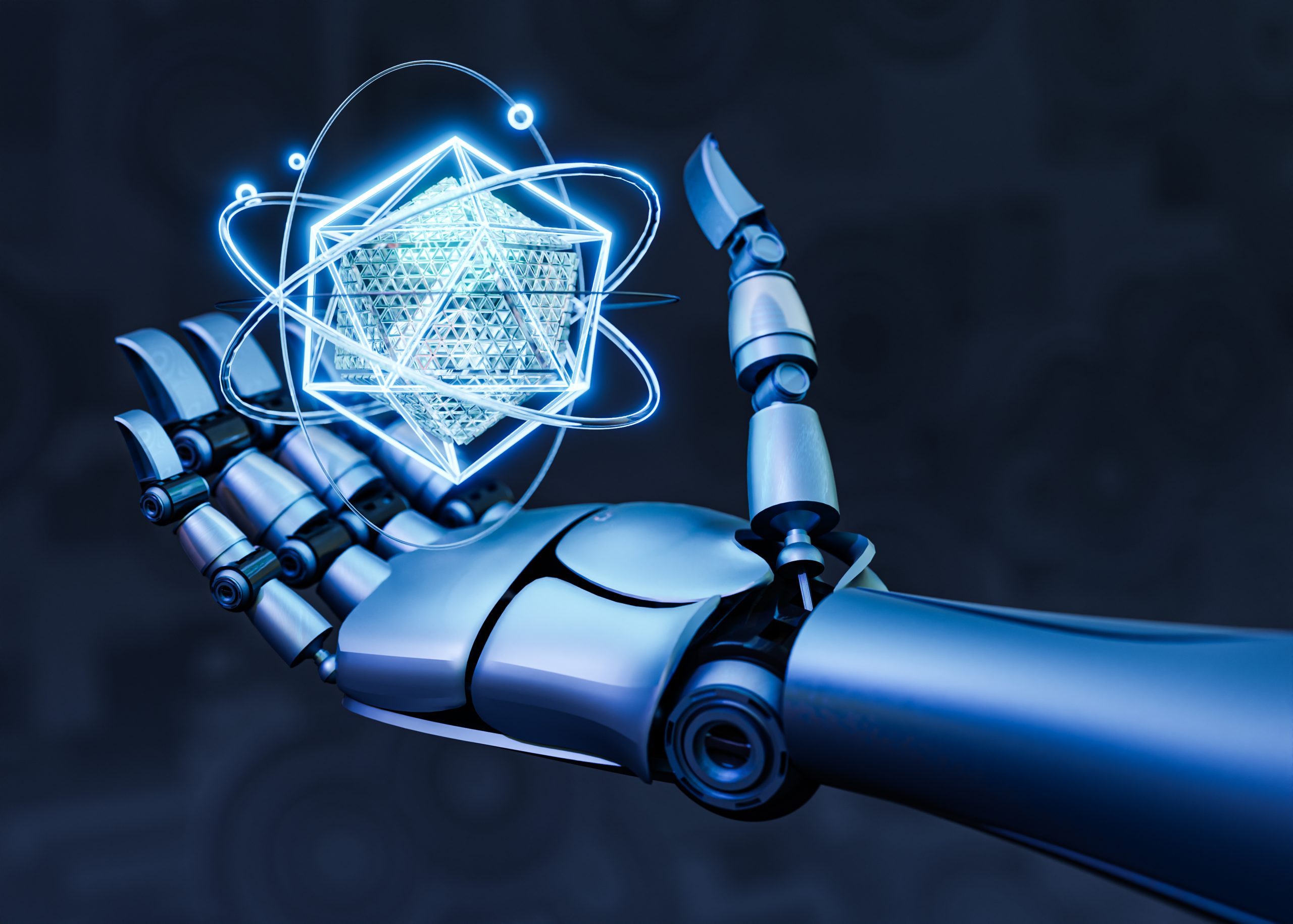
Quantum computing differs from classical computing in how information is represented and processed. Classical computers rely on bits that exist in a state of either zero or one. Quantum computers use quantum bits, or qubits, which can exist in multiple states simultaneously due to superposition. Qubits can also become entangled, meaning the state of one qubit is directly related to the state of another, even at a distance. These properties allow quantum computers to process many possibilities in parallel.
This parallelism gives quantum computing its potential advantage in solving certain types of problems, particularly those involving large-scale optimization, simulation, and probabilistic analysis. However, quantum computers are extremely sensitive to environmental interference and remain difficult to build and scale. As a result, their practical use today is limited to specialized research and early experimental applications.
Why Classical Computing Has Limits
Many real-world problems grow exponentially in complexity as their size increases. Classical computers struggle with tasks such as simulating molecular interactions, optimizing massive networks, or searching enormous solution spaces. These limitations create bottlenecks for AI models that require extensive computation. Quantum computing offers a potential path beyond these constraints by approaching computation in fundamentally different ways.
How Artificial Intelligence Benefits from Quantum Computing
AI systems, especially those based on machine learning and deep learning, rely heavily on computational power. Training advanced models requires processing vast datasets and performing billions of calculations. Quantum computing has the potential to accelerate certain aspects of AI by solving optimization and linear algebra problems more efficiently than classical methods.
Quantum-enhanced machine learning algorithms aim to reduce the time required to train models or explore solution spaces more effectively. For example, quantum algorithms can potentially speed up clustering, pattern recognition, and feature selection tasks. While these applications are still largely theoretical or experimental, they highlight how quantum computing could amplify AI capabilities rather than replace existing methods.
Optimization and Learning Efficiency
Many AI problems involve finding optimal solutions among countless possibilities, such as tuning neural network parameters or scheduling resources. Quantum optimization algorithms may allow AI systems to converge on better solutions faster. This could improve model performance while reducing energy consumption, a growing concern as AI systems scale.
How AI Accelerates Quantum Computing Development
The relationship between AI and quantum computing is not one-directional. AI also plays a critical role in advancing quantum computing itself. Designing quantum hardware, controlling qubits, and correcting errors are extraordinarily complex tasks. AI systems help optimize quantum circuit design, identify error patterns, and stabilize fragile quantum states.
Machine learning algorithms analyze experimental data from quantum systems to improve calibration and control strategies. This feedback loop accelerates progress by automating tasks that would otherwise require extensive human expertise. AI-driven simulation tools also help researchers explore quantum behaviors without relying solely on costly physical experiments.
Error Correction and System Stability
One of the biggest challenges in quantum computing is error correction. Qubits are prone to noise and decoherence, which can disrupt calculations. AI models analyze noise patterns and predict failures, enabling more effective error mitigation strategies. These improvements are essential for building reliable, scalable quantum systems.
Hybrid Classical-Quantum AI Systems
In the near term, the most practical approach is hybrid systems that combine classical computing, AI, and quantum processing. In these systems, classical computers handle data preprocessing and control logic, AI models guide decision-making, and quantum processors solve specific subproblems where they offer an advantage.
This hybrid model reflects the reality that quantum computers will not replace classical systems anytime soon. Instead, they will function as specialized accelerators within broader computational architectures. AI acts as the orchestrator, determining when and how quantum resources should be used.
Realistic Use Cases for Hybrid Models
Hybrid AI-quantum systems are being explored in areas such as financial modeling, materials science, logistics optimization, and drug discovery. These fields involve complex optimization and simulation tasks where quantum algorithms may provide incremental but meaningful improvements over classical approaches.
Implications for Scientific Research
The intersection of AI and quantum computing holds particular promise for scientific discovery. In chemistry and materials science, quantum simulations could model molecular interactions with unprecedented accuracy. AI systems interpret these simulations to identify new materials, catalysts, or pharmaceuticals more efficiently.
In physics, AI-assisted quantum simulations help researchers explore phenomena that are difficult to observe experimentally. These tools expand theoretical understanding and guide experimental design. The combination of AI and quantum computing effectively creates a new scientific methodology driven by computational exploration.
Accelerating Discovery Cycles
Traditional scientific research often involves long cycles of hypothesis, experimentation, and analysis. AI and quantum computing compress these cycles by rapidly generating and testing hypotheses in silico. This acceleration has the potential to transform how knowledge is produced across disciplines.
Economic and Industrial Impact
The convergence of AI and quantum computing will influence global economic competition. Countries and companies that lead in these technologies may gain significant strategic advantages. Industries such as finance, energy, logistics, and pharmaceuticals are investing heavily in research to prepare for future breakthroughs.
However, the economic benefits will not materialize overnight. Quantum hardware remains expensive and specialized, and AI integration requires advanced expertise. Early adopters focus on long-term positioning rather than immediate returns. This creates a landscape where patience, research investment, and talent development are critical.
Workforce and Skill Implications
The intersection of AI and quantum computing demands a new generation of interdisciplinary skills. Professionals must understand machine learning, quantum physics, and advanced mathematics. Educational institutions and training programs will play a key role in preparing the workforce for this convergence.
Ethical and Security Considerations
The power of AI-enhanced quantum computing raises ethical and security concerns. Quantum algorithms could potentially break existing cryptographic systems, threatening data security worldwide. AI systems might accelerate this capability, increasing the urgency of developing quantum-resistant encryption.
Ethical questions also arise around access and control. If quantum-AI capabilities are concentrated among a few actors, power imbalances could deepen. Responsible governance frameworks are needed to ensure that these technologies are developed and deployed in ways that benefit society broadly.
Transparency and Trust
As systems become more complex, transparency becomes more challenging. Understanding decisions made by AI systems operating on quantum processes will require new approaches to explainability and accountability. Maintaining trust will depend on clear standards and oversight mechanisms.
Technical Challenges and Current Limitations
Despite the excitement, significant technical challenges remain. Quantum computers are still limited in scale, stability, and accessibility. Many proposed quantum AI algorithms assume ideal conditions that do not yet exist in practice. Bridging the gap between theory and real-world application will take time and sustained effort.
AI models themselves face limitations related to data quality, bias, and interpretability. Combining these challenges with the complexities of quantum systems requires careful engineering and realistic expectations. Progress will likely be incremental rather than revolutionary in the short term.
The Long-Term Vision of AI and Quantum Convergence
In the long term, the convergence of AI and quantum computing could redefine computation itself. Problems involving massive complexity, uncertainty, and interdependence may become solvable in ways that are currently unimaginable. This could transform fields ranging from climate modeling and economics to medicine and fundamental science.
However, the ultimate impact will depend on human choices. Investment priorities, ethical standards, and international collaboration will shape how these technologies evolve. The future is not determined solely by technical possibility, but by collective responsibility.
Conclusion
The intersection of artificial intelligence and quantum computing represents a frontier of technological potential. By combining AI’s ability to learn and adapt with quantum computing’s unique computational power, humanity may unlock solutions to problems that have long resisted classical approaches. While practical applications remain in early stages, progress is accelerating through hybrid systems and interdisciplinary research. Challenges related to hardware, ethics, security, and skills must be addressed thoughtfully. The convergence of AI and quantum computing is not a distant abstraction, but a developing reality that will shape the future of science, industry, and society.

