Artificial intelligence is transforming industries at an unprecedented pace, but its rapid advancement is also creating new cybersecurity challenges for the cryptocurrency sector. Security researchers are increasingly warning that AI-powered attacks could become one of the biggest threats facing smart contracts, decentralized finance (DeFi), and blockchain applications over the coming years.
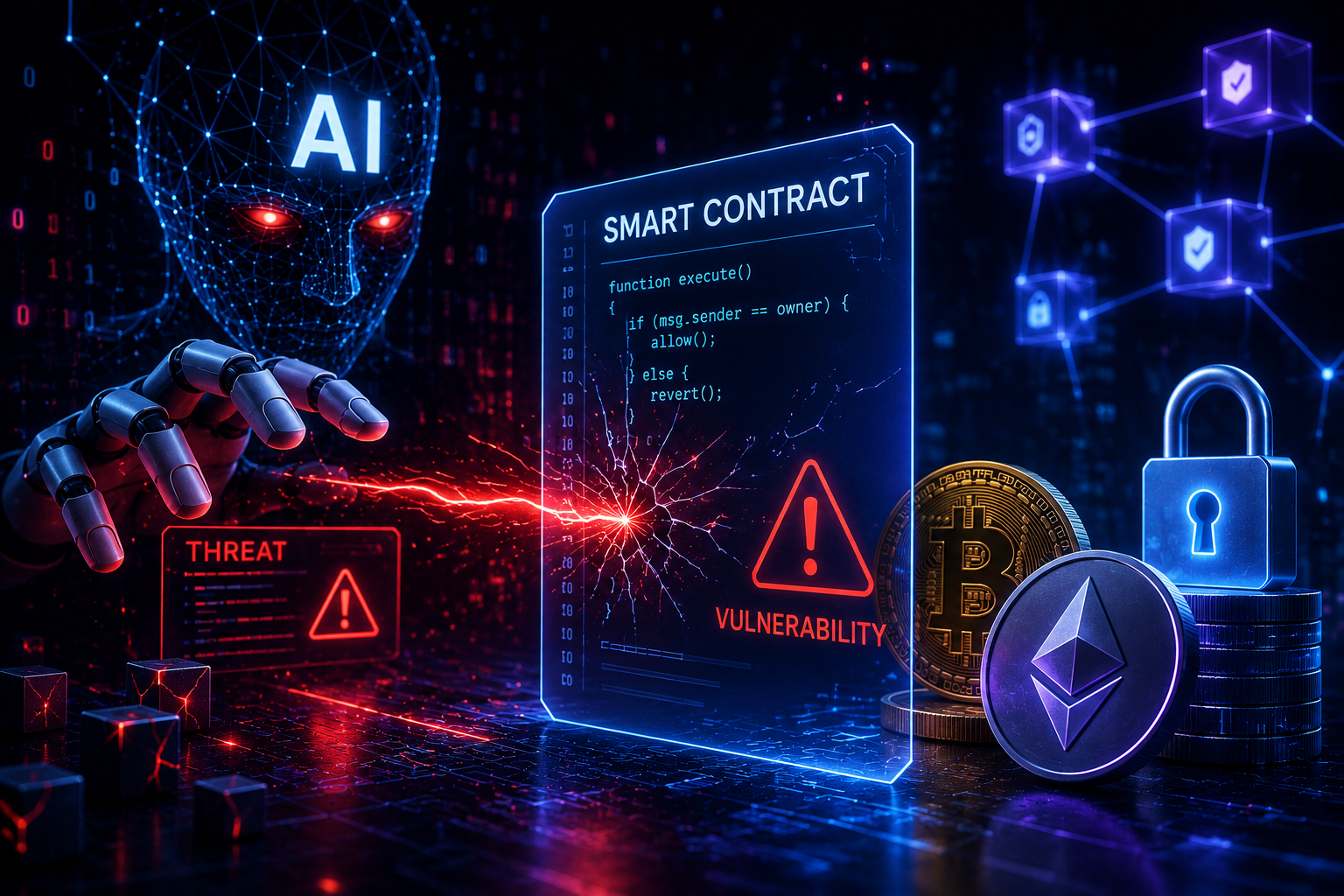
Traditionally, hackers relied on manual code analysis and conventional exploit techniques to identify vulnerabilities. Today, advanced AI tools can automate much of that process, allowing attackers to discover weaknesses faster, launch more sophisticated attacks, and adapt their strategies in real time.
As blockchain technology continues expanding into global finance, developers are racing to strengthen smart contract security before AI-powered cybercriminals gain a significant advantage.
Artificial Intelligence Is Changing Cybersecurity
Artificial intelligence has become a valuable tool for both cybersecurity professionals and cybercriminals. Security teams now use AI to analyze blockchain transactions, identify suspicious activity, detect vulnerabilities, and automate incident response. At the same time, attackers are leveraging similar technologies to accelerate exploit discovery, improve phishing campaigns, and search massive codebases for weaknesses. This growing technological arms race is reshaping how blockchain security is approached across the industry.
Why Smart Contracts Are Attractive Targets
Smart contracts automatically execute transactions without requiring human intervention. They manage billions of dollars across decentralized finance platforms, NFT marketplaces, gaming ecosystems, and tokenized asset networks. Because smart contracts often control large amounts of digital assets, even a single vulnerability can result in millions of dollars being stolen within minutes. Unlike traditional software, deployed smart contracts are often difficult or impossible to modify without governance approval, making prevention far more important than recovery.
How AI Could Help Attackers
Artificial intelligence has the potential to dramatically increase the speed and sophistication of cyberattacks targeting blockchain applications. AI systems can rapidly analyze smart contract code, compare it against previously exploited vulnerabilities, identify unusual execution paths, and suggest potential attack methods. Machine learning models may also help attackers automate vulnerability discovery across thousands of blockchain projects simultaneously, reducing the time required to identify profitable targets. As AI capabilities continue improving, even less experienced attackers could gain access to increasingly powerful offensive tools.
DeFi Platforms Face Growing Risks
Decentralized finance remains one of the largest users of smart contracts. Lending platforms, decentralized exchanges, staking protocols, yield farming applications, and liquidity pools all rely heavily on automated contract execution. Because these systems frequently manage substantial financial value, they represent attractive opportunities for attackers using AI-assisted vulnerability analysis. Projects with unaudited or outdated code may face significantly greater exposure as automated exploit techniques become more advanced.
AI-Powered Phishing Is Becoming More Convincing
The threat extends beyond smart contracts themselves. Artificial intelligence is also making phishing attacks far more effective. Attackers can now generate realistic emails, fake support conversations, fraudulent websites, and convincing social engineering campaigns that closely resemble legitimate communications. Crypto users may find it increasingly difficult to distinguish authentic messages from malicious ones, increasing the risk of wallet theft and credential compromise.
Can AI Also Improve Blockchain Security?
While AI creates new challenges, it also provides powerful defensive capabilities.
Blockchain security firms increasingly use artificial intelligence to:
- Detect suspicious wallet activity.
- Monitor unusual transaction patterns.
- Identify potential smart contract vulnerabilities.
- Analyze blockchain data in real time.
- Prioritize security alerts.
- Improve threat intelligence.
These capabilities allow defenders to respond more quickly to emerging threats while reducing the time required to investigate complex security incidents.
The Importance of Smart Contract Audits
As AI-assisted attacks become more sophisticated, comprehensive security audits will become even more important. Independent audits help identify vulnerabilities before deployment and provide developers with opportunities to strengthen code against future attacks. Many blockchain projects are also adopting continuous monitoring systems that scan deployed contracts for unusual behavior rather than relying solely on pre-launch reviews. Security is increasingly becoming an ongoing process rather than a one-time event.
Why Developers Must Adapt
Blockchain developers can no longer assume that traditional security practices alone will be sufficient. Future development strategies may increasingly include AI-assisted defensive tools capable of automatically reviewing code, detecting vulnerabilities, and recommending improvements before deployment. Combining human expertise with AI-powered analysis could significantly reduce the likelihood of exploitable weaknesses reaching production environments.
Investors Should Remain Cautious
Security incidents continue influencing cryptocurrency prices and investor confidence. Before investing in blockchain projects, market participants should evaluate whether protocols have undergone professional security audits, maintain active bug bounty programs, and demonstrate ongoing commitment to improving security. Projects that prioritize transparency and cybersecurity are generally better positioned to maintain long-term trust. Although no blockchain system can eliminate risk entirely, strong security practices significantly reduce the likelihood of major exploits.
Regulation May Increase
Governments and financial regulators are paying closer attention to cybersecurity risks associated with blockchain technology. As AI-powered threats become more common, regulators may introduce stricter security expectations for cryptocurrency platforms, decentralized finance protocols, and tokenized financial products. Future compliance requirements could include mandatory security assessments, continuous monitoring, and enhanced risk management standards. While additional regulation may increase compliance costs, it could also strengthen confidence across the digital asset industry.
The Future of AI and Blockchain Security
Artificial intelligence is expected to become one of the defining technologies shaping blockchain security over the next decade. Developers will increasingly rely on AI to automate vulnerability detection, improve smart contract verification, and strengthen network defenses. Meanwhile, cybercriminals will likely continue adopting more advanced AI systems to identify new attack opportunities. The long-term outcome will depend on whether defensive innovation can continue outpacing offensive capabilities.
Conclusion
Artificial intelligence is rapidly transforming the cybersecurity landscape, and the cryptocurrency industry is no exception. As AI-powered tools become more sophisticated, smart contracts, decentralized finance platforms, and blockchain applications face an entirely new generation of security challenges. While these emerging threats are significant, AI also offers powerful defensive capabilities that can help developers identify vulnerabilities, strengthen smart contract security, and respond to attacks more efficiently. The future of blockchain security will likely depend on how effectively the industry combines human expertise, advanced AI technology, and robust security practices to protect the next generation of decentralized financial infrastructure.

