In today’s digital world, data is everywhere. From the messages you send on your phone to the financial records stored by banks, almost everything depends on data. But simply having data is not enough. What truly matters is whether that data is accurate, reliable, and consistent. This is where the concept of data integrity comes in. Data integrity is one of the most important pillars of information security and data management. Whether you are running a small business, managing a website, or working in a large organization, understanding data integrity can help you protect valuable information and make better decisions. Let’s explore what data integrity really means, why it matters, and how it can be maintained.
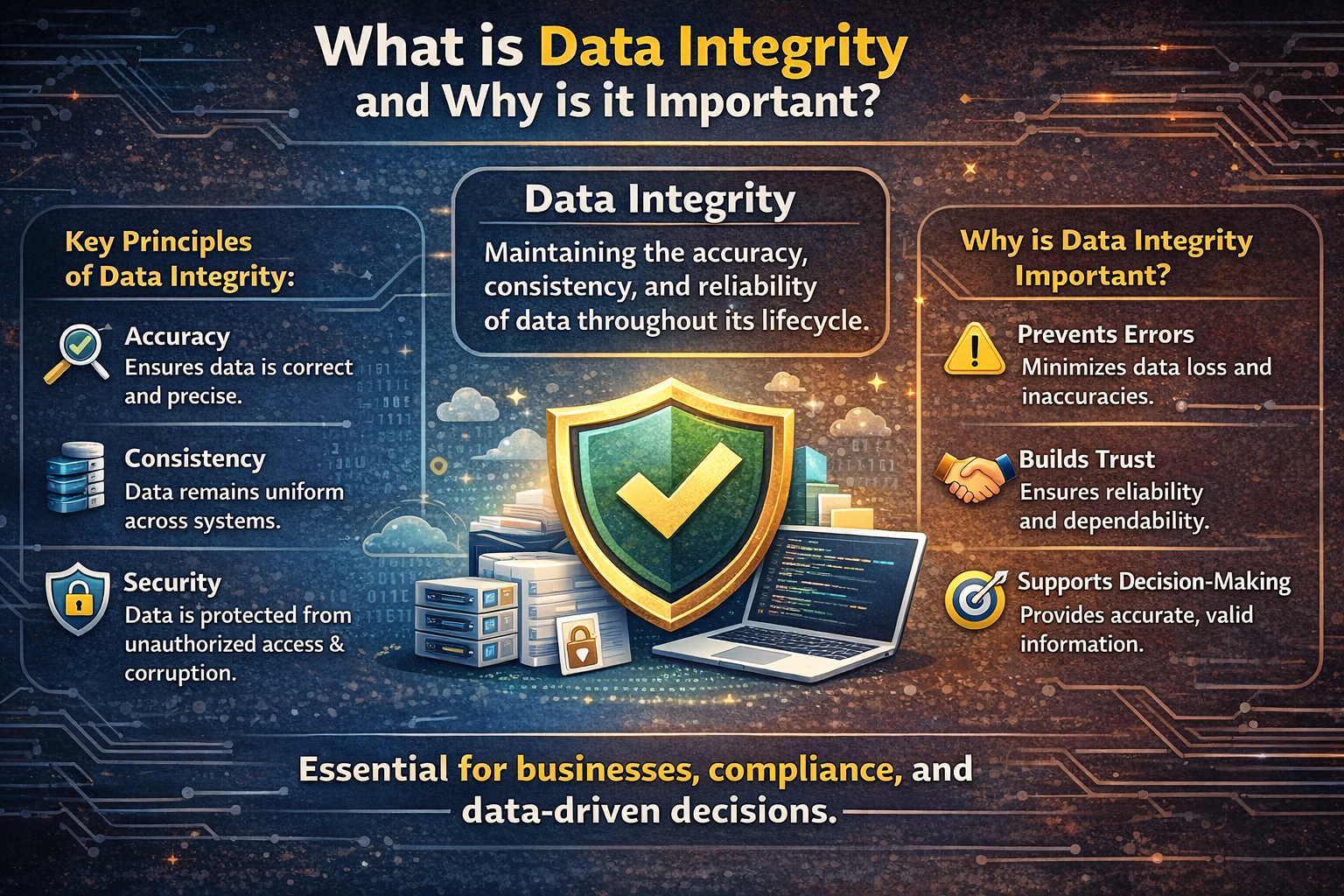
What is Data Integrity
Data integrity refers to the accuracy, consistency, and reliability of data throughout its entire lifecycle. This means that data should remain correct and unchanged from the moment it is created until it is deleted. In simple terms, data integrity ensures that the information you are using is trustworthy. For example, if a customer’s payment details are stored incorrectly, it can lead to failed transactions or financial loss. Similarly, if medical records are altered or corrupted, it can result in serious consequences for patient care. Data integrity ensures that such problems do not happen.
Types of Data Integrity
Data integrity is not just one single concept. It is divided into different types that work together to ensure data remains accurate and consistent.
1. Physical Integrity
Physical integrity focuses on protecting data from physical issues such as hardware failures, power outages, or natural disasters.
For example, if a server crashes or a hard drive fails, data can be lost or corrupted. Backup systems and disaster recovery plans are used to maintain physical integrity.
2. Logical Integrity
Logical integrity ensures that data remains accurate and meaningful within a system. It includes several sub types:
Entity Integrity
This ensures that each record in a database is unique. For example, a customer ID should not be duplicated.
Referential Integrity
This ensures that relationships between data remain consistent. For example, an order should always be linked to a valid customer.
Domain Integrity
This ensures that data entered into a system follows defined rules. For example, a phone number should contain only digits.
User Defined Integrity
This includes custom rules set by businesses based on their needs.
Why is Data Integrity Important
Data integrity is critical for both individuals and organizations. Without it, data becomes unreliable and decisions based on it can be wrong.
Let’s look at the key reasons why data integrity matters.
1. Accurate Decision Making
Businesses rely heavily on data to make decisions. If the data is incorrect, the decisions will also be flawed.
For example, if sales data is inaccurate, a company may invest in the wrong products or markets.
Data integrity ensures that decisions are based on correct and reliable information.
2. Trust and Reputation
Customers trust organizations to handle their data responsibly. If data is lost or altered, it can damage trust.
For example, if a company leaks customer information or shows incorrect account balances, customers may stop using its services.
Maintaining data integrity helps build long term trust.
3. Compliance with Regulations
Many industries have strict rules about how data should be handled. These include financial, healthcare, and legal sectors.
Organizations must ensure data accuracy and protection to comply with laws. Failure to do so can result in heavy penalties.
4. Improved Operational Efficiency
When data is accurate, processes run smoothly. Employees do not have to waste time fixing errors or verifying information.
For example, in an ecommerce business, accurate inventory data ensures that customers can order products without issues.
5. Prevention of Data Loss
Data integrity also helps prevent data loss. With proper systems in place, organizations can recover data even after unexpected failures.
Common Threats to Data Integrity
Data integrity can be affected by various factors. Understanding these threats is important to prevent them.
1. Human Error
Mistakes made by people are one of the biggest causes of data issues. This includes incorrect data entry, accidental deletion, or improper updates.
2. Cyber Attacks
Hackers often target data to manipulate or steal it. Attacks such as malware, ransomware, and unauthorized access can compromise data integrity.
3. Software Bugs
Errors in software can lead to incorrect data processing or storage. This can result in corrupted or inconsistent data.
4. Hardware Failures
Hard drive crashes, server failures, or power outages can damage data and affect its integrity.
5. Poor Data Management Practices
Lack of proper rules and processes can lead to inconsistent data. For example, if multiple systems store the same data differently, it can create confusion.
How to Maintain Data Integrity
Maintaining data integrity requires a combination of technology, processes, and awareness.
Here are some effective ways to ensure data integrity.
1. Data Validation
Data validation ensures that only correct data is entered into a system.
For example, forms can be designed to accept only valid email addresses or numbers within a specific range.
2. Access Control
Not everyone should have access to all data. Limiting access reduces the risk of unauthorized changes.
Role based access ensures that users can only view or modify data relevant to their role.
3. Regular Backups
Creating backups is one of the simplest and most effective ways to protect data.
If data is lost or corrupted, it can be restored from a backup.
4. Encryption
Encryption protects data from unauthorized access. Even if data is intercepted, it cannot be read without the correct key.
5. Audit Trails
Audit trails track changes made to data. This helps identify who made changes and when.
It is useful for detecting errors or suspicious activities.
6. Data Cleaning
Over time, data can become outdated or inconsistent. Regular data cleaning ensures that it remains accurate and relevant.
7. Use of Reliable Systems
Using trusted software and hardware reduces the risk of data corruption.
Regular updates and maintenance also help prevent issues.
Real Life Examples of Data Integrity
Understanding data integrity becomes easier when we look at real life scenarios.
Banking Systems
Banks handle millions of transactions every day. Even a small error can cause financial loss.
Data integrity ensures that account balances, transactions, and customer details remain accurate.
Healthcare Systems
Hospitals store sensitive patient data such as medical history and prescriptions.
If this data is incorrect, it can lead to wrong treatments.
Maintaining data integrity is critical for patient safety.
Ecommerce Platforms
Online stores depend on accurate data for product listings, prices, and inventory.
If a product is shown as available but is actually out of stock, it leads to poor customer experience.
Social Media Platforms
User data such as profiles, messages, and posts must remain consistent.
Data integrity ensures that users see accurate and updated information.
Data Integrity vs Data Security
Many people confuse data integrity with data security, but they are not the same.
Data security focuses on protecting data from unauthorized access.
Data integrity focuses on ensuring that data remains accurate and unchanged.
Both are important and work together to protect data.
For example, encryption is a security measure, while validation is an integrity measure.
The Role of Data Integrity in Modern Technology
As technology continues to grow, the importance of data integrity is increasing.
Cloud Computing
Many businesses now store data in the cloud. Ensuring data integrity in cloud systems is essential for reliability.
Cloud providers use advanced methods to maintain data accuracy and prevent loss.
Artificial Intelligence and Machine Learning
AI systems depend on large amounts of data. If the data is incorrect, the results will also be incorrect.
High quality data is essential for accurate predictions.
Big Data
Organizations analyze huge amounts of data to find patterns and insights.
Without data integrity, these insights can be misleading.
Internet of Things
Devices connected to the internet collect and share data continuously.
Maintaining data integrity ensures that this data remains reliable.
Challenges in Maintaining Data Integrity
Despite its importance, maintaining data integrity is not always easy.
Large Volume of Data
As data grows, managing it becomes more complex.
Integration of Multiple Systems
Organizations often use multiple systems that need to work together.
Ensuring consistency across systems can be challenging.
Rapid Data Changes
Data is constantly being updated. Keeping it accurate in real time requires advanced systems.
Lack of Awareness
Many organizations underestimate the importance of data integrity.
This can lead to poor practices and increased risks.
Best Practices for Ensuring Data Integrity
To maintain high quality data, organizations should follow best practices.
Create clear data management policies
Train employees on proper data handling
Use automated tools for validation and monitoring
Perform regular audits and checks
Keep systems updated and secure
Implement strong backup and recovery plans
Conclusion
Data integrity is the foundation of reliable information. It ensures that data remains accurate, consistent, and trustworthy throughout its lifecycle. In a world where decisions are driven by data, maintaining its integrity is more important than ever. From businesses to healthcare systems, every sector depends on accurate data to function effectively. By understanding the importance of data integrity and implementing the right practices, organizations can protect their data, build trust, and make better decisions. In the end, data is only as valuable as its integrity.

