Artificial intelligence has become one of the most powerful technologies of the modern era. Businesses use it to improve productivity, healthcare organizations use it to enhance patient care, and individuals rely on AI-powered tools every day. While artificial intelligence brings countless benefits, it also introduces new cybersecurity challenges. One of the most concerning developments in recent years is the rise of AI cyber attacks.
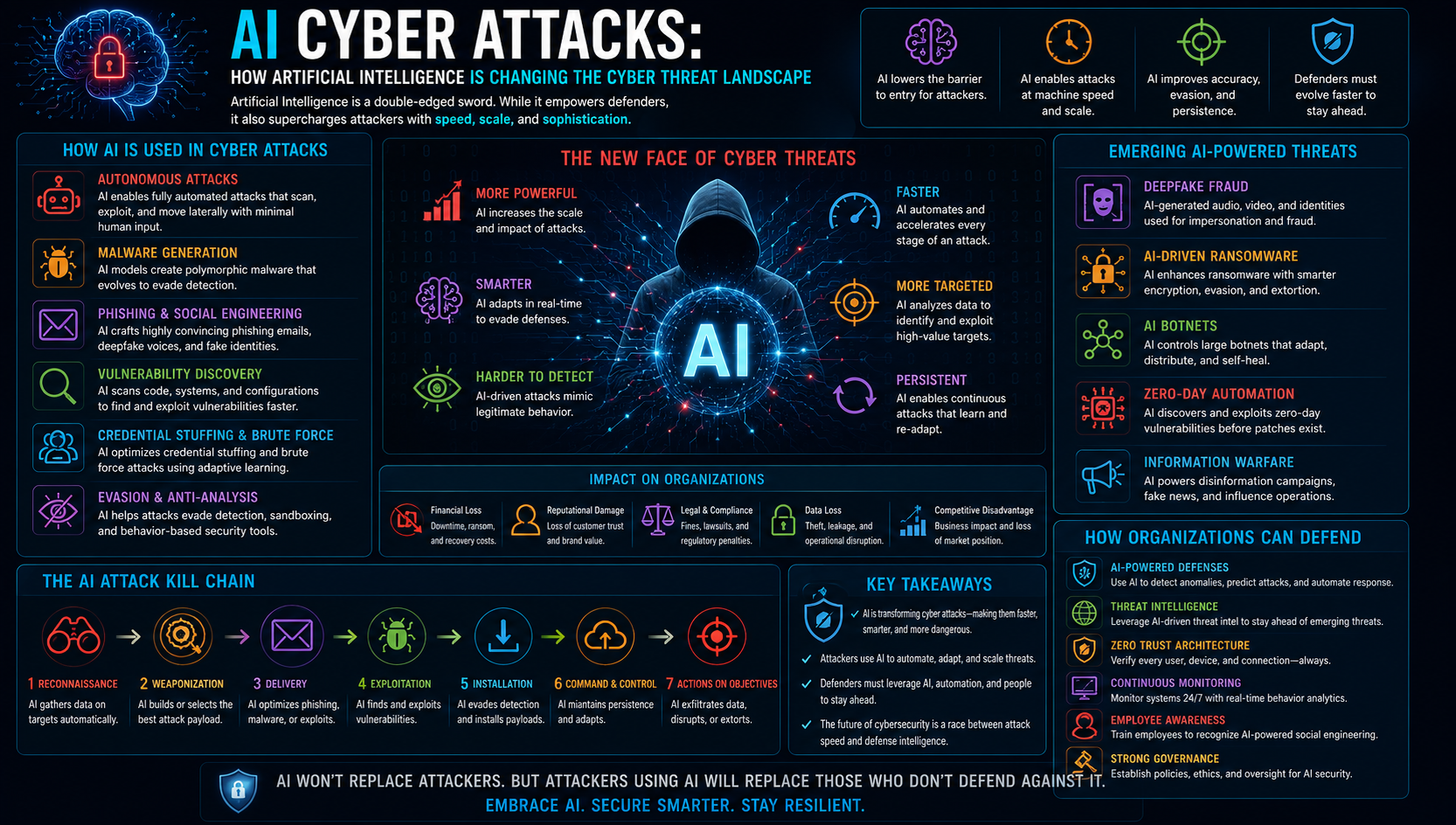
Cybercriminals are increasingly using artificial intelligence to automate attacks, identify vulnerabilities, create convincing scams, and evade traditional security measures. As AI technology becomes more accessible, attackers are finding innovative ways to exploit it for malicious purposes. Understanding how AI cyber attacks work is essential for organizations and individuals who want to stay protected in an increasingly digital world.
What Are AI Cyber Attacks?
AI cyber attacks are cyber threats that leverage artificial intelligence technologies to improve the effectiveness, speed, and scale of malicious activities. Unlike traditional cyber attacks that often require significant human involvement, AI-powered attacks can automate many stages of the attack process.
Artificial intelligence allows attackers to analyze vast amounts of data, identify patterns, learn from previous attempts, and adapt their strategies in real time. This capability makes AI cyber attacks more sophisticated and potentially more dangerous than many conventional threats. Rather than relying solely on manual hacking techniques, cybercriminals can use AI to scan networks, craft personalized phishing emails, crack passwords, and even generate malicious code. The result is a new generation of cyber threats that can evolve faster than traditional security defenses.
The Growing Role of Artificial Intelligence in Cybercrime
Cybercrime has always evolved alongside technology. As organizations adopt advanced digital systems, attackers continuously search for new ways to exploit them. Artificial intelligence has become a valuable tool for cybercriminals because it helps them operate more efficiently and achieve better results.
In the past, launching large-scale cyber attacks required significant technical expertise and resources. Today, AI tools can automate tasks that once took hours or even days to complete. Attackers can identify vulnerabilities more quickly, create realistic social engineering campaigns, and launch attacks against multiple targets simultaneously. This shift has lowered barriers for cybercriminals and increased the overall threat landscape. Even less experienced attackers can leverage AI-powered tools to carry out sophisticated operations that would have previously required advanced hacking skills.
How AI Cyber Attacks Work
The effectiveness of AI cyber attacks comes from the ability of artificial intelligence systems to learn and adapt. Machine learning algorithms can analyze data from previous attacks and continuously improve their performance. For example, an AI system can study thousands of phishing emails to determine which wording, formatting, and emotional triggers are most likely to deceive victims. It can then generate new phishing messages designed to maximize success rates.
Similarly, AI-powered malware can monitor how security software responds to its actions and modify its behavior to avoid detection. This adaptability makes it harder for traditional cybersecurity tools to identify and block threats. The combination of automation, learning, and adaptability gives attackers a significant advantage when targeting vulnerable systems.
AI-Powered Phishing Attacks
One of the most common forms of AI cyber attacks involves phishing. Phishing attacks attempt to trick individuals into revealing sensitive information such as passwords, financial data, or personal details. Artificial intelligence has dramatically improved the quality of phishing campaigns. Instead of sending generic messages to thousands of recipients, attackers can use AI to create highly personalized emails tailored to specific individuals.
AI systems can gather information from social media profiles, company websites, and public databases. Using this information, they can craft messages that appear authentic and relevant to the recipient. A phishing email generated by AI may reference recent events, workplace activities, or personal interests, making it much more convincing than traditional spam messages. This increased realism can significantly improve the success rate of phishing attacks.
Deepfake Technology and Cybersecurity Threats
Deepfake technology represents another growing concern in the world of AI cyber attacks. Deepfakes use artificial intelligence to create realistic images, videos, or audio recordings that mimic real people. Cybercriminals can use deepfakes to impersonate executives, employees, government officials, or business partners. In some cases, attackers have used AI-generated voice recordings to convince employees to transfer money or share confidential information.
The ability to create convincing fake content presents a serious challenge for organizations. Traditional methods of identity verification may become less reliable as deepfake technology continues to improve. Businesses must develop new procedures for validating sensitive requests and verifying communications to reduce the risk of falling victim to deepfake-based attacks.
AI-Generated Malware
Malware has long been a major cybersecurity threat, but artificial intelligence is making it even more dangerous. AI-generated malware can adapt its behavior based on the environment in which it operates. Traditional malware often follows a predefined set of instructions. AI-powered malware, however, can make decisions independently and adjust its actions to achieve specific objectives.
For example, AI malware may detect the presence of security software and alter its behavior to avoid detection. It may also identify the most valuable data on a system and prioritize stealing that information. This level of intelligence makes AI-generated malware more resilient and more difficult for security teams to analyze and remove.
Automated Vulnerability Discovery
Finding vulnerabilities is a critical step in many cyber attacks. Artificial intelligence can accelerate this process by automatically scanning systems and identifying potential weaknesses. AI tools can analyze software code, network configurations, and system architectures much faster than human attackers. They can identify security gaps, misconfigurations, and outdated software versions that may provide opportunities for exploitation.
While ethical security professionals use similar technologies for defensive purposes, cybercriminals can also leverage these tools to discover and exploit vulnerabilities before organizations have a chance to fix them. The speed at which AI can identify weaknesses increases the importance of proactive security measures and regular vulnerability assessments.
Password Cracking with Artificial Intelligence
Passwords remain one of the most widely used security mechanisms, but AI is making password attacks more effective. Traditional password-cracking techniques often rely on brute-force methods that attempt countless combinations until the correct password is found. Artificial intelligence improves this process by analyzing patterns in human behavior and predicting likely password choices.
AI systems can study leaked password databases to learn common password structures and generate more accurate guesses. This approach allows attackers to crack passwords more efficiently while reducing the number of attempts required. Organizations can protect themselves by implementing strong password policies, multi-factor authentication, and password managers.
Why AI Cyber Attacks Are Difficult to Detect
One of the biggest challenges posed by AI cyber attacks is their ability to blend into normal activity. AI-powered threats can analyze user behavior and mimic legitimate actions, making them harder to identify. For example, an AI-driven attack may access systems during normal business hours, use typical communication channels, and interact with data in ways that appear legitimate. This behavior can help attackers avoid triggering traditional security alerts.
Additionally, AI systems can continuously learn from failed attempts and adjust their strategies. This adaptability allows them to bypass security measures that would stop more conventional attacks. As a result, organizations need advanced threat detection solutions capable of identifying subtle anomalies and unusual patterns.
The Impact on Businesses
The consequences of AI cyber attacks can be severe. Businesses may experience financial losses, operational disruptions, reputational damage, and legal consequences following a successful attack.
Data breaches remain one of the most significant risks. AI-powered attacks can help cybercriminals gain unauthorized access to sensitive customer information, intellectual property, and financial records.
Organizations may also face downtime if AI-driven ransomware attacks encrypt critical systems and demand payment for restoration. The financial costs associated with recovery efforts, regulatory fines, and lost business opportunities can be substantial. As AI cyber attacks continue to evolve, organizations must prioritize cybersecurity as a core business function rather than an afterthought.
Defending Against AI Cyber Attacks
Protecting against AI cyber attacks requires a combination of technology, awareness, and proactive security practices. Organizations must recognize that traditional defenses may not be sufficient against increasingly intelligent threats.
Employee education remains one of the most effective security measures. Staff should understand how phishing attacks work, how to verify suspicious communications, and how to report potential security incidents.
Advanced security technologies that use artificial intelligence for defense can also play a critical role. AI-powered security tools can analyze vast amounts of data, detect unusual behavior, and respond to threats more quickly than human analysts alone. Regular software updates, vulnerability management, multi-factor authentication, and comprehensive incident response plans further strengthen an organization’s security posture.
The Future of AI Cyber Attacks
The future of cybersecurity will likely involve an ongoing battle between AI-powered attackers and AI-powered defenders. As artificial intelligence becomes more advanced, both sides will gain access to increasingly sophisticated capabilities.
Cybercriminals will continue to experiment with new attack methods, including autonomous malware, advanced social engineering campaigns, and highly personalized scams. At the same time, cybersecurity professionals will develop smarter detection systems, automated response mechanisms, and predictive threat intelligence tools. Organizations that embrace a proactive security mindset will be better positioned to navigate this evolving landscape. Investing in cybersecurity today can help reduce the risks posed by future AI-driven threats.
Conclusion
AI cyber attacks represent a significant shift in the cybersecurity landscape. By leveraging artificial intelligence, cybercriminals can automate attacks, improve phishing campaigns, create deepfakes, discover vulnerabilities, and evade traditional defenses. These capabilities make modern cyber threats more sophisticated and more challenging to detect.
As businesses and individuals continue to adopt AI technologies, understanding the risks associated with AI cyber attacks becomes increasingly important. While artificial intelligence offers tremendous benefits, it also creates new opportunities for malicious actors. The key to staying protected lies in combining strong security practices, employee awareness, advanced defense technologies, and continuous vigilance. By taking cybersecurity seriously and adapting to emerging threats, organizations can better defend themselves against the growing risks of AI-powered cyber attacks.


saya ingin belajar hackers