Cybersecurity is no longer a concern reserved for large corporations or government agencies. Today, every organization that uses computers, cloud services, email systems, or online applications faces the risk of cyberattacks. While many businesses invest in security tools such as firewalls, antivirus software, and monitoring systems, technology alone cannot guarantee protection. The real test comes when an actual cyber incident occurs. This is where cyber drill scenarios play a critical role.
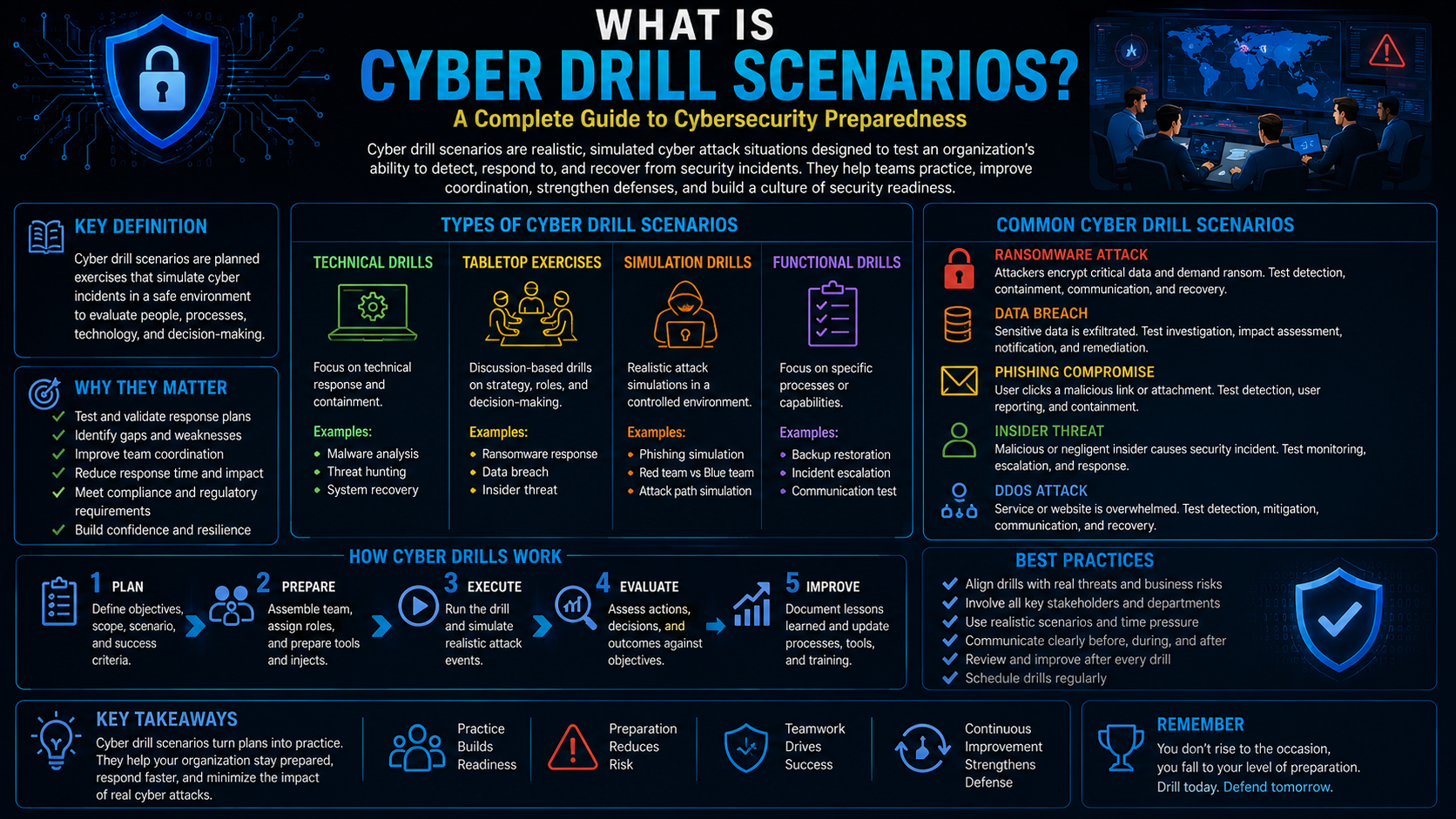
What Is Cyber Drill Scenarios?
Cyber drill scenarios are simulated cybersecurity incidents designed to test how an organization responds to cyber threats in a controlled environment. These exercises recreate realistic attack situations, allowing teams to practice their response procedures, communication strategies, and decision-making processes without facing a real cyberattack.
A cyber drill scenario acts much like a fire drill. Just as employees practice evacuating a building during a simulated fire emergency, cybersecurity teams and business leaders practice responding to simulated cyber incidents. The goal is not only to identify technical weaknesses but also to evaluate how people, processes, and technology work together during a crisis. Cyber drill scenarios help organizations prepare for the unexpected. When a real attack happens, there is often little time to think. Teams must act quickly and confidently. By regularly practicing different scenarios, organizations can reduce confusion, improve coordination, and strengthen their overall cybersecurity posture.
Why Cyber Drill Scenarios Matter
Many organizations believe they are prepared for cyber threats because they have security policies and response plans in place. However, having a plan on paper is very different from executing it during a real emergency.
A cyber incident can create stress, uncertainty, and pressure across an organization. Critical systems may go offline. Customers may lose access to services. Sensitive information may be at risk. During such moments, even experienced professionals can make mistakes if they have never practiced responding to similar situations.
Cyber drill scenarios help bridge this gap between planning and execution. They provide a safe environment where teams can experience the challenges of a cyber crisis without the consequences of a real attack. Organizations often discover hidden weaknesses during drills. Communication channels may be unclear. Incident response procedures may contain gaps. Decision-makers may not fully understand their responsibilities. Identifying these issues during a simulation is far better than discovering them during an actual breach.
The Purpose of Cyber Drill Scenarios
The primary purpose of cyber drill scenarios is preparedness. Organizations use these exercises to test whether their cybersecurity strategies can withstand real-world threats.
Cyber drills help verify incident response plans, ensuring that employees know what actions to take during an attack. They also help security teams evaluate how quickly they can detect, contain, and recover from cybersecurity incidents. Another important purpose is improving communication. Cyber incidents rarely affect only the IT department. They often involve executives, legal teams, human resources, public relations professionals, and customer support teams. Cyber drill scenarios allow these groups to practice working together under pressure.
The exercises also help organizations meet regulatory requirements and industry standards. Many compliance frameworks encourage or require regular cybersecurity testing to demonstrate readiness against cyber threats.
How Cyber Drill Scenarios Work
A cyber drill scenario usually begins with a planned simulation. The cybersecurity team or an external consultant creates a realistic attack scenario based on potential threats facing the organization.
Participants are informed that they will take part in an exercise, although they may not know the exact details beforehand. As the drill progresses, new information is introduced to mimic the evolving nature of a real cyber incident. For example, a scenario may start with suspicious activity detected on a company server. As the exercise continues, participants might learn that customer data has been compromised or that critical systems have become unavailable.
Teams must analyze information, make decisions, communicate with stakeholders, and follow established response procedures. Throughout the exercise, observers evaluate performance and document lessons learned. Once the drill is completed, a review session takes place. Participants discuss what worked well, identify weaknesses, and develop action plans for improvement.
Ransomware Cyber Drill Scenario
One of the most common cyber drill scenarios involves a ransomware attack. Ransomware remains one of the biggest cybersecurity threats facing organizations worldwide. In this scenario, employees discover that important files have become inaccessible. A ransom note appears on company computers demanding payment in exchange for restoring access to data.
The drill challenges participants to determine how the attack occurred, isolate affected systems, communicate with stakeholders, and decide whether backup systems can support recovery efforts. A ransomware drill often reveals how prepared an organization is for business continuity and disaster recovery. It also tests communication strategies, especially if customers or partners may be affected.
Phishing Attack Cyber Drill Scenario
Phishing attacks continue to be one of the most successful methods used by cybercriminals. These attacks rely on deception rather than technical vulnerabilities. In a phishing cyber drill scenario, employees receive simulated emails that appear legitimate but contain malicious links or requests for sensitive information.
The objective is to evaluate whether employees recognize suspicious messages and follow proper reporting procedures. Security teams can also assess how quickly they identify and respond to phishing attempts. This type of drill highlights the importance of cybersecurity awareness training and helps organizations build a stronger security culture.
Data Breach Cyber Drill Scenario
Data breaches can have serious financial, legal, and reputational consequences. A data breach cyber drill scenario focuses on protecting sensitive information and managing the aftermath of unauthorized access. The exercise may involve attackers gaining access to customer records, employee information, or confidential business data. Participants must investigate the incident, assess the scope of exposure, and determine reporting obligations.
Communication becomes particularly important during this type of scenario. Organizations must consider how they would notify customers, regulators, partners, and the media. By practicing these situations in advance, businesses can reduce delays and improve their ability to manage public trust during a real incident.
Insider Threat Cyber Drill Scenario
Not all cybersecurity threats originate from external attackers. Sometimes risks come from individuals within the organization. An insider threat cyber drill scenario may involve a disgruntled employee stealing sensitive information, abusing system privileges, or intentionally disrupting operations. These exercises help organizations evaluate monitoring capabilities, access controls, and response procedures related to internal threats. They also encourage discussions about employee management, human resources coordination, and legal considerations that may arise during an insider incident.
Supply Chain Attack Cyber Drill Scenario
Modern organizations depend heavily on third-party vendors, software providers, and service partners. As a result, supply chain attacks have become increasingly common. In a supply chain cyber drill scenario, a trusted vendor becomes compromised, allowing attackers to gain access to organizational systems. Participants must determine how the threat affects operations, identify affected systems, and coordinate with external partners. This type of drill emphasizes the importance of vendor risk management and demonstrates how cybersecurity extends beyond an organization’s own network.
Cloud Security Cyber Drill Scenario
As businesses continue moving workloads to the cloud, cloud-related security incidents have become a major concern. A cloud security cyber drill scenario may involve unauthorized access to cloud resources, accidental data exposure, or compromised credentials. Teams must investigate cloud environments, identify affected assets, and restore secure operations while maintaining business continuity. These exercises help organizations understand shared responsibility models and improve cloud-specific incident response capabilities.
Benefits of Conducting Cyber Drill Scenarios
Organizations that regularly conduct cyber drill scenarios gain several important advantages. First, they improve confidence among employees and leadership teams. When people know how to respond during a crisis, they are less likely to panic and more likely to make effective decisions. Second, cyber drills strengthen teamwork. Security incidents often require collaboration between multiple departments. Practicing together helps build relationships and establish trust before an emergency occurs.
Third, these exercises expose weaknesses that might otherwise remain hidden. A cyber drill may reveal outdated procedures, missing documentation, inadequate resources, or technical limitations. Fourth, regular drills support continuous improvement. Every exercise provides valuable lessons that can be used to enhance security controls and response strategies. Finally, cyber drill scenarios demonstrate a commitment to cybersecurity readiness. Customers, regulators, and business partners increasingly expect organizations to take proactive measures against cyber threats.
Common Challenges During Cyber Drills
Although cyber drill scenarios provide significant benefits, organizations may encounter challenges when conducting them. Some participants may treat the exercise as a routine meeting rather than a realistic simulation. Without active engagement, the drill may fail to provide meaningful insights.
Another challenge involves creating realistic scenarios. If the exercise is too simple, participants may not experience the complexity of a real cyber incident. If it is too complex, teams may become overwhelmed. Time constraints can also limit effectiveness. Busy schedules sometimes make it difficult to involve all relevant stakeholders. Despite these challenges, organizations that commit to regular practice often see substantial improvements in their cybersecurity readiness over time.
Building a Strong Cybersecurity Culture Through Drills
Cybersecurity is not solely the responsibility of IT departments. Every employee plays a role in protecting organizational assets and information. Cyber drill scenarios help reinforce this message by involving individuals from across the business. Employees gain a better understanding of cyber risks and learn how their actions contribute to overall security. When cyber drills become a regular part of organizational culture, security awareness naturally improves. Employees become more vigilant, communication becomes stronger, and incident response becomes more efficient. Over time, this culture of preparedness can significantly reduce the impact of cyber incidents and improve organizational resilience.
Conclusion
Understanding what is cyber drill scenarios is essential for any organization seeking to strengthen its cybersecurity defenses. These simulated exercises provide valuable opportunities to practice responding to cyber threats before they become real emergencies.
Whether the scenario involves ransomware, phishing, data breaches, insider threats, supply chain compromises, or cloud security incidents, the objective remains the same: preparing people to respond effectively under pressure.
Cyber drill scenarios transform cybersecurity plans from documents into actionable processes. They reveal weaknesses, improve communication, strengthen teamwork, and build confidence across the organization. In a world where cyber threats continue to evolve, preparation is one of the most powerful defenses available. Organizations that regularly conduct cyber drill scenarios are better equipped to protect their systems, safeguard their data, and maintain business continuity when real cyber incidents occur.

