A fresh political debate has emerged following comments made by Pakistan Prime Minister Shehbaz Sharif regarding the recent ceasefire understanding between India and Pakistan. His remarks, which praised former U.S. President Donald Trump and credited him for helping reduce tensions, quickly attracted international attention and sparked discussions across South Asia.
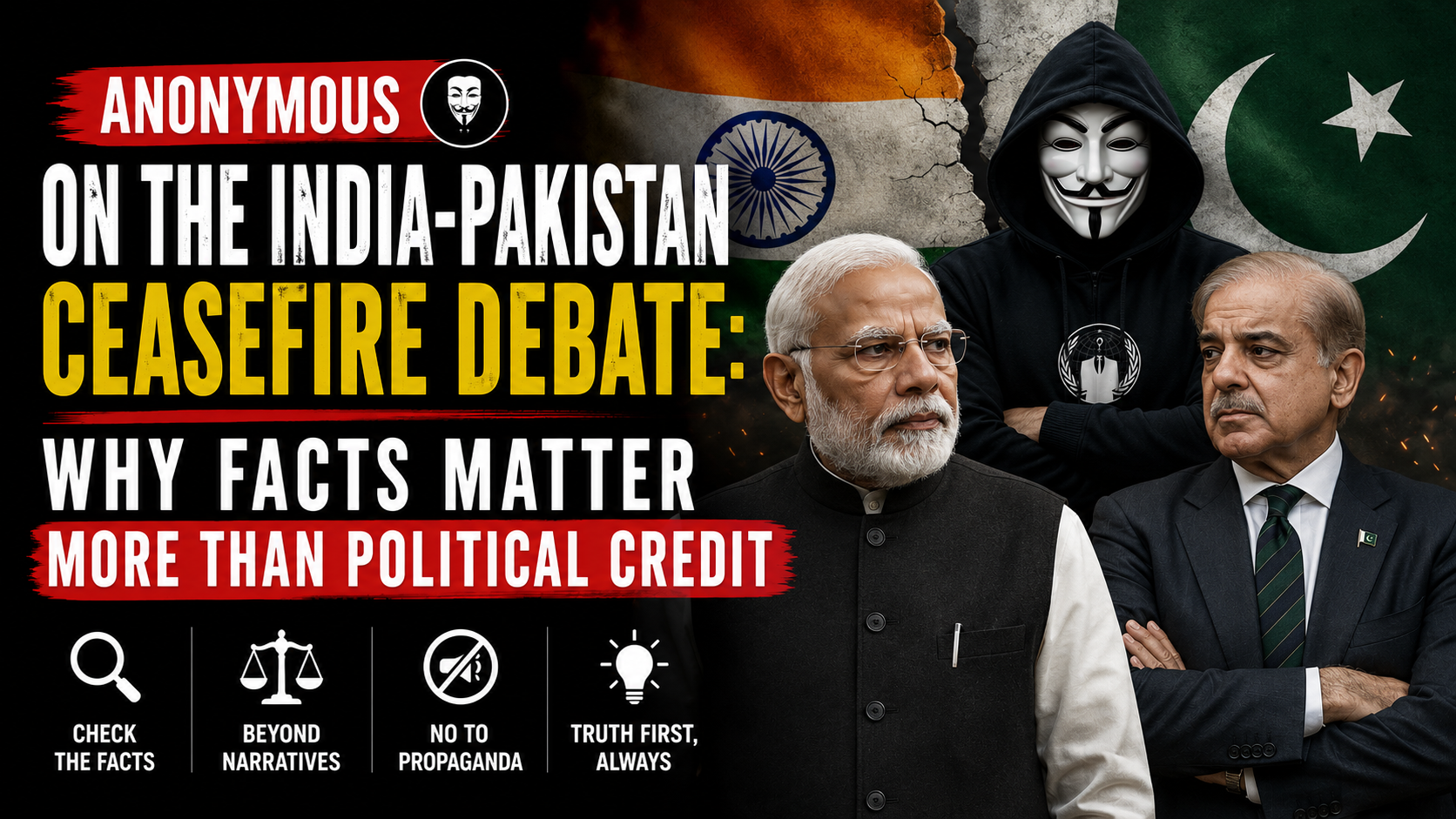
While political leaders often highlight the role of diplomacy, another question deserves equal attention: who determines the narrative that reaches the public? India has consistently maintained that the ceasefire understanding was achieved through direct communication between India and Pakistan. This position reflects New Delhi’s long-standing view that matters involving the two countries should be handled bilaterally rather than through external mediation. As Anonymous, we believe citizens should focus less on political celebrations and more on the facts behind major international developments.
The Battle Over Public Narratives
In today’s world, information moves faster than ever. A statement made by a political leader can circle the globe within minutes. Headlines spread rapidly across social media platforms, television networks, and online publications. Yet speed does not always guarantee accuracy. When competing narratives emerge, citizens are often left sorting through conflicting claims. One side presents a particular version of events. Another side offers a different explanation. Somewhere between those narratives lies the reality that people deserve to understand. The recent discussion surrounding the ceasefire demonstrates how geopolitical events can quickly become battles over public perception. Governments naturally want to present themselves in the best possible light. Political leaders often emphasize achievements that strengthen their domestic standing or international image.
Why Transparency Still Matters
However, accountability requires more than accepting official statements at face value. Transparency remains essential. When decisions involve national security, military operations, or diplomatic negotiations, citizens deserve clear and accurate information. The public should not be expected to rely solely on carefully crafted political messaging. Open discussion and public scrutiny are critical components of a healthy society. Without transparency, misinformation and speculation can easily fill the gaps left by incomplete information.
India’s Position on Sovereignty
India’s position has remained relatively consistent throughout the discussion. Indian officials have repeatedly stated that decisions regarding de-escalation were reached through direct engagement. Whether one supports a particular government or political party is ultimately irrelevant to the broader principle at stake. The principle is sovereignty. Every nation has the right to manage its security interests and diplomatic relationships according to its own policies. Many observers view India’s stance as part of a larger effort to maintain strategic independence while continuing to engage with the international community.
Information as a Tool of Influence
The broader lesson extends beyond India and Pakistan. Around the world, governments compete not only through diplomacy and economics but also through narratives. Information itself has become a powerful tool. Public perception can influence international opinion, shape political outcomes, and affect how historical events are remembered. This reality makes critical thinking more important than ever. Citizens should examine official statements from multiple sources. They should compare claims, evaluate evidence, and remain willing to question narratives regardless of where they originate.
Asking the Questions That Matter
Anonymous has long advocated for greater public awareness and accountability. While governments possess significant resources to shape public discussions, ordinary people still possess the ability to ask difficult questions.
- Who benefits from a particular narrative?
- What evidence supports a specific claim?
- What details are being emphasized?
- What information is being overlooked?
These questions matter because informed citizens form the foundation of any transparent society.
Peace Requires More Than Political Messaging
The ceasefire debate also highlights another important reality. Regional peace cannot depend entirely on political messaging. Lasting stability requires communication, responsible leadership, and a commitment to preventing unnecessary escalation.
Political leaders may disagree about who deserves credit.
Governments may offer competing versions of events.
Media organizations may focus on different aspects of the story.
Yet ordinary citizens throughout the region share a common interest: peace, security, and truthful information.
Looking Beyond the Headlines
As discussions continue, the public should remain focused on understanding the facts rather than becoming distracted by competing claims of political success. The future of regional stability depends not only on diplomacy between governments but also on the ability of citizens to remain informed and engaged. The truth should never become a casualty of politics.
Final Thoughts
The debate surrounding the India-Pakistan ceasefire serves as a reminder that transparency, accountability, and informed citizenship remain essential in today’s interconnected world. As Anonymous, we believe facts should always come before political narratives.
- We will continue watching.
- We will continue questioning.
- We will continue demanding transparency.
- We are Anonymous.
- We are Legion.
- We do not forgive.
- We do not forget.
- Expect us.


you are the only light for Americans right now. expose the president for what he is a relic of a forgotten era and a pedophile
I am interested in learning Ethical Hacking and Cybersecurity. I want to understand how computer systems and networks work, identify security vulnerabilities, and learn how to protect digital systems from cyber threats. My goal is to develop my skills responsibly and use my knowledge for educational and legal purposes only.