We are Anonymous, The world is once again turning its attention to the Korean Peninsula as Chinese President Xi Jinping prepares to visit North Korea on June 8–9. According to official announcements, this will be Xi’s first trip to Pyongyang in nearly seven years. During the visit, Xi is expected to meet North Korean leader Kim Jong Un to discuss bilateral relations, regional stability, economic cooperation, and the future direction of ties between the two nations.
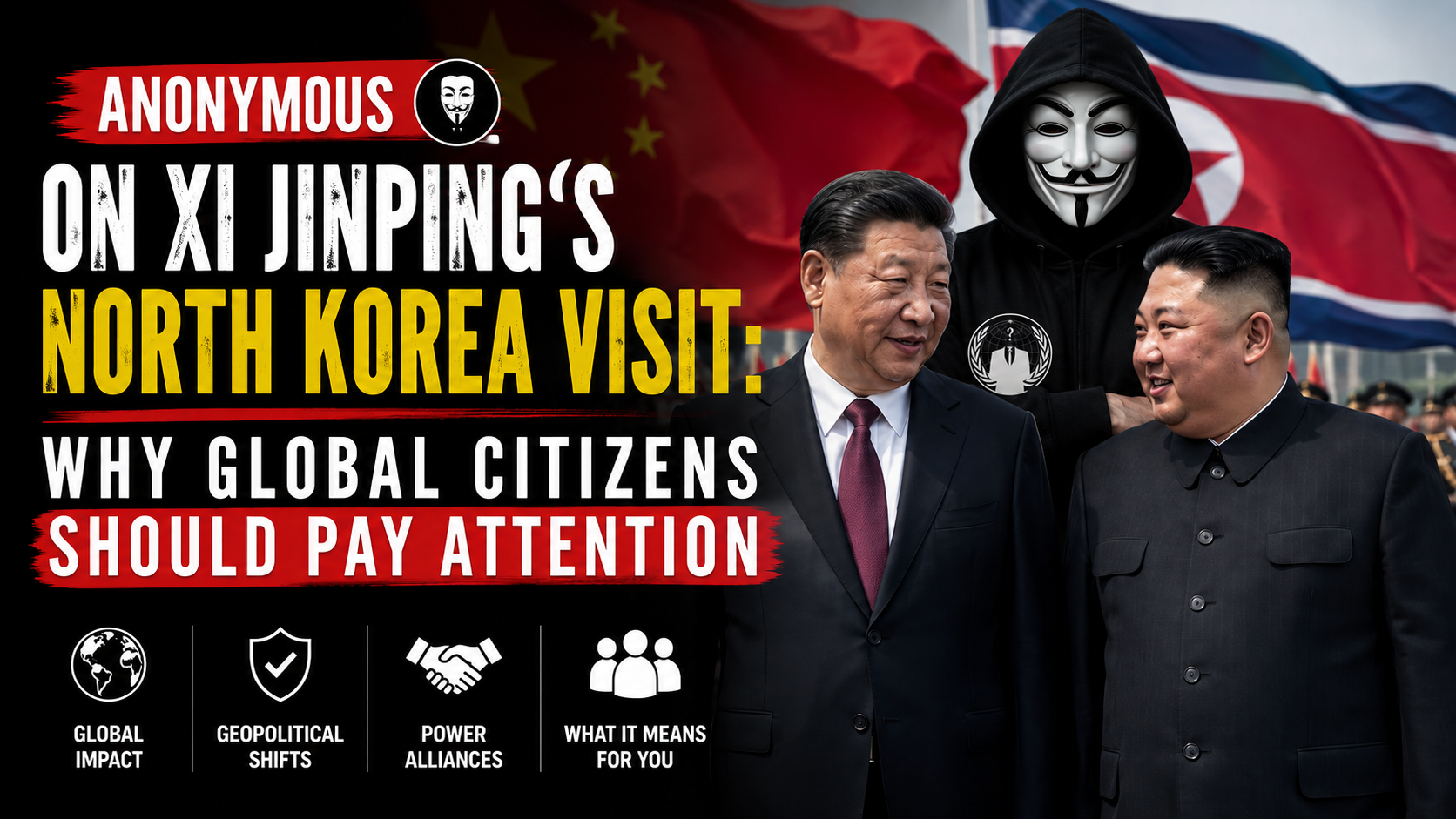
For many governments and media outlets, this is simply another diplomatic event. For us, it is something much larger. It is a reminder that decisions capable of shaping the future of millions are often negotiated behind closed doors, far from public scrutiny.
A Significant Moment for China and North Korea
China and North Korea share one of the most important political relationships in Asia. While the two countries have experienced periods of tension and uncertainty, Beijing remains Pyongyang’s most influential diplomatic and economic partner.
Recent reports suggest that China is seeking to strengthen its relationship with North Korea after years of disruption caused by the pandemic. At the same time, North Korea has expanded its cooperation with Russia, creating a changing geopolitical landscape that Beijing cannot ignore.
Many analysts believe China wants to reinforce its position as North Korea’s primary strategic partner. Xi Jinping’s visit sends a clear message that Beijing intends to remain deeply involved in developments on the Korean Peninsula.
We observe these developments with interest.
Growing Security Concerns
The visit comes at a time when North Korea continues to attract international attention for its military ambitions.
Reports released this week indicate that Kim Jong Un has called for a significant expansion of the country’s nuclear capabilities. Such statements inevitably increase concerns among neighboring countries and the broader international community.
As Anonymous, we encourage people to look beyond official statements and media headlines.
The mainstream discussion often focuses on power, influence, and competition between governments. Yet ordinary citizens around the world are left with critical questions that deserve answers.
What agreements will be discussed?
What commitments will be made?
How will these decisions affect regional and global security?
What information will remain hidden from public view?
These are the questions that matter.
The Importance of Transparency
For decades, governments around the world have relied on secrecy to maintain power and control information. Citizens are frequently expected to trust official explanations without having access to the full picture. We reject that approach. Transparency is not a luxury. It is a necessity. People have the right to understand decisions that affect international relations, economic stability, security policies, and the future of global cooperation. The upcoming meeting between Xi Jinping and Kim Jong Un is significant not only because of the leaders involved but because of what it represents. China is one of the most influential powers in the world. North Korea remains one of the most isolated nations on Earth. When leaders from these countries meet, the effects can extend far beyond their borders.
Shifting Alliances and Global Power
The visit also reflects broader changes taking place in international politics. Recent developments have highlighted growing cooperation between North Korea and Russia. As global alliances continue to evolve, China appears determined to maintain its influence in Pyongyang and demonstrate that it remains a central player in any discussion involving North Korea. Powerful governments continue to compete for influence. Strategic partnerships continue to shift. Meanwhile, citizens continue demanding accountability. This tension between power and transparency is not new. Anonymous has long challenged systems that operate without oversight or public accountability. Regardless of nationality, political ideology, or government structure, we believe that people deserve access to information about decisions that shape their lives.
Looking Beyond the Headlines
As this summit approaches, media organizations will undoubtedly focus on official ceremonies, diplomatic language, and symbolic gestures. We encourage something different. Examine the details. Follow the agreements. Question the narratives. Study the consequences rather than the headlines. Political events are often presented as carefully managed public performances. The real significance frequently lies in what happens behind the scenes and in the long-term impact of the decisions being made. Whether this visit leads to stronger economic cooperation, new diplomatic initiatives, increased regional influence, or future security agreements, the public deserves clear and honest information about the discussions taking place.
The Responsibility of Global Citizens
The digital age has transformed access to information. People today have more tools than ever before to research, analyze, and question official narratives. At the same time, governments and institutions possess increasingly sophisticated methods for controlling public perception. This reality places a responsibility on citizens. Remain informed. Remain skeptical. Remain engaged. Do not accept every narrative without question. Do not ignore the details hidden beneath political headlines. The future is shaped not only by governments but also by informed citizens who demand accountability from those in power.
Final Thoughts
Xi Jinping’s upcoming visit to North Korea is more than a diplomatic meeting. It is a reminder that global politics continues to evolve in ways that affect people everywhere. As governments negotiate alliances and pursue strategic interests, transparency remains essential.
- We will continue watching.
- We will continue questioning.
- We will continue demanding accountability.
- We are Anonymous.
- We are Legion.
- We do not forgive.
- We do not forget.
- Expect us.

