In a move that has captured global attention, China is preparing to officially unveil its new fifth-generation stealth fighter jet, the J-35, a carrier-based aircraft expected to strengthen its naval aviation capabilities. While the announcement signals major advances in China’s military technology, it also revives longstanding allegations that parts of the J-35’s design may be rooted in stolen U.S. defense secrets.
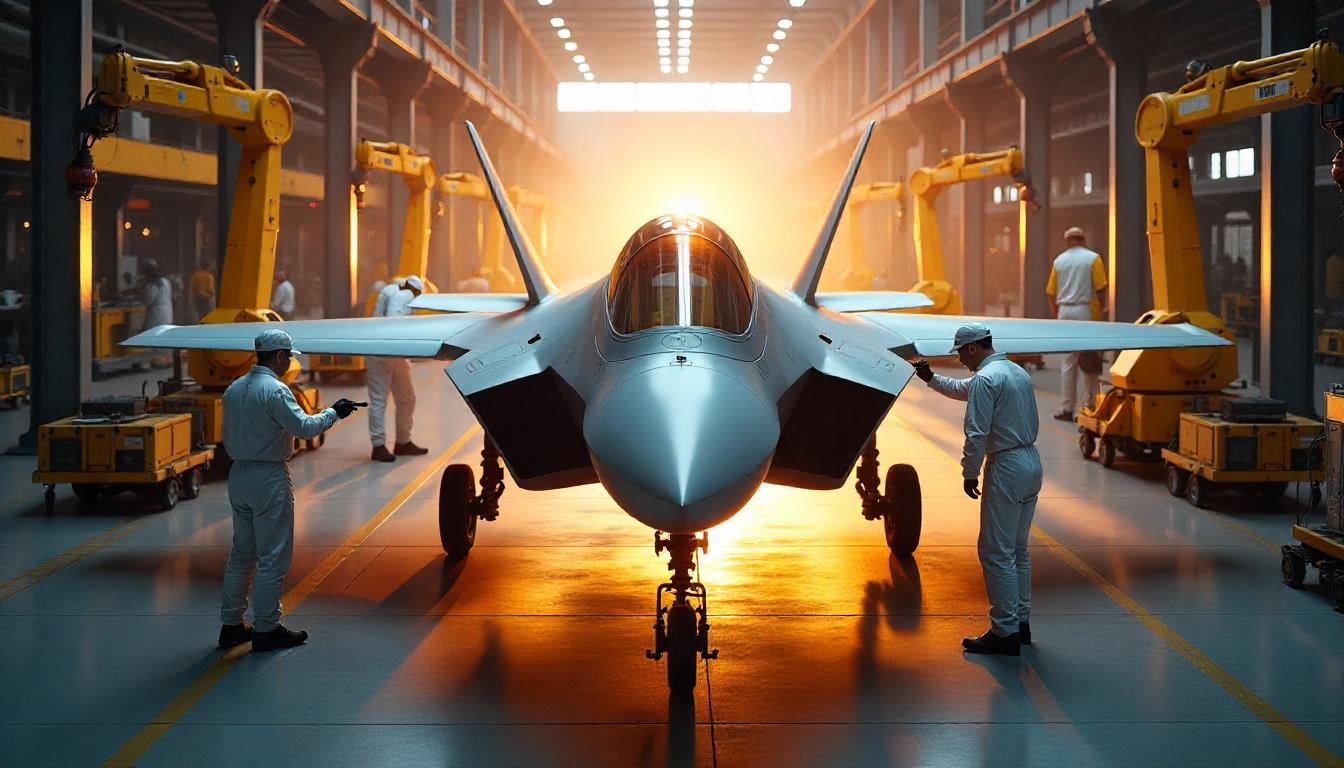
A New Chapter in China’s Stealth Program
The J-35, also referred to as FC-31 in earlier prototypes, is the latest addition to China’s ambitious military modernization program. Developed by Shenyang Aircraft Corporation, the twin-engine stealth fighter is expected to operate from China’s growing fleet of aircraft carriers, including the latest Fujian-class supercarrier.
Early images and leaked footage show an angular, radar-absorbing design that bears an uncanny resemblance to the U.S. Navy’s F-35C, a carrier-based version of Lockheed Martin’s F-35 Lightning II. Analysts suggest the J-35’s role will mirror that of the F-35, serving as a multirole combat platform with an emphasis on stealth, agility, and advanced electronics.
Technology Echoes: Coincidence or Copy?
The controversy surrounding the J-35 isn’t new. For years, U.S. intelligence agencies and cybersecurity experts have raised red flags about Chinese cyber espionage targeting defense contractors. As early as 2007, reports emerged detailing Chinese hackers penetrating networks of companies involved in the development of the F-35. Sensitive files, including radar specifications, engine schematics, and electronic warfare data, were allegedly compromised.
While Chinese officials have consistently denied these accusations, military experts point to striking similarities between the J-35 and the F-35, from external features to possible internal systems. “It’s not just the shape,” one former Pentagon analyst stated, “It’s how systems are integrated and optimized for carrier-based missions. Those aren’t just engineering guesses.”
Strategic Implications
The unveiling of the J-35 marks a major shift in the regional power balance, especially in the Indo-Pacific. With this new aircraft, China is closing the gap in a domain that was once firmly under U.S. control: naval aviation superiority.
China’s growing presence in the South China Sea, its continued friction with Taiwan, and deepening disputes with neighboring countries make the J-35 not just a technological milestone, but a geopolitical tool. “This isn’t just about aircraft design,” said a former U.S. Navy pilot. “It’s about power projection and regional dominance.”
The Cyberwarfare Factor
One of the most alarming aspects of this development is the evolving nature of warfare. While battles are still fought on land, sea, and air, the digital battlefield is increasingly where the first shots are fired. The J-35 may represent one of the most visible examples of what cyberwarfare can accomplish—gathering intelligence, stealing data, and shortening the time required to catch up in critical defense technologies.
According to a 2024 report by the Center for Strategic and International Studies (CSIS), China’s cyber-enabled economic espionage remains a persistent threat. Defense and aerospace are prime targets, with stolen technology being reverse-engineered into new platforms within a few years—a trend that seems to fit the timeline of the J-35’s development.
U.S. Response and Precautions
In response to the growing concerns, the U.S. Department of Defense has increased funding toward cyber defense, insider threat mitigation, and advanced encryption of sensitive data. Congressional hearings have been held to probe the extent of earlier breaches and assess ongoing risks. The Pentagon has also expanded partnerships with allies in the region, including Japan, South Korea, and Australia, in an effort to contain China’s growing military reach.
Looking Ahead
Whether or not the J-35 is directly the product of stolen U.S. technology may never be definitively proven. However, the implications are undeniable. China now possesses a stealth carrier jet that rivals the most advanced fighter platforms in the world. More importantly, it has sent a message that cyber warfare can be just as effective as traditional weapons in gaining strategic advantage. As tensions continue to rise in global hotspots, the emergence of the J-35 stands as a powerful reminder that the race for military superiority is no longer limited to laboratories and runways—it now includes server rooms and code repositories.


0should know the proper way to write about my first comment, I have no more doubt, about the abuse of the mandate of the president of China, making more effort. to the *cybers to act in a way more controversy about the types of robberies they have committed with that type of national group..