In today’s digital world, almost everything we do is connected to the internet. From online banking and shopping to social media and business operations, our data is constantly moving across networks. While this makes life easier, it also opens the door to cyber threats. This is where ethical hacking comes into play.
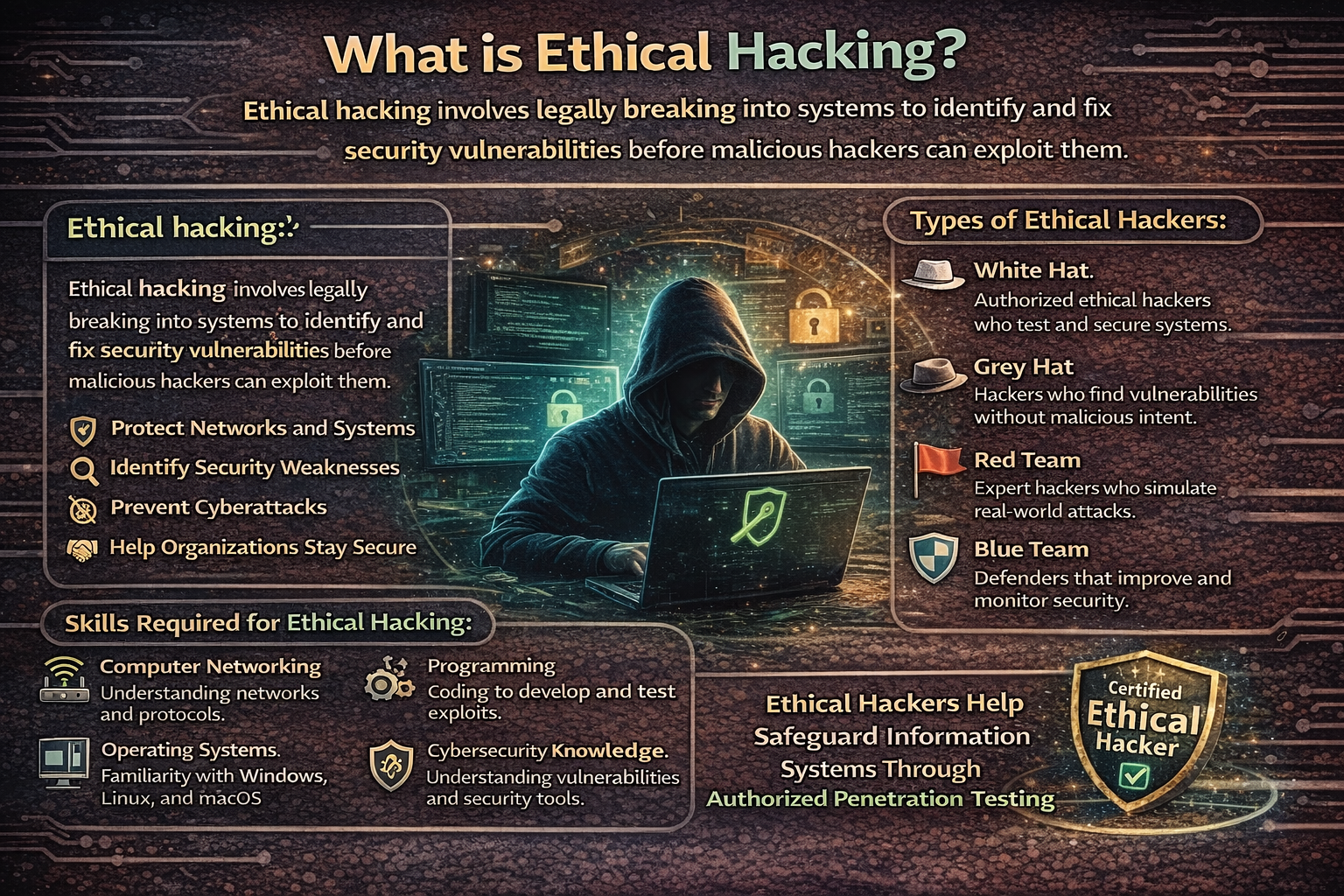
Ethical hacking is not about breaking the law or causing harm. Instead, it is about protecting systems, finding weaknesses, and making the digital world safer for everyone. Let’s explore what ethical hacking really means, how it works, and why it matters more than ever.
Understanding Ethical Hacking in Simple Words
Ethical hacking is the practice of testing computer systems, networks, or applications to find security weaknesses before malicious hackers can exploit them. The person who performs this task is known as an ethical hacker or a white hat hacker. Think of it like hiring a professional to test the locks of your house. Instead of waiting for a thief to break in, you invite someone trusted to find weak spots and fix them in advance. Ethical hackers use the same tools and techniques as cybercriminals, but their intention is completely different. Their goal is to protect, not damage.
Why Ethical Hacking is Important Today
The internet is growing rapidly, and so are cyber threats. Every day, companies face risks such as data breaches, ransomware attacks, and identity theft. Without proper security, sensitive information like passwords, financial data, and personal details can fall into the wrong hands.
Ethical hacking helps in:
-
Identifying vulnerabilities before attackers find them
-
Protecting customer data and privacy
-
Avoiding financial losses and reputational damage
-
Strengthening overall cybersecurity
For businesses, a single security breach can lead to huge losses. Ethical hackers act as the first line of defense.
Types of Hackers You Should Know
To understand ethical hacking better, it helps to know the different types of hackers.
White Hat Hackers
These are ethical hackers who work legally to improve security. They follow rules and have permission to test systems.
Black Hat Hackers
These are malicious hackers who break into systems for personal gain, such as stealing data or money.
Grey Hat Hackers
They fall somewhere in between. They may find vulnerabilities without permission but do not always have harmful intentions.
Ethical hacking is all about being a white hat hacker.
How Ethical Hacking Works
Ethical hacking follows a structured process. It is not random guessing or trial and error. Professionals use a step by step approach to ensure systems are thoroughly tested.
1. Reconnaissance
This is the information gathering phase. The hacker collects details about the target system, such as IP addresses, domain names, and network structure.
2. Scanning
In this phase, tools are used to identify open ports, services, and vulnerabilities in the system.
3. Gaining Access
Here, the ethical hacker tries to exploit the identified weaknesses to see how deep they can go into the system.
4. Maintaining Access
This step checks if an attacker could stay inside the system for a long time without being detected.
5. Reporting
Finally, the ethical hacker prepares a detailed report explaining the vulnerabilities and how to fix them.
This process ensures that security issues are found and resolved effectively.
Common Techniques Used in Ethical Hacking
Ethical hackers use various methods to test security. Some of the most common techniques include:
Penetration Testing
This involves simulating a real cyberattack to test how secure a system is.
Vulnerability Scanning
Automated tools are used to scan systems for known weaknesses.
Social Engineering
This tests human behavior, such as tricking employees into revealing sensitive information.
Password Cracking
Ethical hackers test how strong passwords are and whether they can be easily guessed or broken.
Network Analysis
This involves monitoring network traffic to detect unusual activities.
Each technique focuses on a different aspect of security.
Tools Used by Ethical Hackers
Ethical hackers rely on powerful tools to perform their work efficiently. Some popular tools include:
-
Nmap for network scanning
-
Wireshark for analyzing network traffic
-
Metasploit for testing vulnerabilities
-
Burp Suite for web application security
-
John the Ripper for password testing
These tools help ethical hackers identify and fix issues quickly.
Skills Required to Become an Ethical Hacker
Ethical hacking is a technical field, but it is also about mindset and curiosity. Here are some key skills needed:
Strong Knowledge of Networking
Understanding how networks work is essential for finding vulnerabilities.
Programming Skills
Languages like Python, JavaScript, and C help in writing scripts and understanding system behavior.
Problem Solving Ability
Ethical hackers must think creatively to identify weaknesses.
Knowledge of Operating Systems
Familiarity with systems like Linux and Windows is important.
Attention to Detail
Even a small flaw can lead to a major security issue.
Learning ethical hacking takes time, but it is a rewarding journey.
Is Ethical Hacking Legal?
Yes, ethical hacking is completely legal as long as it is done with proper permission. Organizations hire ethical hackers to test their systems and improve security.
However, hacking without permission is illegal and can lead to serious consequences. The key difference is authorization.
Always remember, ethical hacking must follow legal and ethical guidelines.
Certifications in Ethical Hacking
If you want to build a career in ethical hacking, certifications can help you gain credibility. Some popular ones include:
-
Certified Ethical Hacker CEH
-
Offensive Security Certified Professional OSCP
-
CompTIA Security Plus
-
Certified Information Systems Security Professional CISSP
These certifications prove your skills and increase job opportunities.
Career Opportunities in Ethical Hacking
The demand for ethical hackers is growing rapidly. Companies across industries need cybersecurity experts to protect their systems.
Some common job roles include:
-
Ethical Hacker
-
Penetration Tester
-
Security Analyst
-
Cybersecurity Consultant
-
Network Security Engineer
With experience, ethical hackers can earn high salaries and work with top organizations.
Real Life Example of Ethical Hacking
Imagine a bank hires an ethical hacker to test its online system. The hacker discovers that the login page is vulnerable to a certain type of attack. If a malicious hacker found this flaw, they could access customer accounts.
Thanks to the ethical hacker, the bank fixes the issue before any damage occurs. This is how ethical hacking protects real people and businesses.
Ethical Hacking vs Cybersecurity
People often confuse ethical hacking with cybersecurity, but they are not exactly the same.
Cybersecurity is a broader field that includes protecting systems, networks, and data.
Ethical hacking is a part of cybersecurity that focuses specifically on testing and finding vulnerabilities.
Both work together to create a secure digital environment.
Challenges Faced by Ethical Hackers
Ethical hacking is not always easy. Professionals face several challenges such as:
-
Constantly evolving cyber threats
-
Keeping up with new technologies
-
Legal and compliance issues
-
Time pressure during testing
Despite these challenges, ethical hackers play a crucial role in digital safety.
How to Get Started with Ethical Hacking
If you are interested in ethical hacking, here is a simple path to begin:
-
Learn the basics of networking and computers
-
Understand how the internet works
-
Start with programming languages like Python
-
Practice using ethical hacking tools
-
Take online courses and certifications
-
Join cybersecurity communities
Consistency and practice are key to success in this field.
The Human Side of Ethical Hacking
Behind every system and every line of code, there are people. Ethical hacking is not just about machines, it is about protecting lives, privacy, and trust.nWhen a company avoids a data breach, it means customers feel safe. When a website is secure, users can interact without fear. Ethical hackers help build that trust. It is a profession that combines technology with responsibility.
Final Thoughts
Ethical hacking is one of the most important fields in today’s digital age. As cyber threats continue to grow, the need for skilled ethical hackers will only increase. It is a career that offers both challenges and opportunities. More importantly, it allows you to make a real difference by protecting people and organizations from harm. Whether you are a beginner or someone exploring cybersecurity, ethical hacking is a path worth considering. It is not about breaking systems, it is about making them stronger. In a world where data is everything, ethical hackers are the silent guardians keeping it safe.

