Not long ago, if you saw a video of a public figure saying something shocking, you would assume it was real. Today, that assumption can be dangerous. With the rise of artificial intelligence, deepfakes have become more advanced, more realistic, and easier to create than ever before.
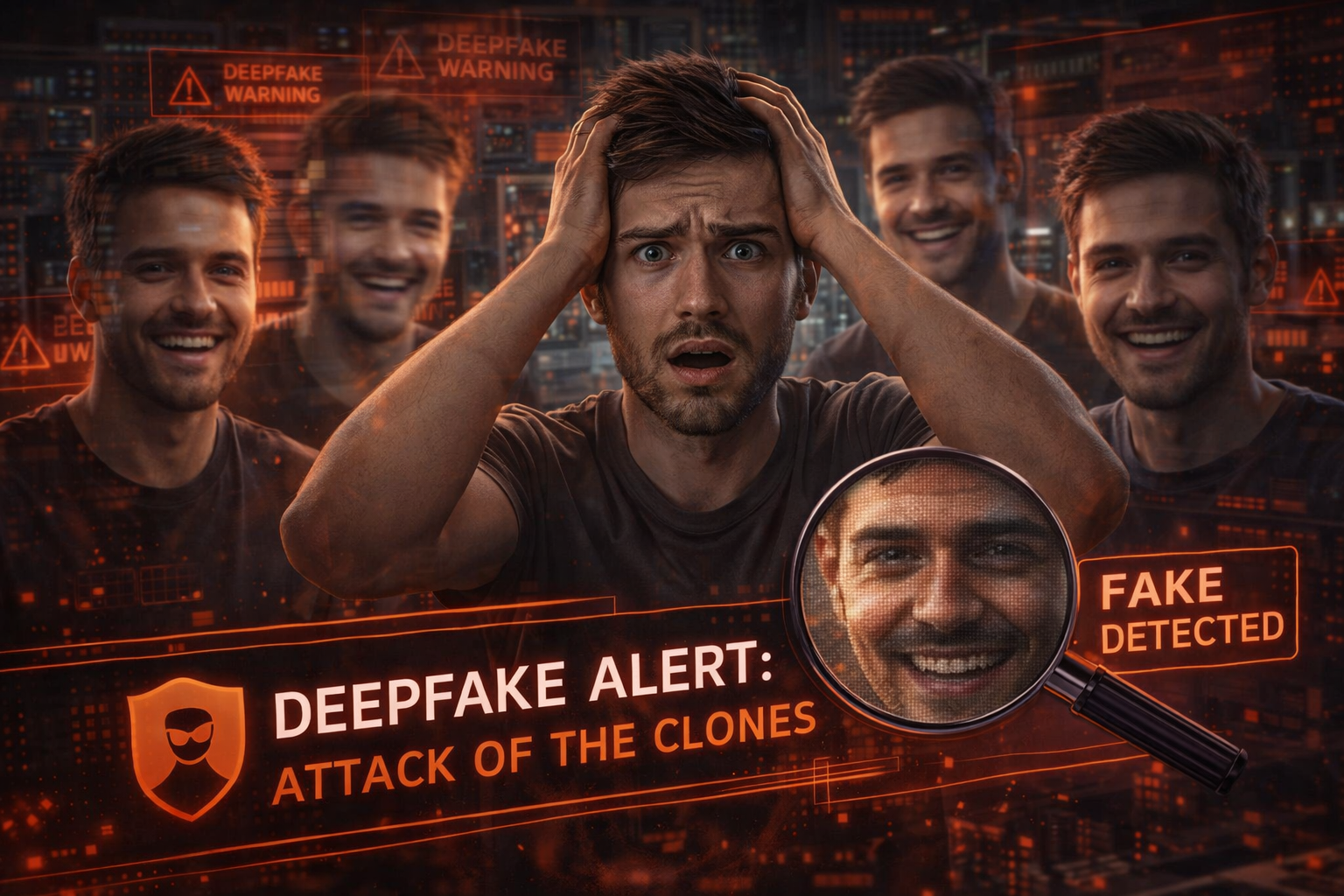
This “attack of the clones” isn’t science fiction anymore. It’s happening right now, across social media, news platforms, and even private messaging apps. And the scary part? Many people can’t tell the difference. In this guide, you’ll learn what deepfakes are, why they’re spreading so fast, and most importantly, how to recognize a deepfake before it tricks you.
What Is a Deepfake?
A deepfake is a piece of media—usually a video, image, or audio clip—that has been manipulated using artificial intelligence to make it look or sound real.
The term comes from “deep learning” and “fake.” AI models are trained on real images, videos, and voices of a person. Then, they generate new content that mimics that person almost perfectly.
For example:
-
A celebrity appears to say something they never said
-
A politician seems to give a fake speech
-
A friend’s voice is cloned to send a message
At first glance, these look completely real. That’s what makes deepfakes so powerful—and dangerous.
Why Deepfakes Are Growing So Fast
Deepfakes used to require expert-level skills and powerful computers. Now, things have changed.
Here’s why they are spreading quickly:
1. Easy Access to Tools
Today, anyone can use apps and software to create deepfakes. Some tools are even free.
2. Social Media Amplification
Platforms like Instagram, X, and YouTube help content spread within minutes. A fake video can reach millions before it’s verified.
3. Realistic AI Models
Modern AI can recreate facial expressions, voice tones, and even emotions with shocking accuracy.
4. Lack of Awareness
Most people still don’t know how to spot a deepfake. That makes them easy targets.
The Real Dangers of Deepfakes
Deepfakes are not just entertainment. They can cause serious harm.
Misinformation
Fake political speeches or news clips can influence public opinion and elections.
Scams and Fraud
Criminals can clone voices to trick people into sending money or sharing sensitive data.
Reputation Damage
A fake video can destroy someone’s reputation overnight.
Emotional Manipulation
People can be emotionally affected by fake content involving loved ones or public figures.
How to Recognize a Deepfake
Spotting a deepfake is not always easy, but there are clear signs if you know what to look for.
Let’s break it down.
1. Unnatural Facial Movements
Deepfake videos often struggle with realistic facial details.
Watch for:
-
Strange blinking patterns (too little or too much)
-
Lips not syncing properly with speech
-
Stiff or robotic facial expressions
If something feels “off,” trust that instinct.
2. Inconsistent Lighting and Shadows
Lighting is one of the hardest things for AI to get right.
Look closely:
-
Does the lighting match the environment?
-
Are shadows falling naturally?
-
Does the face look brighter or darker than the body?
Small inconsistencies can reveal a fake.
3. Blurry or Warped Details
Deepfakes sometimes fail in high-detail areas.
Check:
-
Edges of the face
-
Hairline and ears
-
Teeth and eyes
You might notice blurring, distortion, or unnatural shapes.
4. Strange Eye Behavior
Eyes are very difficult for AI to replicate perfectly.
Watch for:
-
Glassy or lifeless eyes
-
Irregular blinking
-
Eyes not focusing properly
Real human eyes have subtle movements that are hard to fake.
5. Audio Doesn’t Match Video
Sometimes the video looks real, but the audio gives it away.
Pay attention to:
-
Voice tone that feels robotic or flat
-
Slight delays between speech and lip movement
-
Background noise that doesn’t match the setting
If the sound feels disconnected, be cautious.
6. Unusual Head or Body Movement
AI often focuses on the face and ignores the rest of the body.
Look for:
-
Awkward head tilts
-
Sudden or jerky movements
-
Body posture that doesn’t match the face
These inconsistencies are common in deepfakes.
7. Context Doesn’t Make Sense
Sometimes the biggest clue is not visual—it’s logical.
Ask yourself:
-
Would this person really say or do this?
-
Is the timing suspicious?
-
Is this coming from a reliable source?
Deepfakes often rely on shock value to spread quickly.
Simple Steps to Verify Content
If you suspect something is a deepfake, don’t panic. Just verify it.
1. Check the Source
Is it from a trusted news outlet or a random account?
2. Search for the Same Content
If it’s real, multiple reliable sources will report it.
3. Use Reverse Image Search
Upload a screenshot and see where else it appears online.
4. Look for Official Statements
Public figures often respond quickly to fake content.
5. Slow Down Before Sharing
Most damage happens when people share without thinking.
Tools That Can Help Detect Deepfakes
Technology is also being used to fight deepfakes.
Some tools analyze:
-
Facial inconsistencies
-
Pixel-level changes
-
Audio patterns
While not perfect, they can provide an extra layer of protection.
The Human Side of the Problem
Deepfakes are not just a technical issue. They are a human issue.
They exploit trust.
They play on emotions like fear, anger, and curiosity. When we react quickly, we become part of the problem without realizing it.
Think about it:
How many times have you seen a shocking video and felt the urge to share it instantly?
That’s exactly what deepfake creators rely on.
Why Awareness Is Your Best Defense
You don’t need to be a tech expert to protect yourself.
Awareness alone can make a huge difference.
When you:
-
Question what you see
-
Take a moment to verify
-
Educate others
You reduce the power of deepfakes.
The Future of Deepfakes
Deepfake technology will continue to improve. There’s no doubt about that.
In the future, it may become almost impossible to detect fakes with the naked eye alone.
But at the same time:
-
Detection tools will get better
-
Regulations may be introduced
-
Public awareness will grow
The battle between fake and real will continue.
Final Thoughts
The “attack of the clones” is not about robots taking over. It’s about information being manipulated in ways we’ve never seen before. Deepfakes challenge one of our most basic instincts—trusting what we see and hear. But you are not powerless. By learning how to recognize the signs, staying cautious, and thinking before you react, you can protect yourself and others from being misled. Next time you see a video that feels shocking or too perfect, pause for a moment. Look closer. Because in today’s world, the truth doesn’t always come at first glance.

