In today’s digital life, passwords are the keys to almost everything. From banking apps to social media accounts, from work dashboards to personal emails, each login represents a doorway into something valuable. To manage this growing number of credentials, many people rely on password managers. These tools promise convenience, security, and peace of mind. They store complex passwords, generate strong ones, and keep everything locked behind a single master key.
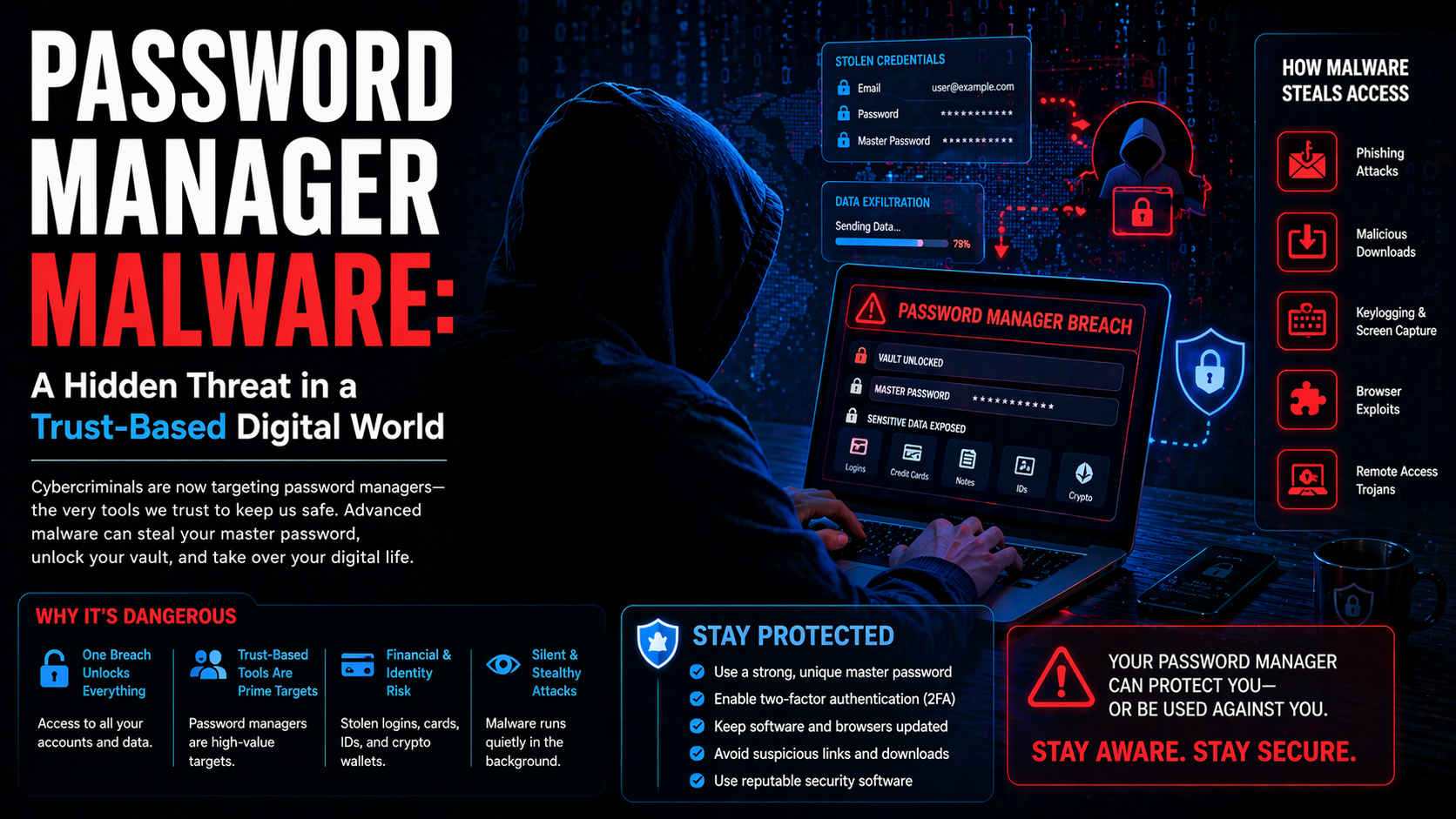
But what happens when the very tool designed to protect your secrets becomes the target of cybercriminals? This is where password manager malware enters the picture. It is a growing and often misunderstood threat that quietly takes advantage of trust. Unlike traditional malware that aims to damage systems or display obvious signs of infection, this type works silently, aiming for something far more valuable: your identity.
What Is Password Manager Malware
Password manager malware is a type of malicious software specifically designed to target password management tools. Instead of attacking random files or slowing down your system, it focuses on extracting sensitive data such as saved passwords, autofill information, and even master credentials.
This malware can infect devices through various means, including fake downloads, phishing emails, compromised websites, or bundled software. Once inside, it tries to locate password manager databases, intercept login activities, or capture keystrokes when you unlock your vault. The danger lies in its precision. It does not just steal one password. It can potentially unlock access to your entire digital life in one move.
Why Hackers Target Password Managers
Password managers are attractive targets because they act as centralized storage for sensitive data. Instead of stealing individual credentials one by one, attackers can focus on a single point of access. There is also a psychological factor involved. People trust password managers deeply. Once they start using one, they often store everything inside it without hesitation. This makes the reward for attackers significantly higher.
Another reason is efficiency. Gaining access to a password manager can provide credentials for banking platforms, business tools, cloud storage, and even cryptocurrency wallets. In many cases, attackers do not need to hack multiple systems when they can simply unlock one.
How Password Manager Malware Works
The way this malware operates depends on its design, but most variants follow a similar pattern. First, it gains entry into a device through social engineering or software vulnerabilities. Once installed, it begins scanning for known password manager applications or browser extensions. Some malware variants focus on memory scraping. When you unlock your password manager, the decrypted data temporarily exists in your system’s memory. Malware can capture this information before it is secured again. Others rely on keylogging techniques. They record every keystroke, including the master password used to unlock the vault. Once the attacker has the master password, they can attempt to access the stored data directly.
There are also clipboard hijackers that monitor copied data. If you copy a password from your manager to paste it into a login field, the malware can intercept it in real time. More advanced threats may even modify browser behavior. They can trick users into entering credentials into fake login forms or redirect them to phishing pages that look identical to legitimate ones.
The Role of Fake Password Managers
One of the most deceptive tactics used by cybercriminals is the creation of fake password manager apps. These apps often look identical to legitimate ones, complete with logos, user interfaces, and branding. Users may download them from unofficial websites or even stumble upon them through search engine ads. Once installed, these fake tools ask users to import or create passwords. Instead of securing the data, they quietly send it to remote servers controlled by attackers. This approach is particularly dangerous because it does not rely on exploiting technical vulnerabilities. It exploits human trust instead.
Signs That Your Password Manager May Be Compromised
Password manager malware is designed to remain hidden, but there are subtle signs that something might be wrong. You might notice unusual login attempts on your accounts, even though you use strong and unique passwords. Another warning sign is unexpected behavior in your password manager, such as auto-filling incorrect data or failing to recognize saved credentials. Sometimes, your device may feel slower than usual, or you may see unknown processes running in the background. In more serious cases, you may receive alerts about password changes or suspicious activity across multiple accounts at the same time. This often indicates that attackers have gained access to your stored credentials.
Real-World Impact of Password Manager Malware
The consequences of such an attack can be severe. Once attackers gain access to your password manager, they can log into your accounts without triggering suspicion. They may transfer money, steal personal data, or even lock you out of your own accounts.
For businesses, the damage can be even greater. Employees often store work-related credentials in password managers. A single compromised device can lead to data breaches, financial loss, and reputational damage. In some cases, attackers use stolen credentials to launch further attacks. They may access email accounts to reset other passwords or impersonate users to trick others into sharing sensitive information.
How This Malware Is Spreading
Password manager malware spreads through many of the same channels as other cyber threats. Phishing emails remain one of the most common methods. These emails may contain attachments or links that appear legitimate but lead to malicious downloads.
Another common method is software bundling. Users may download free tools or cracked software that secretly includes malware. Once installed, it operates quietly in the background. Malicious advertisements, also known as malvertising, can redirect users to infected websites. Even visiting a compromised site can sometimes trigger a download without the user’s knowledge. Browser extensions are another growing risk. Some extensions claim to enhance security or productivity but actually contain hidden malicious code.
The Illusion of Complete Security
Many people believe that using a password manager automatically guarantees safety. While these tools are designed with strong encryption and security practices, they are not immune to threats. The biggest vulnerability often lies outside the password manager itself. If your device is compromised, even the most secure vault can be accessed indirectly. This creates a false sense of security that attackers are eager to exploit. Security is not just about tools. It is about the entire environment in which those tools operate.
Protecting Yourself Against Password Manager Malware
Staying safe requires a combination of awareness and good practices. The first step is to download password managers only from official sources. Avoid third-party websites or unknown links, even if they appear trustworthy. Keeping your system updated is also essential. Many malware attacks rely on outdated software with known vulnerabilities. Regular updates can close these gaps. Using antivirus and anti-malware tools adds another layer of protection. These tools can detect and remove threats before they cause serious damage. It is also important to enable multi-factor authentication wherever possible. Even if attackers gain access to your passwords, they will still need an additional verification step. Being cautious with emails and downloads can make a significant difference. If something feels suspicious, it is better to avoid it than take the risk.
The Importance of a Strong Master Password
Your master password is the key to your entire password manager. If it is weak or reused, it becomes an easy target for attackers. A strong master password should be long, unique, and difficult to guess. It should not be based on personal information or common phrases. Combining random words, symbols, and numbers can create a more secure option. Remembering such a password can be challenging, but it is worth the effort. It is the one password that protects all others.
Future of Password Security
As cyber threats continue to evolve, so does the technology designed to combat them. Passwordless authentication methods, such as biometrics and security keys, are becoming more popular. These methods reduce reliance on traditional passwords and make it harder for attackers to gain access. However, password managers will likely remain relevant for years to come. They provide a practical solution for managing credentials in a complex digital environment. The key is to use them wisely and stay aware of potential risks.
A Human Perspective on Digital Trust
At its core, the issue of password manager malware is about trust. We trust technology to protect our personal and professional lives. We trust apps to keep our secrets safe. But trust should never replace caution. Cybersecurity is not just a technical challenge. It is a human one. Attackers often rely on human behavior more than technical weaknesses. They take advantage of curiosity, urgency, and convenience. Understanding this can help shift the way we approach security. It is not about living in fear, but about staying informed and making smarter choices.
Final Thoughts
Password manager malware represents a quiet but serious threat in the modern digital landscape. It does not announce itself with obvious damage. Instead, it works behind the scenes, targeting the very tools we rely on for safety.
The good news is that awareness can go a long way. By understanding how this threat works and taking simple precautions, you can significantly reduce your risk. Technology will continue to evolve, and so will cyber threats. But one thing remains constant: the importance of staying vigilant. Your digital life is valuable, and protecting it starts with the choices you make every day.

