Cybersecurity threats continue to evolve every year, and one of the most serious dangers organizations face is the zero-day vulnerability. These security flaws are especially concerning because attackers can exploit them before software developers have time to create and release a fix. As a result, businesses, government agencies, and individual users can become victims of cyberattacks without even realizing they are at risk.
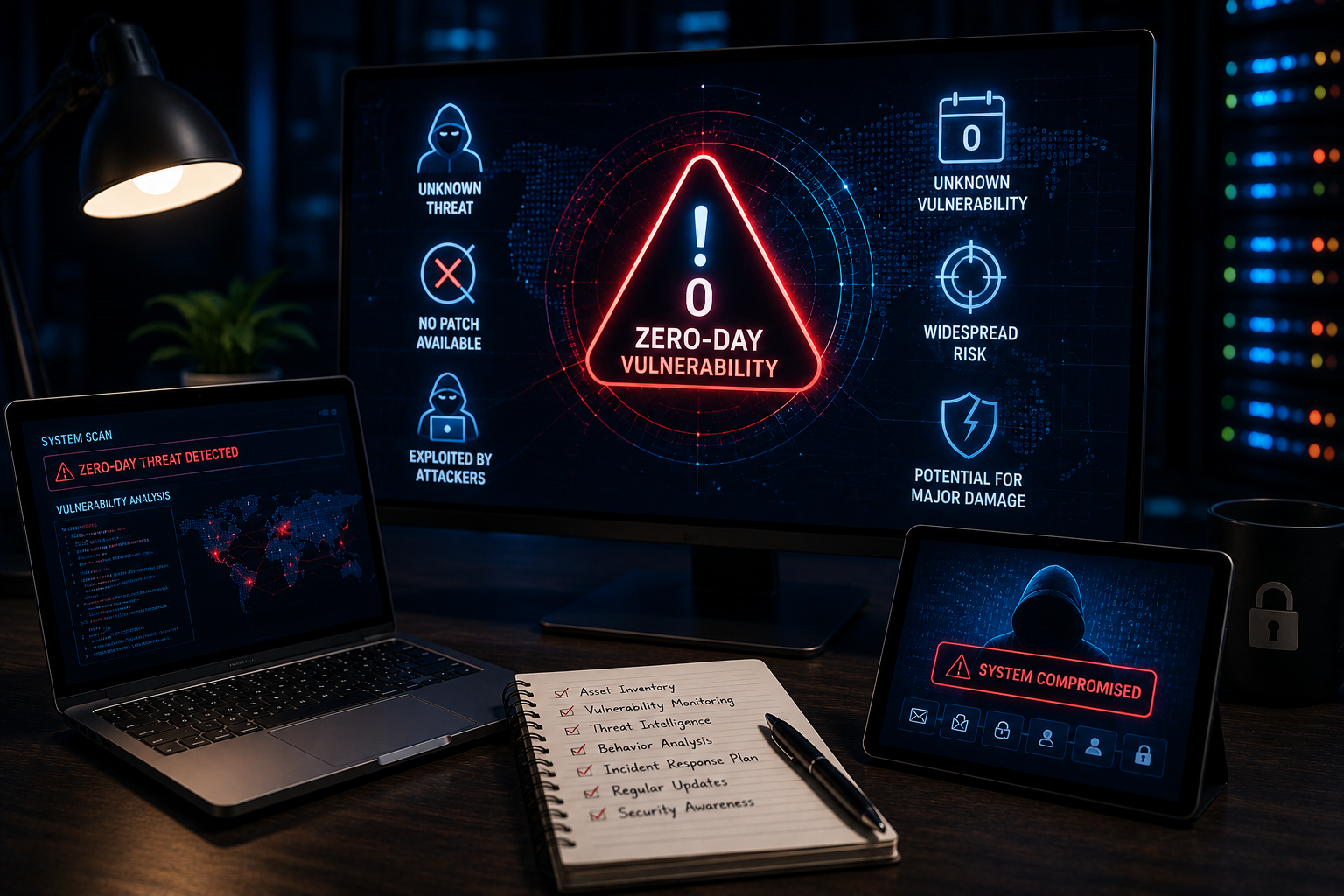
In 2026, zero-day vulnerabilities remain one of the most valuable weapons used by cybercriminals, ransomware groups, and even state-sponsored hacking organizations. A single unpatched vulnerability can lead to data breaches, financial losses, service disruptions, and unauthorized access to sensitive information.
Understanding how zero-day vulnerabilities work and learning how to reduce their impact is essential for anyone responsible for protecting digital systems. In this article, we’ll explain what zero-day vulnerabilities are, why they are so dangerous, how attackers exploit them, and what organizations can do to defend against them.
What Is a Zero-Day Vulnerability?
A zero-day vulnerability is a security flaw in software, hardware, or firmware that is unknown to the vendor or has not yet been patched. Because developers have had “zero days” to fix the issue, attackers can exploit it before a security update becomes available.
These vulnerabilities can exist in:
- Operating systems
- Web browsers
- Mobile applications
- Enterprise software
- Cloud platforms
- Network devices
- Internet of Things (IoT) devices
Once discovered by attackers, a zero-day vulnerability may become a powerful tool for compromising systems before defenders have a chance to respond.
What Is a Zero-Day Exploit?
A zero-day vulnerability and a zero-day exploit are related but not the same thing.
The vulnerability is the security flaw itself. A zero-day exploit is the method or code attackers use to take advantage of that flaw.
For example, if a web browser contains an unknown programming error that allows attackers to execute malicious code, the programming error is the vulnerability. The malicious code designed to trigger that weakness is the exploit.
Cybercriminals often develop exploits quickly after discovering a vulnerability, especially if they believe valuable targets can be compromised.
Why Are Zero-Day Vulnerabilities So Dangerous?
Zero-day vulnerabilities are considered among the most dangerous cybersecurity threats because there is no immediate protection available when they are first discovered.
Unlike known vulnerabilities, security software may not recognize attacks targeting newly discovered flaws.
Several factors make zero-day vulnerabilities especially dangerous:
- No security patch exists initially.
- Traditional antivirus software may not detect the attack.
- Organizations often remain unaware they are vulnerable.
- Attackers can exploit thousands of systems before fixes become available.
- Sensitive data may be stolen before security teams detect suspicious activity.
The combination of secrecy and speed gives attackers a significant advantage during the early stages of exploitation.
How Attackers Discover Zero-Day Vulnerabilities
Cybercriminals use several methods to identify previously unknown vulnerabilities.
Some attackers perform extensive security research by analyzing software code and searching for programming mistakes. Others use automated tools to test applications for unexpected behavior.
In some cases, vulnerabilities are discovered accidentally during routine software testing. Unfortunately, if the discovery falls into the wrong hands, it can become a dangerous zero-day exploit.
There are also underground markets where previously undisclosed vulnerabilities are bought and sold for large amounts of money. High-value zero-day exploits targeting widely used software can command significant prices because of their potential impact.
Common Targets for Zero-Day Attacks
Attackers usually focus on software that is widely used because it offers the greatest opportunity to compromise many systems.
Common targets include:
- Web browsers
- Email clients
- Office productivity software
- Operating systems
- Virtual private network (VPN) software
- Cloud services
- Database servers
- Mobile operating systems
The more popular a platform is, the more attractive it becomes to attackers searching for zero-day opportunities.
How Zero-Day Attacks Work
Although every attack is different, most zero-day attacks follow a similar process.
First, attackers discover an unknown vulnerability. They then create an exploit capable of triggering the flaw. Next, they deliver the exploit using methods such as phishing emails, malicious websites, infected documents, or compromised software.
Once the exploit succeeds, attackers may:
- Install malware
- Steal confidential information
- Gain administrator privileges
- Deploy ransomware
- Move through internal networks
- Create persistent backdoors
If the vulnerability remains undiscovered, attackers may continue exploiting it for weeks or even months.
The Business Impact of Zero-Day Attacks
Zero-day attacks can have serious consequences for organizations of all sizes.
Potential impacts include:
- Data breaches
- Financial losses
- Business downtime
- Regulatory penalties
- Reputation damage
- Customer trust issues
- Intellectual property theft
Even a single successful attack can interrupt operations and require significant resources to investigate and recover.
Why Traditional Security Tools May Not Stop Zero-Day Attacks
Traditional antivirus software often relies on known malware signatures to identify threats.
Since zero-day attacks involve previously unknown vulnerabilities, there may be no existing signatures available.
This means attackers can sometimes bypass conventional security tools during the early stages of an attack.
Modern cybersecurity solutions improve protection by analyzing behavior rather than depending only on known attack patterns.
Behavior-based detection can identify suspicious activities such as:
- Unexpected memory usage
- Privilege escalation attempts
- Unusual network connections
- Unauthorized file modifications
- Suspicious application behavior
These indicators may reveal attacks even when the exact vulnerability remains unknown.
The Role of Artificial Intelligence
Artificial intelligence has become increasingly important in defending against zero-day threats.
AI-powered security systems continuously analyze user activity, application behavior, and network traffic to identify anomalies that may indicate an ongoing attack.
Instead of waiting for known signatures, AI can recognize unusual patterns that differ from normal operations.
Examples include:
- Unexpected data transfers
- Abnormal login activity
- Suspicious process execution
- Rapid privilege changes
- Unknown application behavior
Although AI cannot prevent every attack, it significantly improves early detection and response.
Vulnerability Disclosure Programs
Many technology companies encourage security researchers to report vulnerabilities responsibly.
Responsible disclosure allows vendors to develop security updates before attackers widely exploit discovered flaws.
Many organizations also operate bug bounty programs that reward researchers who identify vulnerabilities.
These programs help improve software security while reducing the chances that vulnerabilities will be abused by cybercriminals.
How Organizations Can Reduce Zero-Day Risks
While preventing every zero-day attack is impossible, businesses can significantly reduce their exposure.
Some effective security measures include:
Keep Software Updated
Install security patches immediately after vendors release them.
Although patches cannot stop unknown vulnerabilities before disclosure, they reduce the time attackers have to exploit newly discovered flaws.
Use Multi-Layered Security
Organizations should combine multiple defensive technologies such as:
- Endpoint protection
- Firewalls
- Email security
- Network monitoring
- Endpoint detection and response (EDR)
- Intrusion detection systems
Multiple security layers increase the likelihood of detecting suspicious activity.
Monitor Network Activity
Continuous monitoring helps identify unusual behavior before attackers cause extensive damage.
Security teams should investigate:
- Unexpected outbound traffic
- Unusual login attempts
- Large data transfers
- Unauthorized administrative activity
Early detection often limits the impact of an attack.
Implement the Principle of Least Privilege
Users should only receive access required for their specific roles.
Restricting permissions reduces the opportunities attackers have after compromising an account.
Segment Critical Systems
Network segmentation prevents attackers from moving freely throughout an organization’s environment.
Separating critical infrastructure limits the damage caused by a successful compromise.
Maintain Secure Backups
Although backups cannot prevent zero-day attacks, they greatly improve recovery after ransomware incidents or destructive malware infections.
Backups should be stored securely and tested regularly.
Employee Awareness Matters
Many zero-day attacks begin with phishing emails or malicious downloads.
Employees should receive regular training on:
- Recognizing suspicious emails
- Avoiding unknown attachments
- Reporting unusual activity
- Following security policies
- Protecting login credentials
Well-trained employees often become an organization’s first line of defense.
Incident Response Planning
Organizations should prepare for the possibility of a zero-day attack before one occurs.
An effective incident response plan includes:
- Detection procedures
- Isolation of affected systems
- Communication strategies
- Recovery processes
- Evidence collection
- Post-incident reviews
Prepared organizations recover much faster than those responding without a plan.
The Future of Zero-Day Threats
As software becomes more complex, zero-day vulnerabilities will continue to appear. At the same time, attackers are using artificial intelligence, automation, and advanced research techniques to discover weaknesses more quickly.
Security vendors are responding by improving behavior-based detection, threat intelligence, cloud security, and automated incident response. Governments and technology companies are also investing more in coordinated vulnerability disclosure programs to reduce the window of opportunity for attackers.
Although zero-day vulnerabilities are unlikely to disappear, advances in cybersecurity are helping organizations detect and respond to these threats more effectively than ever before.
Conclusion
Zero-day vulnerabilities remain one of the most serious cybersecurity challenges in 2026 because they allow attackers to exploit unknown security flaws before patches become available. Their ability to bypass traditional defenses makes them especially dangerous for businesses, governments, and individuals.
While no organization can eliminate the risk completely, adopting a layered security strategy, monitoring systems continuously, applying updates quickly, limiting user privileges, educating employees, and preparing an effective incident response plan can significantly reduce the impact of zero-day attacks.
Cybersecurity is a continuous process, and staying informed about emerging threats is one of the best ways to protect digital assets. Organizations that combine modern security technologies with proactive planning will be far better prepared to defend against zero-day vulnerabilities and the evolving cyber threats of the future.

