The internet feels safe when everything works smoothly. You log into your WordPress site, publish content, check your traffic, and move on with your day. But what many website owners do not realize is that behind this normal routine, a quiet and dangerous threat is growing. It does not crash your site. It does not show obvious warning signs. Instead, it quietly watches, collects, and steals. This threat is known as a hacked WordPress infostealer.
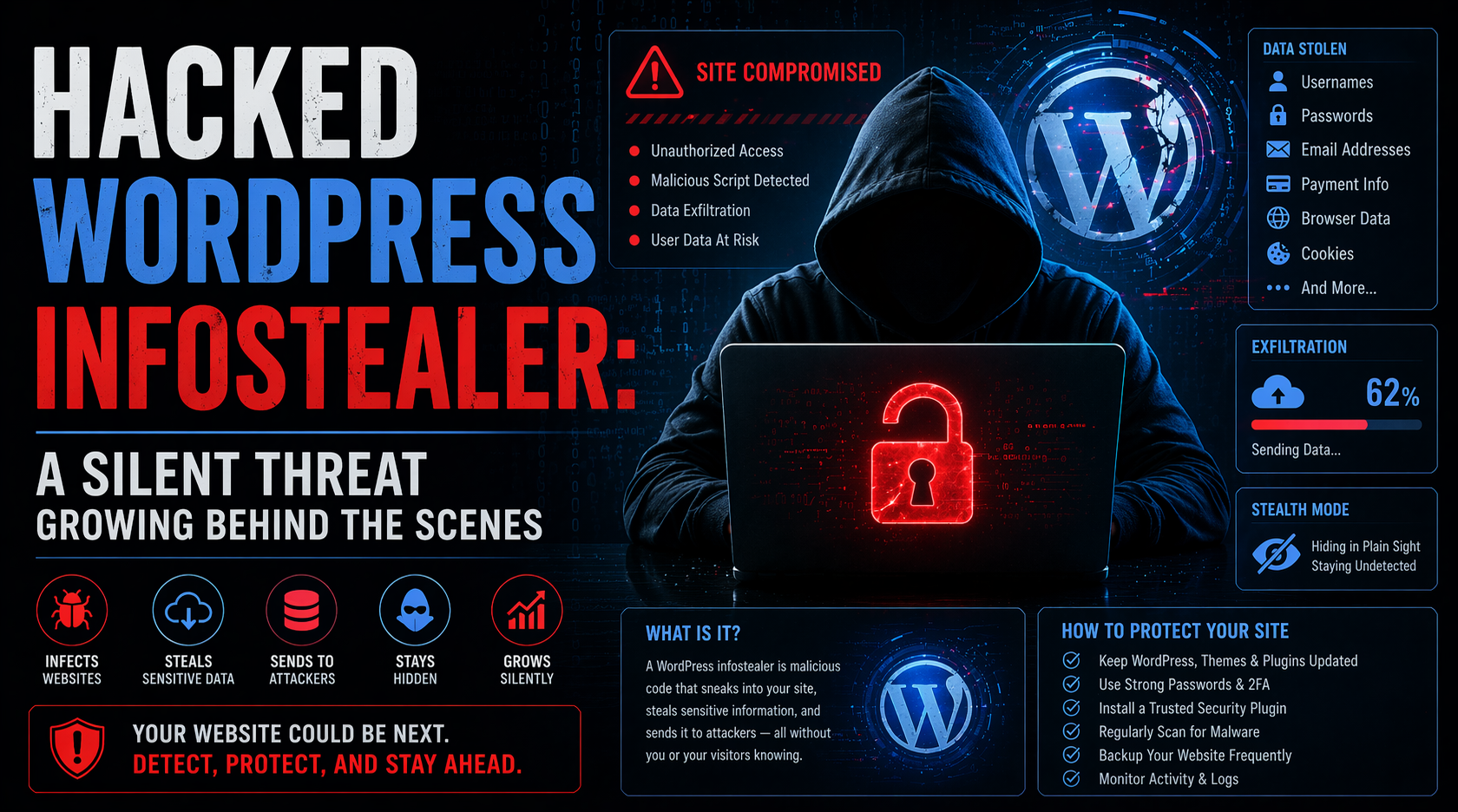
This is not just another cybersecurity buzzword. It is a real and evolving risk that affects bloggers, business owners, freelancers, and even developers. What makes it more dangerous is how invisible it can be. By the time you notice something is wrong, the damage may already be done. Understanding how this threat works is the first step toward protecting yourself and your website.
What Is a WordPress Infostealer
A WordPress infostealer is a type of malicious code designed to secretly collect sensitive information from a hacked WordPress website. Unlike traditional hacks that deface your site or shut it down, an infostealer focuses on data. It targets login credentials, personal user details, admin access, payment information, and even browser session data. Once your WordPress site is compromised, the infostealer quietly operates in the background. It may log keystrokes, capture form submissions, or intercept data sent between your site and its users. This stolen data is then sent to attackers, who can use it for financial fraud, identity theft, or even larger cyberattacks. The most dangerous part is that everything may appear normal. Your website may still load perfectly, and your visitors may never suspect anything is wrong.
How WordPress Sites Get Hacked
Most WordPress hacks do not happen because of advanced hacking skills. They usually happen because of simple mistakes or overlooked security gaps. Attackers often look for easy entry points, and WordPress, being widely used, becomes a frequent target.
One common reason is outdated plugins and themes. When developers release updates, they often fix security issues. If you ignore those updates, your site becomes vulnerable. Hackers can exploit these weaknesses to inject malicious code, including infostealers. Weak passwords are another major issue. Many site owners still use simple or repeated passwords across multiple platforms. If one account gets compromised, attackers can easily gain access to your WordPress dashboard.
Another common method is through infected plugins or themes downloaded from untrusted sources. These files may look legitimate, but they can carry hidden malware. Once installed, they open the door for attackers to take control. Even hosting environments can play a role. Shared hosting with poor security measures can expose multiple websites if one gets compromised.
What Happens After the Hack
Once a hacker gains access to your WordPress site, the infostealer begins its work quietly. It does not rush. Instead, it collects data over time, making it harder to detect. Admin login details are often the first target. If attackers gain full admin access, they can control your entire website. They may create hidden accounts, change settings, or install more malware.
User data is another valuable target. If your website collects emails, passwords, or personal information, all of it can be stolen. This is especially dangerous for eCommerce sites or membership platforms. In some cases, attackers inject malicious scripts into your site. These scripts can steal data directly from your visitors. This means your users are also at risk, not just you. The stolen data is then sent to remote servers controlled by attackers. From there, it can be sold on the dark web or used for further attacks.
Signs Your WordPress Site May Be Infected
Detecting an infostealer is not always easy, but there are some warning signs you should not ignore. You may notice unusual login activity, such as logins from unknown locations or at strange times. This could indicate that someone else has access to your site. Your website may start running slower than usual. Malware often consumes resources, which can affect performance. Another sign is unexpected changes in your files or database. If you see new files you did not create or changes in your code, it could be a sign of a compromise.
Sometimes, your hosting provider or security plugin may alert you about suspicious activity. These warnings should never be ignored. In more serious cases, your site may be flagged by search engines or browsers as unsafe. This can damage your reputation and reduce your traffic.
Why Infostealers Are More Dangerous Than Traditional Hacks
Traditional hacks are often loud and visible. They deface your homepage or take your site offline. While this is damaging, it also alerts you quickly. Infostealers are different. They are designed to stay hidden. Their goal is not to destroy your site but to use it as a tool for stealing data.
This makes them more dangerous because they can operate for weeks or even months without being detected. During this time, they may collect a large amount of sensitive information. Another reason they are dangerous is that they affect not only the website owner but also the users. If your visitors trust your site and enter their information, they may unknowingly become victims.
The Real Impact on Website Owners
A hacked WordPress site with an infostealer can cause serious damage. The financial impact can be significant, especially if customer data is involved. You may lose customer trust, which is often harder to recover than money. Once users feel that your site is unsafe, they may never return. There can also be legal consequences, especially if you are responsible for protecting user data. Data breaches can lead to fines and legal actions. Search engine rankings can also suffer. If your site is flagged as malicious, it may be removed from search results, affecting your visibility and traffic. In some cases, attackers may even use your site to launch further attacks, turning your platform into a tool for spreading malware.
How to Protect Your WordPress Site
Protecting your WordPress site does not require advanced technical skills, but it does require consistency and awareness. Keeping your WordPress core, plugins, and themes updated is one of the simplest and most effective steps. Updates often include security patches that protect against known vulnerabilities.
Using strong and unique passwords is another important step. Avoid using the same password across multiple accounts. Installing security plugins can help monitor your site for suspicious activity. These tools can detect malware, block attacks, and alert you to potential threats. Regular backups are also essential. If your site gets compromised, having a backup allows you to restore it quickly without losing data. Choosing a reliable hosting provider with strong security measures can also make a big difference.
Cleaning a Hacked WordPress Site
If your site is already infected, taking immediate action is important. The longer you wait, the more damage the infostealer can cause. Start by taking your site offline if possible. This helps prevent further data theft and protects your visitors. Next, scan your website using a trusted security tool. This can help identify malicious files and code. Remove any suspicious plugins, themes, or files. If you are unsure, it is better to replace them with clean versions. Change all your passwords, including your WordPress admin, hosting account, and database credentials. Restoring your site from a clean backup is often the safest option. However, make sure the backup itself is not infected. If the situation is complex, seeking professional help may be the best choice.
The Human Side of Cybersecurity
It is easy to think of hacking as a technical issue, but it is also a human one. Behind every hacked site is a person who trusted their platform and did not expect to become a target. Many website owners feel shocked or even guilty when their site is compromised. But the truth is, cyber threats are constantly evolving, and even experienced users can fall victim. What matters is how you respond. Taking action, learning from the experience, and improving your security can make a big difference. Cybersecurity is not about being perfect. It is about being prepared.
The Future of WordPress Security
As WordPress continues to grow, so will the threats targeting it. Infostealers are becoming more advanced, using techniques that make them harder to detect. Artificial intelligence and automation are also being used by attackers, making attacks faster and more efficient. At the same time, security tools are improving. New technologies are being developed to detect and prevent threats more effectively. The future of WordPress security will depend on awareness. The more users understand these risks, the harder it becomes for attackers to succeed.
Final Thoughts
A hacked WordPress infostealer is not something to ignore. It is a silent threat that can cause serious damage without obvious signs. The good news is that it is preventable. By staying updated, using strong security practices, and being aware of potential risks, you can protect your website and your users. Your website is more than just a digital space. It represents your work, your business, and your reputation. Keeping it safe should always be a priority. In a world where cyber threats are constantly evolving, awareness and action are your strongest defenses.


I went to goin you