The world around us is becoming smarter every day. From the watch on your wrist to the camera at your front door, everyday objects are now connected to the internet. This growing network is known as the Internet of Things, or IoT. While these connected devices bring comfort, efficiency, and innovation, they also introduce new risks. This is where IoT security comes into the picture.
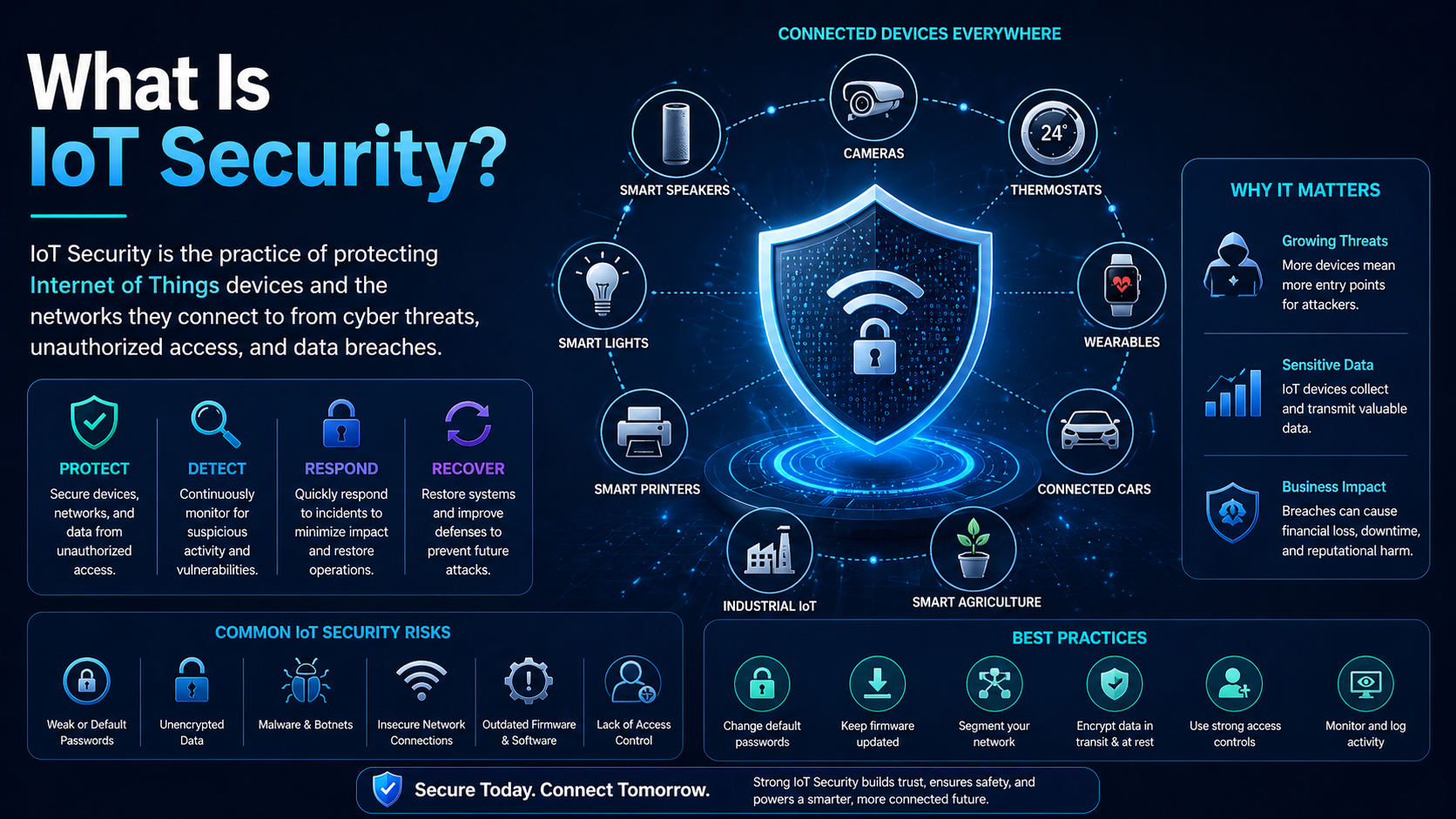
IoT security refers to the methods, tools, and practices used to protect internet-connected devices and the networks they operate on. It focuses on keeping data safe, preventing unauthorized access, and ensuring that devices function as intended without being manipulated by attackers. As the number of IoT devices continues to rise across homes, businesses, and industries, the importance of securing them has become more critical than ever.
Understanding the Internet of Things
To understand IoT security, it helps to first understand what IoT really is. The Internet of Things is a system of physical objects that are embedded with sensors, software, and connectivity features. These devices collect and exchange data over the internet. Examples include smart TVs, fitness trackers, home automation systems, industrial sensors, and even connected cars.
What makes IoT unique is that many of these devices operate automatically. They communicate with each other and perform actions without direct human involvement. While this automation improves convenience and efficiency, it also creates more entry points for cyber threats. Every connected device becomes a potential target if it is not properly secured.
Why IoT Security Matters
The importance of IoT security cannot be ignored. As more devices connect to the internet, the attack surface grows. This means hackers have more opportunities to exploit weaknesses. A single vulnerable device can be enough to compromise an entire network.
Imagine a smart home where everything is connected, from lights to security cameras. If one device is poorly secured, an attacker could gain access to the network and control multiple systems. In more serious cases, such as healthcare or industrial environments, compromised IoT devices can lead to real-world harm, including safety risks and financial losses. Data privacy is another major concern. IoT devices often collect sensitive information such as personal habits, location data, and health details. If this data falls into the wrong hands, it can be misused in harmful ways. IoT security helps protect this data and ensures that users maintain control over their information.
Common IoT Security Risks
IoT devices face a wide range of security threats. One of the most common issues is weak or default passwords. Many devices come with factory-set login credentials that users never change. This makes it easy for attackers to gain access using simple methods.
Another major risk is outdated software. IoT devices often run on firmware that may not receive regular updates. Without updates, known vulnerabilities remain unpatched, giving attackers an easy way in. Lack of encryption is also a problem. If data transmitted between devices is not encrypted, it can be intercepted and read by unauthorized parties. This exposes sensitive information and weakens overall security.
Some devices are designed with limited computing power, which means they may not support advanced security features. As a result, manufacturers sometimes prioritize functionality over security, leaving devices exposed. Network vulnerabilities can also play a role. If an IoT device is connected to an unsecured network, it can act as a gateway for attackers to access other systems. This is especially risky in business environments where multiple devices are interconnected.
Types of IoT Security Solutions
To protect against these risks, various IoT security solutions are used. These solutions focus on different aspects of device and network protection. Device authentication ensures that only authorized devices can connect to a network. This prevents unknown or malicious devices from gaining access. Encryption is used to protect data during transmission. It ensures that even if data is intercepted, it cannot be easily understood or misused. Network security tools help monitor and control traffic between devices. They detect unusual activity and block potential threats before they cause harm.
Firmware updates and patch management are essential for fixing vulnerabilities. Regular updates help keep devices protected against the latest threats. Access control systems limit who can interact with devices and what actions they can perform. This reduces the risk of unauthorized changes or misuse.
Challenges in IoT Security
Despite the available solutions, IoT security comes with its own set of challenges. One of the biggest challenges is the sheer number of devices. Managing and securing thousands of connected devices can be complex and time-consuming. Another challenge is the diversity of devices. IoT includes a wide range of products from different manufacturers, each with its own design and security standards. This lack of uniformity makes it difficult to apply consistent security measures.
Limited resources on devices also create challenges. Many IoT devices are designed to be small and efficient, which means they may not have the processing power needed for strong security features.
User awareness is another factor. Many people are not aware of the risks associated with IoT devices. They may not change default settings or apply updates, leaving devices vulnerable. Finally, the fast pace of innovation in IoT means that new devices are constantly being introduced. Keeping up with security for all these devices is a continuous effort.
IoT Security in Everyday Life
IoT security is not just a technical concept. It affects everyday life in many ways. In smart homes, it protects devices like thermostats, cameras, and voice assistants from being accessed by strangers. In healthcare, IoT security ensures that medical devices such as monitors and wearable trackers operate safely and keep patient data private. A security breach in this area could have serious consequences.
In industries, IoT devices are used for monitoring equipment, managing supply chains, and improving efficiency. Security in these environments is critical to prevent disruptions and protect sensitive business data. Even in transportation, connected vehicles rely on secure communication systems. IoT security helps ensure that these systems are not tampered with, keeping drivers and passengers safe.
Best Practices for IoT Security
Improving IoT security starts with simple steps. Changing default passwords is one of the easiest and most effective actions. Strong, unique passwords make it harder for attackers to gain access. Keeping devices updated is also important. Regular updates fix known vulnerabilities and improve overall security. Using secure networks adds another layer of protection. A strong Wi-Fi password and proper network configuration can reduce the risk of unauthorized access.
Disabling unnecessary features can help minimize exposure. If a device has functions that are not needed, turning them off reduces potential entry points. Monitoring device activity is also useful. Keeping an eye on how devices behave can help detect unusual patterns that may indicate a security issue.
The Role of Manufacturers
Manufacturers play a crucial role in IoT security. They are responsible for designing devices with security in mind from the beginning. This includes using secure coding practices, providing regular updates, and offering clear instructions for users.
Transparency is also important. Users should know how their data is collected, stored, and used. Clear communication builds trust and helps users make informed decisions. Some companies are now adopting security standards and certifications to ensure their products meet certain requirements. This is a positive step toward improving overall IoT security.
The Future of IoT Security
As technology continues to evolve, IoT security will become even more important. The number of connected devices is expected to grow rapidly, bringing new opportunities and challenges.
Artificial intelligence and machine learning are being used to improve security systems. These technologies can analyze patterns and detect threats more quickly than traditional methods. Governments and organizations are also working on regulations and guidelines to improve IoT security. These efforts aim to create a safer environment for both consumers and businesses. At the same time, awareness is increasing. More people are recognizing the importance of securing their devices and taking steps to protect themselves.
Final Thoughts
IoT security is an essential part of the connected world we live in today. It ensures that the devices we rely on remain safe, reliable, and trustworthy. While IoT brings many benefits, it also introduces risks that cannot be ignored. By understanding what IoT security is and why it matters, individuals and organizations can take steps to protect their devices and data. Simple actions, combined with strong security practices, can make a significant difference. As the Internet of Things continues to grow, IoT security will remain a key focus. It is not just about protecting technology, but also about safeguarding the people who use it every day.

