In today’s digital world, keeping your devices safe from online threats is more important than ever. With cyberattacks becoming increasingly sophisticated, selecting the right antivirus software is crucial. Two household names in this space are McAfee and Norton. Both have decades of experience, and both continue to evolve their features and protection in 2025. But which one is truly better? Let’s explore their strengths, weaknesses, and overall value for this year.
Overview: McAfee and Norton
McAfee: Founded in 1987, McAfee has grown from a simple antivirus company into a full-fledged cybersecurity provider. After selling its enterprise division in 2021, McAfee shifted its focus entirely to consumers. By 2025, it now integrates AI-powered threat detection and identity theft protection tools, along with a Scam Detector that flags suspicious messages, emails, and videos across Windows PCs and mobile devices.
Norton: Launched in 1990 and now part of Gen Digital, Norton has become a comprehensive security suite. Its flagship, Norton 360, covers antivirus protection, VPN, password management, cloud backup, and dark web monitoring. In 2025, Norton remains a top choice for those who want strong protection paired with additional privacy features.
Protection and Performance
McAfee: Independent lab tests consistently show McAfee as a reliable defender against malware. It has earned high ratings from AV-TEST and SE Labs, reflecting excellent real-world protection and minimal system slowdown. In 2025, it continues to receive accolades for both malware detection and speed performance, making it a solid choice for everyday users.
Norton: Norton 360 is widely praised for near-perfect malware detection rates, slightly outperforming McAfee in recent tests. It also offers fast scanning speeds and a lighter impact on system performance, making it ideal for users who want maximum protection without slowing down their devices.
Feature Comparison
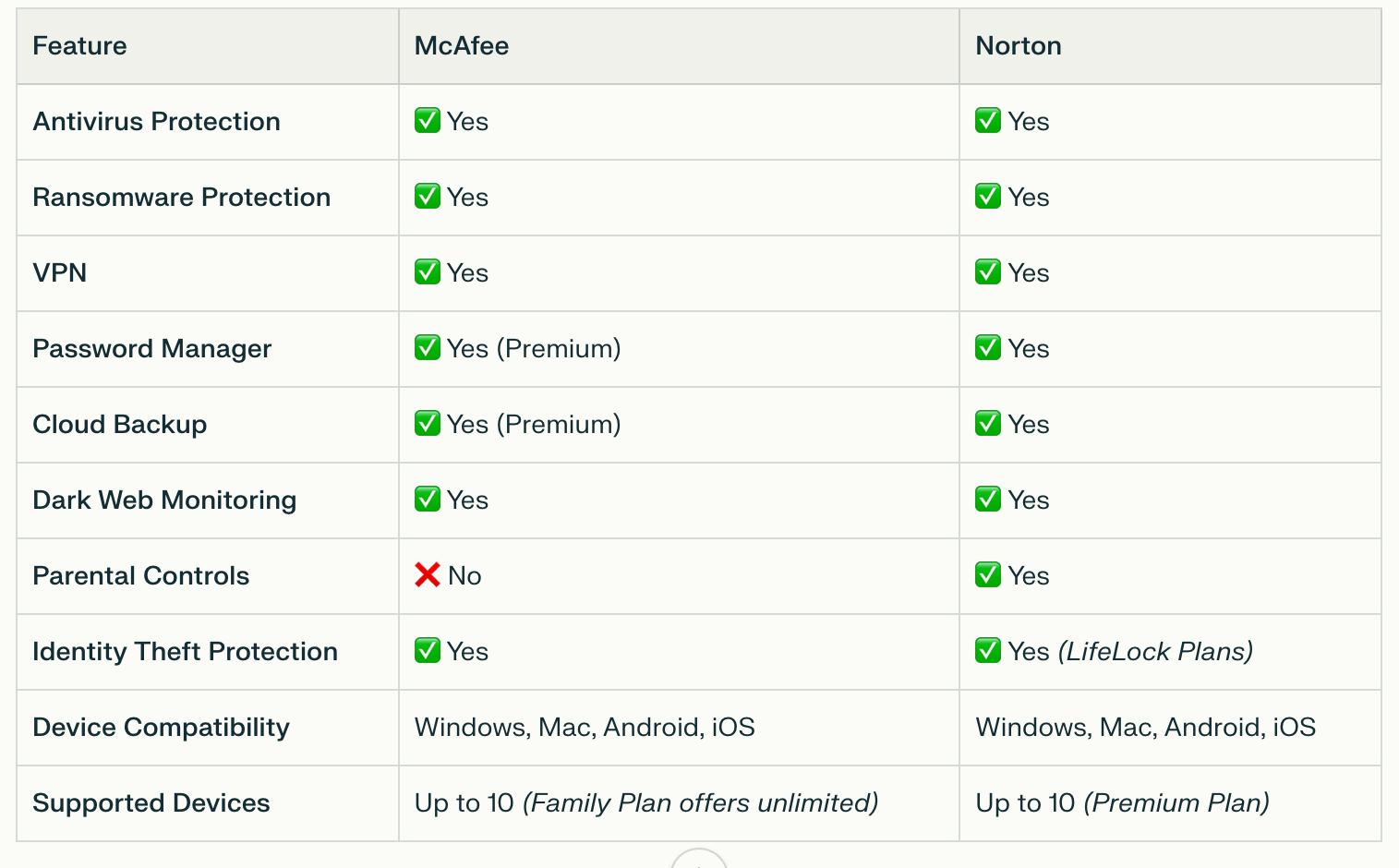
Both offer extensive protection and useful features, but Norton’s inclusion of parental controls gives it an edge for families.
Pricing Overview
McAfee: Plans start at $39.99/year, offering Basic, Essential, and Premium+ tiers. Premium+ includes a VPN, identity monitoring, and file protection, while the Family Plan covers unlimited devices at a competitive price.
Norton: Norton 360 starts at $59.99/year for the Standard plan (1 device), $89.99/year for Deluxe (up to 5 devices), and $109.99/year for Premium (up to 10 devices). Premium plans also include parental controls, cloud backup, and full feature access.
Mobile App Experience
McAfee: The McAfee mobile app provides Wi-Fi scanning, identity protection, and device optimization. Users can monitor multiple networks and get alerts for potential threats.
Norton: Norton’s mobile app is intuitive and syncs with the desktop version. It includes Wi-Fi scanning, device protection, and identity monitoring, making it easy for users to manage security on the go.
Customer Support
McAfee: Offers 24/7 support via phone, chat, and email. Users report quick responses and helpful assistance.
Norton: Provides support through similar channels, with consistent praise for professional and effective service.
Verdict: Which Is Better?
Both McAfee and Norton provide strong protection, but your choice depends on your specific needs:
Choose McAfee if you want:
-
Coverage for multiple devices or an entire family
-
Advanced identity theft protection
-
AI-powered scam detection
-
A smooth, low-impact experience on your PC or mobile device
Choose Norton if you want:
-
Slightly better malware detection and scanning speed
-
Integrated privacy tools like VPN and LifeLock
-
Parental controls and cloud backup options
-
Seamless mobile and desktop integration
Conclusion
In 2025, both McAfee and Norton remain excellent antivirus solutions. McAfee shines for families and AI-driven identity protection, while Norton is ideal for those who value high detection rates, extra privacy tools, and parental controls. Evaluate your needs carefully to choose the antivirus that best protects your devices and personal information.

