As humanity’s dependence on space-based systems deepens, satellites and orbital networks have quietly become some of the most critical yet least understood components of global digital infrastructure. Navigation, communications, weather forecasting, financial transactions, military operations, and internet connectivity increasingly rely on assets orbiting Earth. Unlike terrestrial systems, satellites operate in environments where physical access is nearly impossible, updates are slow, and failures can be irreversible. This unique context has created a dangerous misconception that space systems are inherently secure due to their isolation. In reality, satellites are cyber-physical systems deeply connected to ground stations, supply chains, and terrestrial networks, making them vulnerable to a wide range of cyber threats. Understanding threat models for space cybersecurity requires rethinking traditional assumptions and recognizing how attackers adapt their tactics to exploit the technical, operational, and geopolitical realities of orbital infrastructure.
Why Satellites Are High-Value Cyber Targets
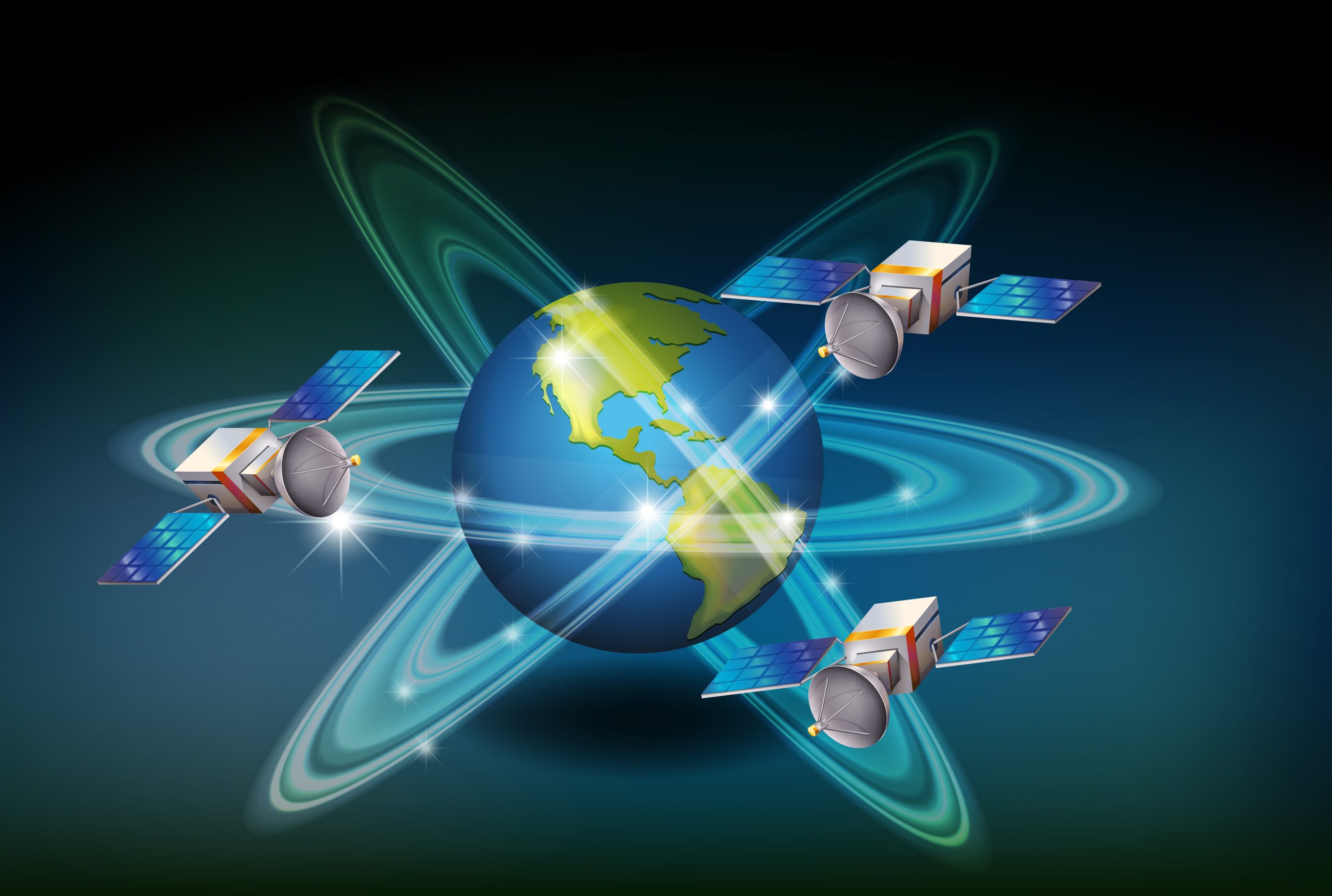
Satellites represent exceptionally high-value targets because of the disproportionate impact a successful attack can produce. A single compromised satellite can disrupt communications across continents, degrade military capabilities, or interfere with critical infrastructure on Earth. From an attacker’s perspective, this asymmetry is highly attractive, as relatively limited effort can yield strategic outcomes that would be difficult to achieve through conventional cyber attacks.
Additionally, satellites are long-lived assets often designed years before launch, meaning their hardware and software may already be outdated by the time they become operational. Patch cycles are slow, and in many cases, vulnerabilities cannot be fully remediated once the system is in orbit. This creates a static attack surface that sophisticated adversaries can study over long periods. The psychological appeal for attackers lies in persistence and leverage, as control or disruption of space assets offers both tactical advantage and symbolic power.
The Satellite Attack Surface Beyond Orbit
While satellites operate in space, their attack surface extends far beyond the vacuum of orbit. Ground stations, mission control systems, data processing centers, and supply chains all present potential entry points for cyber adversaries. These terrestrial components often rely on conventional IT infrastructure, making them susceptible to familiar attack techniques such as phishing, credential theft, and supply chain compromise.
Threat actors understand that attacking the satellite directly is often unnecessary when compromising a ground-based system can yield equivalent control. Once access is gained to command-and-control interfaces, attackers may issue malicious commands, disrupt telemetry, or manipulate payload data. This indirect approach aligns with attacker psychology favoring the path of least resistance, where complex space systems are exploited through comparatively mundane weaknesses on Earth.
Threat Actors Targeting Orbital Networks
The threat landscape for space cybersecurity includes a diverse range of actors with distinct motivations. Nation-state adversaries view satellites as strategic assets integral to intelligence, surveillance, and military operations. For these actors, cyber attacks against orbital systems are tools of geopolitical competition, deterrence, and conflict preparation. Such campaigns are often stealthy, long-term, and focused on reconnaissance or capability denial rather than immediate disruption.
Commercial competitors and criminal groups may target satellites for financial gain, industrial espionage, or extortion. As satellite-based internet and communication services expand, the economic incentives for exploitation grow accordingly. Hacktivist groups, while less technically sophisticated, may also attempt symbolic attacks to draw attention to political or environmental causes. Each of these actors operates under different risk tolerances and timelines, shaping the threat models defenders must consider.
Command Injection and Unauthorized Control
One of the most severe threat scenarios in satellite cybersecurity involves unauthorized command injection. If attackers gain access to command uplinks, they may alter satellite orientation, disable subsystems, or exhaust fuel reserves, effectively rendering the asset useless. Unlike terrestrial systems, recovery options are limited, and physical intervention is rarely possible.
The psychological dimension of this threat lies in the permanence of consequences. Attackers aware that their actions may cause irreversible damage may be emboldened by anonymity or ideological justification. From a defensive standpoint, this underscores the importance of strong authentication, command validation, and anomaly detection mechanisms that account for both technical and human factors in satellite operations.
Data Integrity and Signal Manipulation Attacks
Not all attacks aim to destroy or disable satellites. Manipulating data integrity can be equally damaging while remaining less visible. By altering sensor readings, navigation signals, or communication payloads, attackers can introduce subtle errors that propagate through dependent systems on Earth. For example, falsified GPS data can affect aviation, shipping, and financial networks without immediately revealing the source of the problem.
These attacks exploit trust relationships between space systems and their users. Because satellite data is often treated as authoritative, corrupted information may go unquestioned until downstream impacts become severe. Attackers leveraging this trust demonstrate a strategic mindset focused on influence rather than disruption, making detection and attribution significantly more challenging.
Supply Chain Risks in Space Systems
The supply chain for satellites and orbital networks introduces another critical threat vector. Space systems are assembled from components sourced globally, including hardware, firmware, and software developed by multiple vendors. Each link in this chain presents an opportunity for malicious insertion or compromise, whether intentional or accidental.
Supply chain attacks are particularly concerning in space cybersecurity because vulnerabilities introduced during design or manufacturing may remain hidden for years. Once deployed, these weaknesses can be activated remotely, providing attackers with privileged access that is difficult to detect or remove. The long timelines and complexity of space projects amplify the impact of such compromises, requiring defenders to adopt rigorous verification and assurance practices from the earliest stages of development.
Orbital Networks and the Rise of Mega-Constellations
The emergence of large satellite constellations has transformed the threat landscape by introducing scale and interdependence. While distributed architectures offer redundancy, they also expand the attack surface dramatically. A vulnerability affecting a single satellite model can potentially impact hundreds or thousands of units simultaneously.
From an attacker’s perspective, this concentration of similar systems creates efficiency. Exploiting a common weakness yields broad access, enabling large-scale disruption or surveillance. Defenders must therefore consider not only individual satellite security but systemic risks arising from homogeneity, automated management, and shared control infrastructure.
Challenges in Detection and Incident Response
Detecting cyber incidents in space systems presents unique challenges. Telemetry data is limited, latency is high, and distinguishing between cyber anomalies and natural environmental effects can be difficult. Solar radiation, space debris, and hardware degradation can all produce symptoms that resemble cyber interference, complicating analysis.
Incident response is equally constrained. Traditional approaches such as isolating systems, deploying patches, or reimaging devices may be impractical or impossible. These limitations require a shift toward prevention, resilience, and graceful degradation rather than reactive remediation. Understanding attacker behavior and intent becomes critical when technical options are limited.
Strategic and Geopolitical Implications
Space cybersecurity cannot be separated from geopolitics. Satellites are dual-use assets, serving both civilian and military purposes, and attacks on orbital systems may be interpreted as acts of aggression. This ambiguity increases the risk of escalation, particularly when attribution is uncertain.
From a strategic standpoint, cyber operations against space assets offer deniability and asymmetry, making them attractive tools in gray-zone conflict. Defenders must therefore consider not only technical security but policy, diplomacy, and international norms. The psychology of deterrence in space differs from terrestrial domains, as the consequences of miscalculation are global and long-lasting.
Building Resilient Space Cybersecurity Architectures
Addressing threats to satellites and orbital networks requires a resilience-first approach. This includes designing systems with layered defenses, strong cryptographic protections, and fail-safe modes that limit damage from unauthorized actions. Diversity in hardware and software can reduce systemic risk, while continuous monitoring and threat intelligence improve situational awareness.
Equally important is organizational readiness. Space operators must integrate cybersecurity into mission planning, training, and governance rather than treating it as an afterthought. Collaboration between commercial operators, governments, and international partners is essential, as no single entity can address the complexity of space cybersecurity alone.
Conclusion
Outer space is no longer a benign or isolated domain but a contested environment where cyber threats pose real and growing risks. Satellites and orbital networks underpin critical functions of modern society, making them attractive targets for a wide range of adversaries. Understanding threat models for space cybersecurity requires recognizing the unique technical constraints, attacker motivations, and geopolitical dynamics that shape this domain. By shifting from assumptions of isolation to strategies grounded in resilience and behavioral insight, organizations can better protect space-based systems in an era where the consequences of failure extend far beyond Earth’s atmosphere.

