In today’s digital world, threats are no longer loud or obvious. Some of the most dangerous attacks happen quietly in the background, without any visible signs. One such threat is Formbook malware. It does not crash your system or lock your files like ransomware. Instead, it watches, records, and steals information without you even noticing.
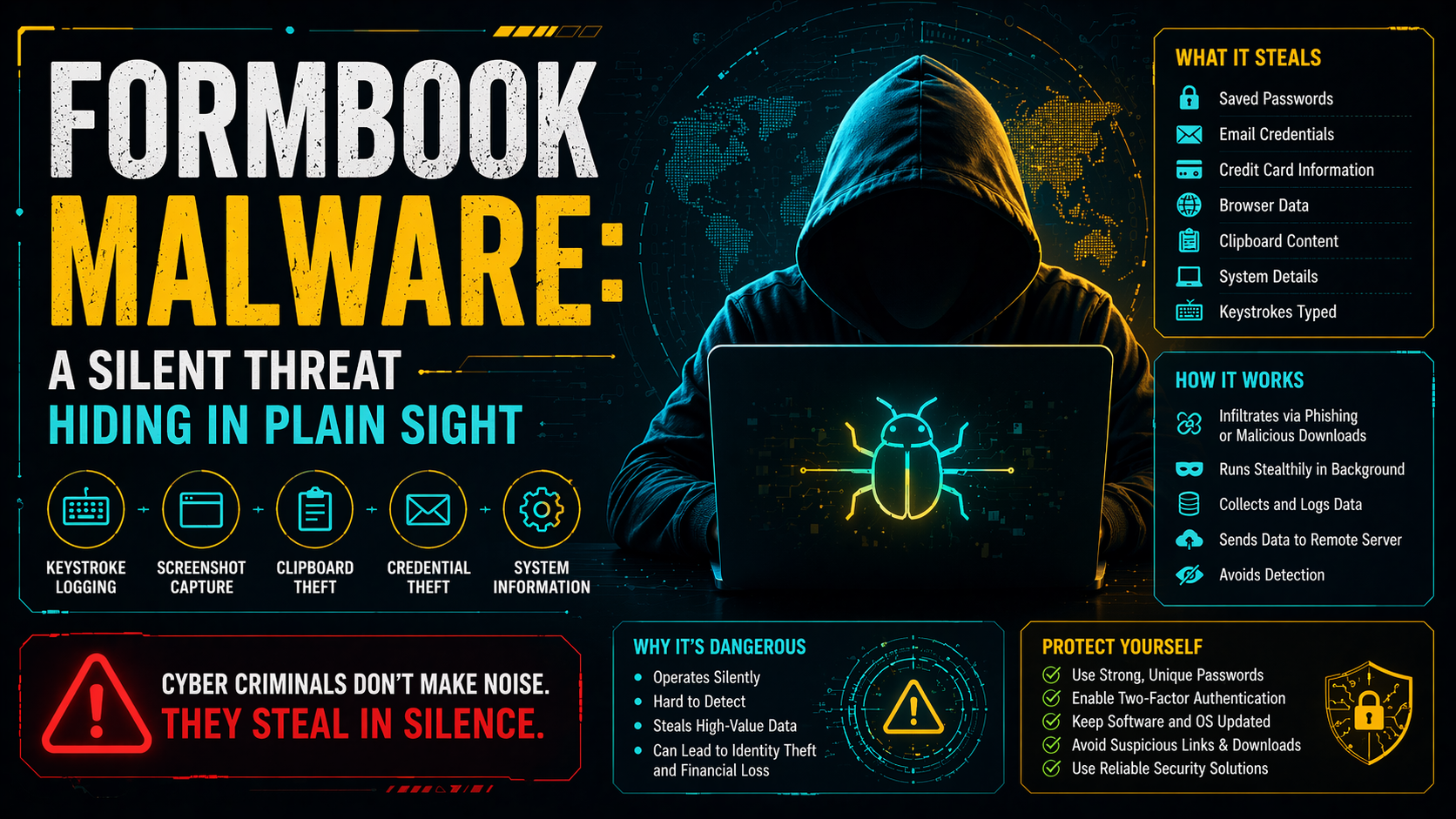
Formbook has been active for years, yet it continues to evolve and stay relevant. Cybercriminals favor it because it is lightweight, easy to distribute, and extremely effective at stealing sensitive data. From login credentials to financial information, it targets the kind of data that can cause real damage in everyday life. Understanding how Formbook works is not just important for cybersecurity professionals. It matters for anyone who uses a computer, shops online, or logs into accounts daily.
What Is Formbook Malware
Formbook is a type of infostealer malware. Its main purpose is to collect data from infected devices and send it back to attackers. Unlike traditional viruses that may damage files or disrupt systems, Formbook focuses on quietly gathering valuable information. It is commonly sold on underground forums as a Malware-as-a-Service. This means even individuals with limited technical knowledge can purchase and use it. This accessibility has contributed to its widespread use across the globe. Once it infects a system, Formbook can capture keystrokes, steal saved passwords, monitor clipboard activity, and even take screenshots. It targets web browsers, email clients, and various applications where users enter sensitive data.
How Formbook Spreads
One of the reasons Formbook is so successful is its distribution method. It often spreads through phishing emails that look completely legitimate. These emails may appear to come from trusted companies, banks, or even coworkers. A common tactic involves sending an attachment disguised as an invoice, receipt, or important document. When the user downloads and opens the file, the malware silently installs itself in the background.
In other cases, Formbook may be delivered through malicious links. Clicking on these links can trigger a hidden download, especially if the system lacks proper security updates. Attackers also use compromised websites to distribute the malware. Visiting such a site may lead to automatic infection without any obvious warning.
What Happens After Infection
Once Formbook enters a system, it begins its work immediately. It connects to a remote server controlled by the attacker. This connection allows it to send stolen data and receive further instructions. The malware integrates itself into the system in a way that avoids detection. It can hide in legitimate processes, making it difficult for standard antivirus tools to identify it. As the user continues normal activities, Formbook quietly records everything. Every login, every password, every copied piece of text becomes a potential target.
The victim often has no idea anything is wrong. There are no pop-ups or warnings. The system may continue to function normally while sensitive information is being stolen in real time.
Why Formbook Is So Dangerous
What makes Formbook particularly dangerous is its stealth. It does not rely on aggressive tactics. Instead, it focuses on long-term data collection. The information it steals can be used in many harmful ways. Attackers may access bank accounts, steal identities, or gain entry into business systems. In some cases, stolen credentials are sold on the dark web, where they are used by other criminals.
Another concern is its ability to bypass detection. Formbook frequently updates its code to avoid antivirus signatures. This makes it a moving target that is difficult to stop completely. Its low cost and ease of use also mean that it is widely available. This increases the number of attacks and makes it a persistent threat across different regions and industries.
Real-Life Impact of Formbook Attacks
The impact of Formbook is not limited to large corporations. Individuals are often targeted because they are seen as easier victims. Imagine logging into your email one day and finding that your account has been taken over. Or noticing unauthorized transactions in your bank account. These situations can be the result of stolen credentials collected by malware like Formbook. Businesses face even greater risks. A single infected device can lead to a data breach, exposing customer information and damaging trust. The financial and reputational consequences can be severe. In many cases, victims only realize what happened after the damage is done. By then, the stolen data may already be in the hands of multiple attackers.
Signs Your System Might Be Infected
Formbook is designed to remain hidden, but there can still be subtle signs of infection. Your system may become slightly slower than usual. You might notice unusual network activity or unknown processes running in the background.
Sometimes, antivirus software may detect suspicious behavior, even if it cannot fully identify the threat. Unexpected login alerts or unauthorized account access can also be warning signs. However, these signs are not always present. The absence of obvious symptoms does not mean your system is safe. This is what makes Formbook particularly challenging to detect.
How to Protect Yourself from Formbook
Protection starts with awareness. Being cautious with emails is one of the most effective ways to avoid infection. Always verify the sender before opening attachments or clicking on links. Keeping your system updated is equally important. Security patches help close vulnerabilities that malware can exploit. Using reliable antivirus software adds another layer of protection. Avoid downloading files from untrusted sources. Even if a file looks legitimate, it is better to double-check before opening it.
Using strong and unique passwords for different accounts can reduce the damage if one set of credentials is compromised. Enabling two-factor authentication provides additional security. Regularly monitoring your accounts for unusual activity can help you catch problems early. The sooner you detect an issue, the better your chances of minimizing damage.
The Future of Formbook and Similar Threats
Cyber threats are constantly evolving, and Formbook is no exception. Developers behind such malware continue to refine their techniques to stay ahead of security measures. As technology advances, attackers find new ways to exploit users. This includes targeting mobile devices, cloud services, and emerging platforms. The rise of remote work has also increased the attack surface. More devices connected to networks mean more opportunities for malware to spread. While security tools are improving, the human factor remains a key vulnerability. Social engineering tactics continue to be effective because they exploit trust and curiosity.
Final Thoughts
Formbook malware is a reminder that not all threats are visible. Some operate quietly, collecting information piece by piece until significant damage is done. Staying safe in the digital world requires more than just software. It involves awareness, caution, and good habits. Understanding how threats like Formbook work is the first step toward protecting yourself. The internet offers countless opportunities, but it also comes with risks. By staying informed and taking simple precautions, you can reduce those risks and maintain control over your personal and professional data. In a world where information is power, protecting that information has never been more important.

