Ransomware in 2026 has taken on a new level of sophistication, and if you’ve been keeping an eye on cybersecurity news lately, you’ve probably noticed how often it shows up in headlines. What used to be a problem mainly affecting large corporations has now become a widespread threat touching small businesses, hospitals, schools, and even individuals. The way ransomware operates today is no longer simple encryption followed by a ransom demand. It has evolved into a complex ecosystem driven by organized cybercrime, advanced technology, and a deep understanding of human behavior.
How Ransomware Has Evolved Over Time
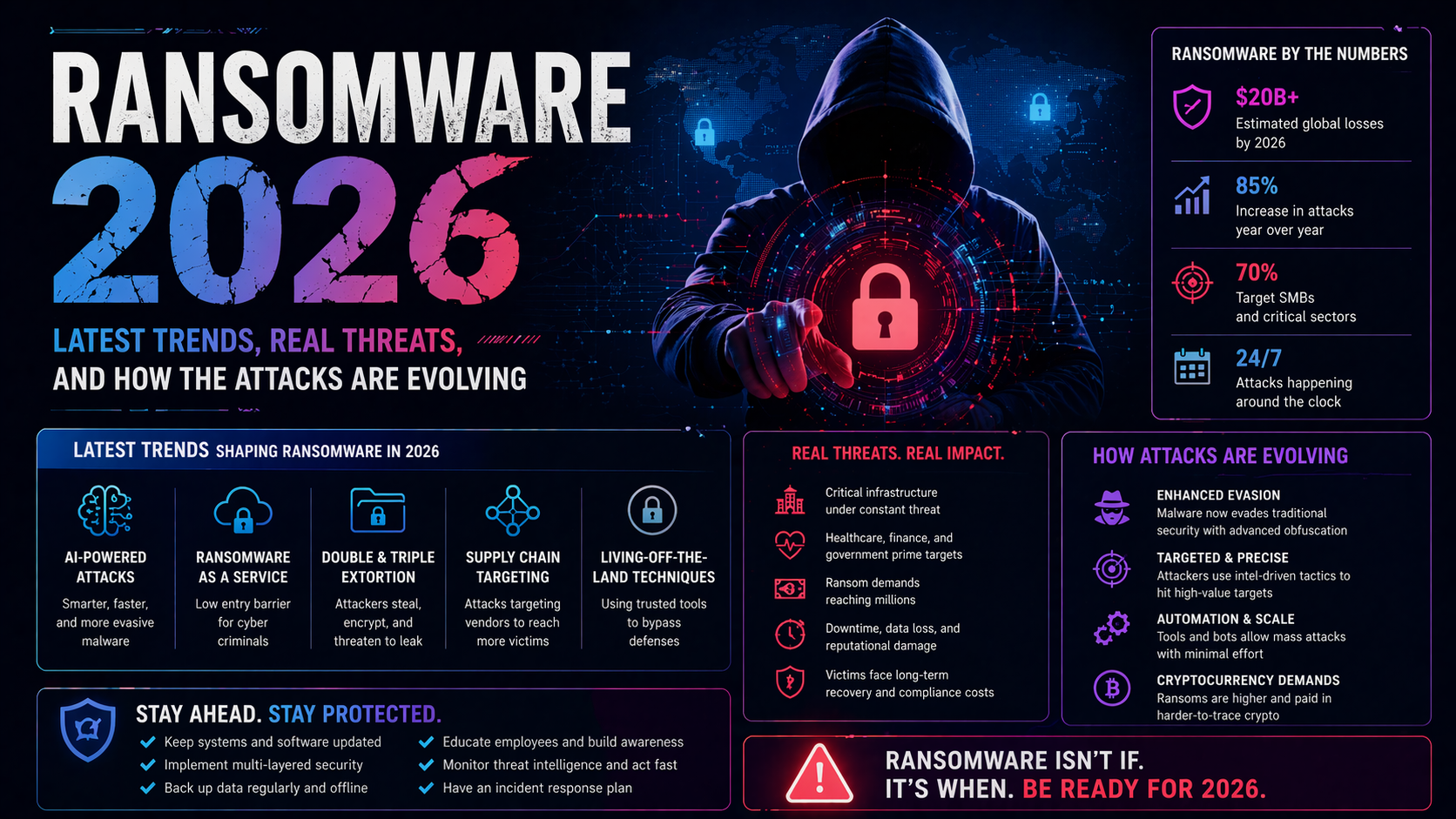
To understand why ransomware is such a serious issue in 2026, it helps to look at how it has changed over time. In earlier years, attackers would lock files and demand payment to restore access. Now, attackers go much further. They often steal sensitive data before encrypting it, and then threaten to leak that data publicly if the victim refuses to pay. This tactic, often called double extortion, has become one of the most effective methods for cybercriminals. It puts victims under pressure not just to regain access to their systems, but also to protect their reputation and customer trust.
Rise in Ransomware Attacks Across the World
Recent reports from across the internet suggest that ransomware attacks have increased both in frequency and impact. Many attackers are no longer working alone. Instead, they operate in organized groups, sometimes referred to as ransomware-as-a-service networks. These groups develop the malware and infrastructure, then allow other criminals to use their tools in exchange for a share of the profits. This has made ransomware more accessible than ever, even for people with limited technical knowledge.
Targeting Critical Infrastructure
One of the most noticeable trends in 2026 is the targeting of critical infrastructure. Hospitals, energy providers, and government services have all faced attacks that disrupted operations and put lives at risk. In some cases, healthcare systems had to delay treatments, and emergency services experienced outages. These are not just financial crimes anymore. They are attacks that can have real-world consequences, affecting people who have nothing to do with cybersecurity.
The Role of Artificial Intelligence in Ransomware
Another major shift is the use of artificial intelligence in ransomware attacks. Attackers are now using AI to automate parts of their operations, making attacks faster and harder to detect. For example, AI can help generate convincing phishing emails that trick employees into clicking malicious links or downloading infected attachments. These emails often look so real that even experienced users can be fooled. Once inside a system, attackers use advanced tools to move quietly across networks, identify valuable data, and prepare their attack without being noticed.
At the same time, defenders are also using AI to fight back. Security systems are becoming smarter, capable of detecting unusual behavior and stopping attacks before they cause damage. However, this has created a kind of digital arms race, where both attackers and defenders are constantly trying to outsmart each other. The result is a rapidly changing landscape where new threats appear almost daily.
Human Error and Social Engineering
One of the reasons ransomware continues to succeed is the human factor. Many attacks begin with a simple mistake, such as clicking on a suspicious link or using a weak password. Cybercriminals understand this and design their attacks to exploit human behavior. They create urgency, fear, or curiosity to push people into making quick decisions without thinking. In 2026, social engineering remains one of the most powerful tools in a hacker’s arsenal.
Rise of Targeted Ransomware Attacks
Another concerning development is the rise of targeted attacks. Instead of casting a wide net, attackers now carefully choose their victims. They research organizations, study their systems, and identify weaknesses before launching an attack. This makes ransomware more effective and harder to defend against. Small businesses are particularly vulnerable because they often lack the resources to implement strong security measures.
Cryptocurrency and Ransomware Payments
Cryptocurrency continues to play a central role in ransomware payments. It allows attackers to receive money with a level of anonymity that traditional payment methods do not provide. While some governments have tried to regulate cryptocurrency transactions, it remains difficult to track and prevent ransomware payments completely. This has helped sustain the ransomware economy, making it a profitable venture for cybercriminals.
The Real Impact of Ransomware
The impact of ransomware goes beyond the immediate damage. When a company is attacked, it can lose customer trust, face legal consequences, and suffer long-term financial losses. Recovery can take weeks or even months, and in some cases, businesses never fully recover. For individuals, ransomware can mean losing personal files, photos, and important documents, which can be devastating.
Government Response and Global Efforts
Governments around the world have started taking ransomware more seriously. In 2026, there is increased cooperation between countries to track down and disrupt cybercriminal networks. Law enforcement agencies are working together to identify attackers, seize their infrastructure, and prevent future attacks. However, this is not an easy task. Many ransomware groups operate across borders, making it difficult to enforce laws and bring criminals to justice.
There has also been a push for stronger cybersecurity regulations. Organizations are now expected to follow stricter security standards, report incidents quickly, and take steps to protect sensitive data. While these measures can help reduce the risk of attacks, they also add pressure on businesses to invest in cybersecurity, which can be challenging for smaller companies.
Importance of Preparation and Backups
One of the most important lessons from recent ransomware incidents is the value of preparation. Organizations that have strong backup systems and clear response plans are better able to recover from attacks without paying a ransom. Backups allow them to restore their data, while response plans help them act quickly and limit the damage. In contrast, organizations that are unprepared often find themselves with no choice but to pay, which only encourages further attacks.
Growing Public Awareness
Public awareness has also improved in recent years. People are becoming more cautious about online threats and more aware of the importance of cybersecurity. However, awareness alone is not enough. It needs to be combined with practical steps, such as using strong passwords, enabling multi-factor authentication, and keeping software up to date.
Supply Chain Attacks on the Rise
Another trend in 2026 is the use of supply chain attacks. Instead of targeting a single organization, attackers compromise a trusted vendor or service provider, then use that access to reach multiple victims. This approach allows them to spread their ransomware more widely and increase their chances of success. It also makes detection more difficult, because the attack appears to come from a legitimate source.
The Role of Cybersecurity Professionals
The role of cybersecurity professionals has become more critical than ever. Companies are investing in skilled experts who can monitor systems, detect threats, and respond to incidents. However, there is a global shortage of cybersecurity talent, which makes it harder for organizations to defend themselves effectively. This gap is likely to remain a challenge in the coming years.
The Future of Ransomware
Despite the growing threat, there are reasons to be hopeful. Advances in technology are providing new tools to combat ransomware. Improved encryption methods, better threat intelligence, and more effective collaboration between organizations are all helping to reduce the impact of attacks. In addition, some ransomware groups have been disrupted by law enforcement operations, showing that it is possible to fight back against cybercrime.
Looking ahead, ransomware is unlikely to disappear anytime soon. As long as it remains profitable, cybercriminals will continue to develop new techniques and target new victims. However, the balance can shift if organizations and individuals take cybersecurity seriously and work together to create a safer digital environment.
Conclusion
In 2026, ransomware is not just a technical issue. It is a global challenge that affects economies, societies, and individuals. It highlights the importance of trust in the digital world and the need to protect that trust. Whether you are a business owner, an employee, or simply someone who uses the internet, ransomware is something that cannot be ignored.
Understanding how it works, staying informed about the latest trends, and taking proactive steps to protect yourself are essential in this new era of cyber threats. The more prepared we are, the harder it becomes for attackers to succeed. And while the fight against ransomware is far from over, every step taken toward better security makes a difference.

