Large-Scale Phishing Campaigns: How They Work and How to Stay Safe

In today’s digital world, cyber threats are evolving faster than ever, and one of the most widespread dangers is large-scale phishing campaigns. These attacks are no longer small, random attempts by amateur hackers. Instead, they are well-organized, highly targeted, and capable of affecting thousands—even millions—of people at once.
Large-Scale Phishing Campaigns: How They Work and How to Stay Safe If you’ve ever received a suspicious email asking you to “verify your account” or click on a link urgently, you’ve already encountered phishing. But large-scale phishing campaigns take this to an entirely different level. Let’s break it down in a simple, human way so you truly understand what’s happening behind the scenes—and how you can protect yourself. What Are Large-Scale Phishing Campaigns? Large-scale phishing campaigns are cyberattacks where attackers send massive volumes of fake messages to trick people into sharing sensitive information like: Passwords Credit card details Bank account credentials Personal identity information These campaigns are designed to look real. They often impersonate trusted companies like banks, social media platforms, or delivery services. Instead of targeting one person, attackers cast a wide net. Even if only a small percentage of people fall for it, the attackers can still make huge profits. How These Campaigns Actually Work At first glance, phishing may seem simple. But large-scale campaigns are carefully planned and executed. 1. Data Collection Attackers gather email addresses or phone numbers from: Data breaches Public databases Social media Dark web marketplaces This gives them a massive list of potential victims. 2. Crafting the Message The next step is creating a convincing message. These messages often include: Urgency (“Your account will be locked”) Fear (“Suspicious activity detected”) Excitement (“You won a prize!”) They are designed to trigger emotional reactions so people act quickly without thinking. 3. Fake Websites Victims are directed to fake websites that look almost identical to real ones. For example: A fake banking login page A cloned email login screen A counterfeit payment gateway Once you enter your details, the attacker instantly captures them. 4. Automation at Scale This is what makes it “large-scale.” Attackers use automated tools to: Send millions of emails in minutes Track who clicks links Collect stolen data in real time This automation allows even small cybercriminal groups to run massive campaigns. Why Large-Scale Phishing Is So Dangerous The biggest danger is not just the number of victims—but how advanced these campaigns have become. 1. They Look Extremely Real Modern phishing emails often: Use official logos Mimic real email formats Include correct company names Sometimes, even experienced users get fooled. 2. They Use Personal Information Some campaigns include your: Name Location Previous activity This makes the message feel personal and trustworthy. 3. They Spread Fast Because these campaigns operate at scale, they can spread globally within hours. One successful campaign can affect thousands of users across different countries. 4. Financial and Emotional Damage Victims may lose: Money Access to accounts Personal data Beyond financial loss, there is also stress, fear, and frustration. Types of Large-Scale Phishing Campaigns Not all phishing attacks are the same. Here are the most common types: Email Phishing This is the most widespread form. Attackers send bulk emails pretending to be trusted organizations. Example: “You need to update your banking details immediately.” SMS Phishing (Smishing) Instead of emails, attackers send text messages. Example: “Your package is delayed. Click here to track.” Voice Phishing (Vishing) Attackers call victims pretending to be customer support or bank representatives. Social Media Phishing Fake messages or ads appear on platforms like Facebook, Instagram, or Twitter. Clone Phishing A real email is copied and slightly modified with a malicious link. Real-Life Feeling: Why People Fall for It Let’s be honest—phishing works because it targets human emotions, not just technology. Imagine this: You receive a message saying your bank account is at risk. You’re busy, maybe stressed, and you click quickly just to fix the issue. That’s exactly what attackers rely on. It’s not about intelligence. It’s about timing and psychology. Signs of a Phishing Attempt Here are some simple signs that something might be wrong: Urgent or threatening language Suspicious links Poor grammar or spelling Unknown sender email Requests for sensitive information If something feels off, it probably is. How to Protect Yourself Now comes the most important part—staying safe. 1. Think Before You Click Always pause before clicking any link, especially if the message creates urgency. 2. Check the URL Carefully Hover over links (or long-press on mobile) to see the actual website address. Fake URLs often look similar but have small differences. 3. Use Two-Factor Authentication (2FA) Even if your password is stolen, 2FA adds an extra layer of protection. 4. Keep Software Updated Regular updates fix security vulnerabilities that attackers may exploit. 5. Avoid Public Wi-Fi for Sensitive Tasks Public networks can expose your data to attackers. 6. Use Security Tools Install: Antivirus software Email filters Browser security extensions These tools can block many phishing attempts automatically. What to Do If You Get Phished Mistakes happen. If you think you’ve fallen for a phishing attack, act quickly: Change your passwords immediately Enable 2FA on all accounts Contact your bank if financial details were shared Scan your device for malware Report the phishing attempt The faster you act, the more damage you can prevent. The Role of Organizations Companies also play a big role in stopping phishing campaigns. They must: Educate users Implement strong security systems Monitor suspicious activity Respond quickly to threats However, even the best systems can’t replace human awareness. The Future of Phishing Campaigns Phishing is becoming more advanced with the help of new technologies. AI-Powered Phishing Attackers are now using artificial intelligence to: Write highly realistic messages Mimic human conversations Personalize attacks at scale Deepfake Scams Some attackers use voice or video deepfakes to impersonate real people. Imagine getting a call that sounds exactly like your boss asking for urgent action. More Targeted Campaigns Even large-scale campaigns are becoming more personalized, making them harder to detect. Final Thoughts Large-scale phishing campaigns are not going away anytime soon. In fact, they are growing more sophisticated every day. But here’s the truth—awareness is your strongest defense. You don’t need to be a cybersecurity expert to stay safe. Just slow down, stay alert, and question anything that feels unusual. Because in the world of phishing, one small moment of awareness can save you from a huge problem.

If you’ve ever received a suspicious email asking you to “verify your account” or click on a link urgently, you’ve already encountered phishing. But large-scale phishing campaigns take this to an entirely different level. Let’s break it down in a simple, human way so you truly understand what’s happening behind the scenes—and how you can protect yourself.

What Are Large-Scale Phishing Campaigns?

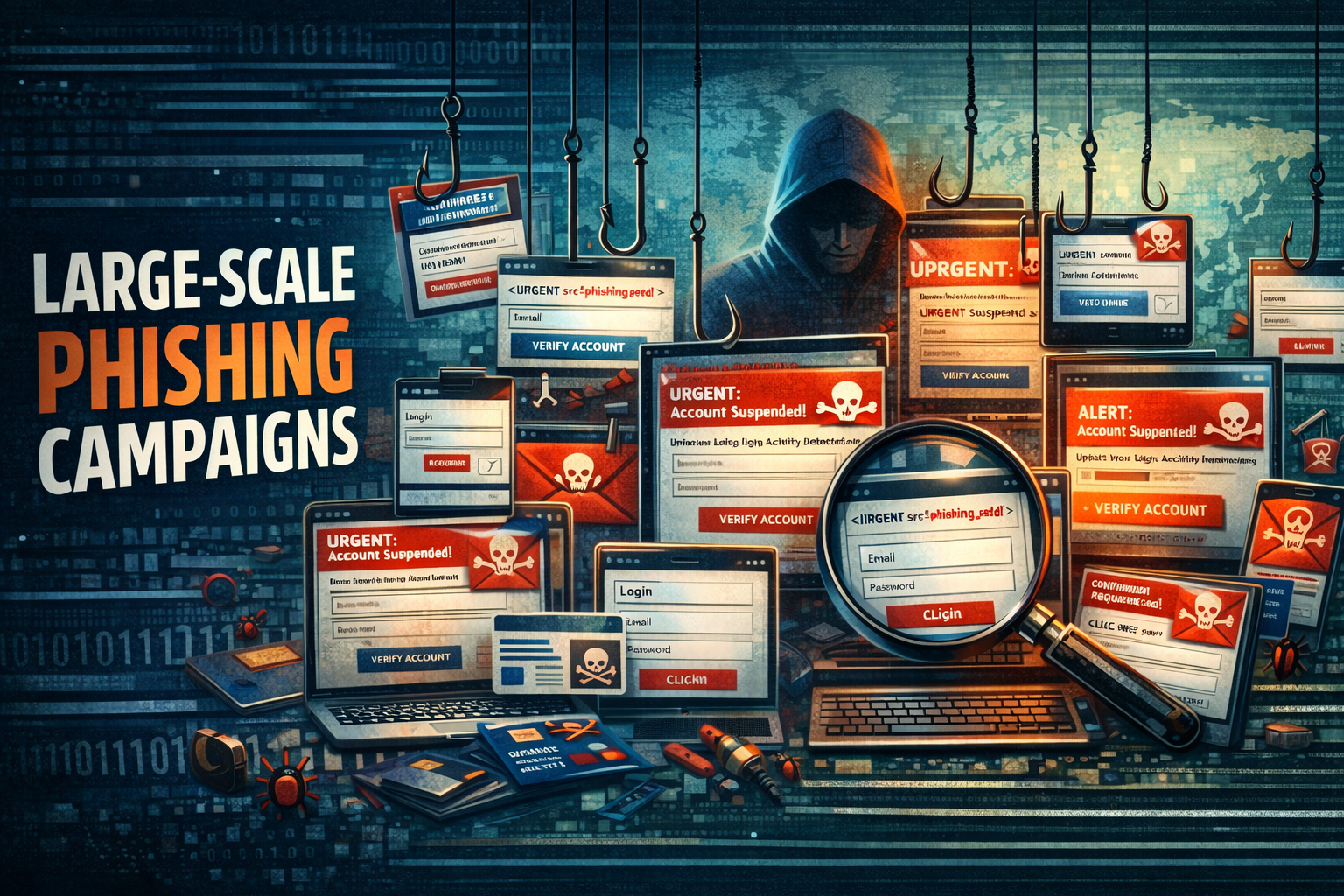
Large-scale phishing campaigns are cyberattacks where attackers send massive volumes of fake messages to trick people into sharing sensitive information like:

  • Passwords
  • Credit card details
  • Bank account credentials
  • Personal identity information

These campaigns are designed to look real. They often impersonate trusted companies like banks, social media platforms, or delivery services.

Instead of targeting one person, attackers cast a wide net. Even if only a small percentage of people fall for it, the attackers can still make huge profits.

How These Campaigns Actually Work

At first glance, phishing may seem simple. But large-scale campaigns are carefully planned and executed.

1. Data Collection

Attackers gather email addresses or phone numbers from:

  • Data breaches
  • Public databases
  • Social media
  • Dark web marketplaces

This gives them a massive list of potential victims.

2. Crafting the Message

The next step is creating a convincing message. These messages often include:

  • Urgency (“Your account will be locked”)
  • Fear (“Suspicious activity detected”)
  • Excitement (“You won a prize!”)

They are designed to trigger emotional reactions so people act quickly without thinking.

3. Fake Websites

Victims are directed to fake websites that look almost identical to real ones.

For example:

  • A fake banking login page
  • A cloned email login screen
  • A counterfeit payment gateway

Once you enter your details, the attacker instantly captures them.

4. Automation at Scale

This is what makes it “large-scale.”

Attackers use automated tools to:

  • Send millions of emails in minutes
  • Track who clicks links
  • Collect stolen data in real time

This automation allows even small cybercriminal groups to run massive campaigns.

Why Large-Scale Phishing Is So Dangerous

The biggest danger is not just the number of victims—but how advanced these campaigns have become.

1. They Look Extremely Real

Modern phishing emails often:

  • Use official logos
  • Mimic real email formats
  • Include correct company names

Sometimes, even experienced users get fooled.

2. They Use Personal Information

Some campaigns include your:

  • Name
  • Location
  • Previous activity

This makes the message feel personal and trustworthy.

3. They Spread Fast

Because these campaigns operate at scale, they can spread globally within hours. One successful campaign can affect thousands of users across different countries.

4. Financial and Emotional Damage

Victims may lose:

  • Money
  • Access to accounts
  • Personal data

Beyond financial loss, there is also stress, fear, and frustration.

Types of Large-Scale Phishing Campaigns

Not all phishing attacks are the same. Here are the most common types:

Email Phishing

This is the most widespread form. Attackers send bulk emails pretending to be trusted organizations.

Example:
“You need to update your banking details immediately.”

SMS Phishing (Smishing)

Instead of emails, attackers send text messages.

Example:
“Your package is delayed. Click here to track.”

Voice Phishing (Vishing)

Attackers call victims pretending to be customer support or bank representatives.

Social Media Phishing

Fake messages or ads appear on platforms like Facebook, Instagram, or Twitter.

Clone Phishing

A real email is copied and slightly modified with a malicious link.

Real-Life Feeling: Why People Fall for It

Let’s be honest—phishing works because it targets human emotions, not just technology.

Imagine this:
You receive a message saying your bank account is at risk. You’re busy, maybe stressed, and you click quickly just to fix the issue.

That’s exactly what attackers rely on.

It’s not about intelligence. It’s about timing and psychology.

Signs of a Phishing Attempt

Here are some simple signs that something might be wrong:

  • Urgent or threatening language
  • Suspicious links
  • Poor grammar or spelling
  • Unknown sender email
  • Requests for sensitive information

If something feels off, it probably is.

How to Protect Yourself

Now comes the most important part—staying safe.

1. Think Before You Click

Always pause before clicking any link, especially if the message creates urgency.

2. Check the URL Carefully

Hover over links (or long-press on mobile) to see the actual website address.

Fake URLs often look similar but have small differences.

3. Use Two-Factor Authentication (2FA)

Even if your password is stolen, 2FA adds an extra layer of protection.

4. Keep Software Updated

Regular updates fix security vulnerabilities that attackers may exploit.

5. Avoid Public Wi-Fi for Sensitive Tasks

Public networks can expose your data to attackers.

6. Use Security Tools

Install:

  • Antivirus software
  • Email filters
  • Browser security extensions

These tools can block many phishing attempts automatically.

What to Do If You Get Phished

Mistakes happen. If you think you’ve fallen for a phishing attack, act quickly:

  1. Change your passwords immediately
  2. Enable 2FA on all accounts
  3. Contact your bank if financial details were shared
  4. Scan your device for malware
  5. Report the phishing attempt

The faster you act, the more damage you can prevent.

The Role of Organizations

Companies also play a big role in stopping phishing campaigns.

They must:

  • Educate users
  • Implement strong security systems
  • Monitor suspicious activity
  • Respond quickly to threats

However, even the best systems can’t replace human awareness.

The Future of Phishing Campaigns

Phishing is becoming more advanced with the help of new technologies.

AI-Powered Phishing

Attackers are now using artificial intelligence to:

  • Write highly realistic messages
  • Mimic human conversations
  • Personalize attacks at scale

Deepfake Scams

Some attackers use voice or video deepfakes to impersonate real people. Imagine getting a call that sounds exactly like your boss asking for urgent action.

More Targeted Campaigns

Even large-scale campaigns are becoming more personalized, making them harder to detect.

Final Thoughts

Large-scale phishing campaigns are not going away anytime soon. In fact, they are growing more sophisticated every day. But here’s the truth—awareness is your strongest defense. You don’t need to be a cybersecurity expert to stay safe. Just slow down, stay alert, and question anything that feels unusual. Because in the world of phishing, one small moment of awareness can save you from a huge problem.

Spread the love

Leave a Reply

Your email address will not be published. Required fields are marked *

css.php