AI chatbots are everywhere today. From customer support to content creation, from coding help to casual conversations, they have quietly become part of daily life. Tools powered by artificial intelligence promise speed, convenience, and smart assistance. But behind this smooth experience, there are real risks that many people overlook.
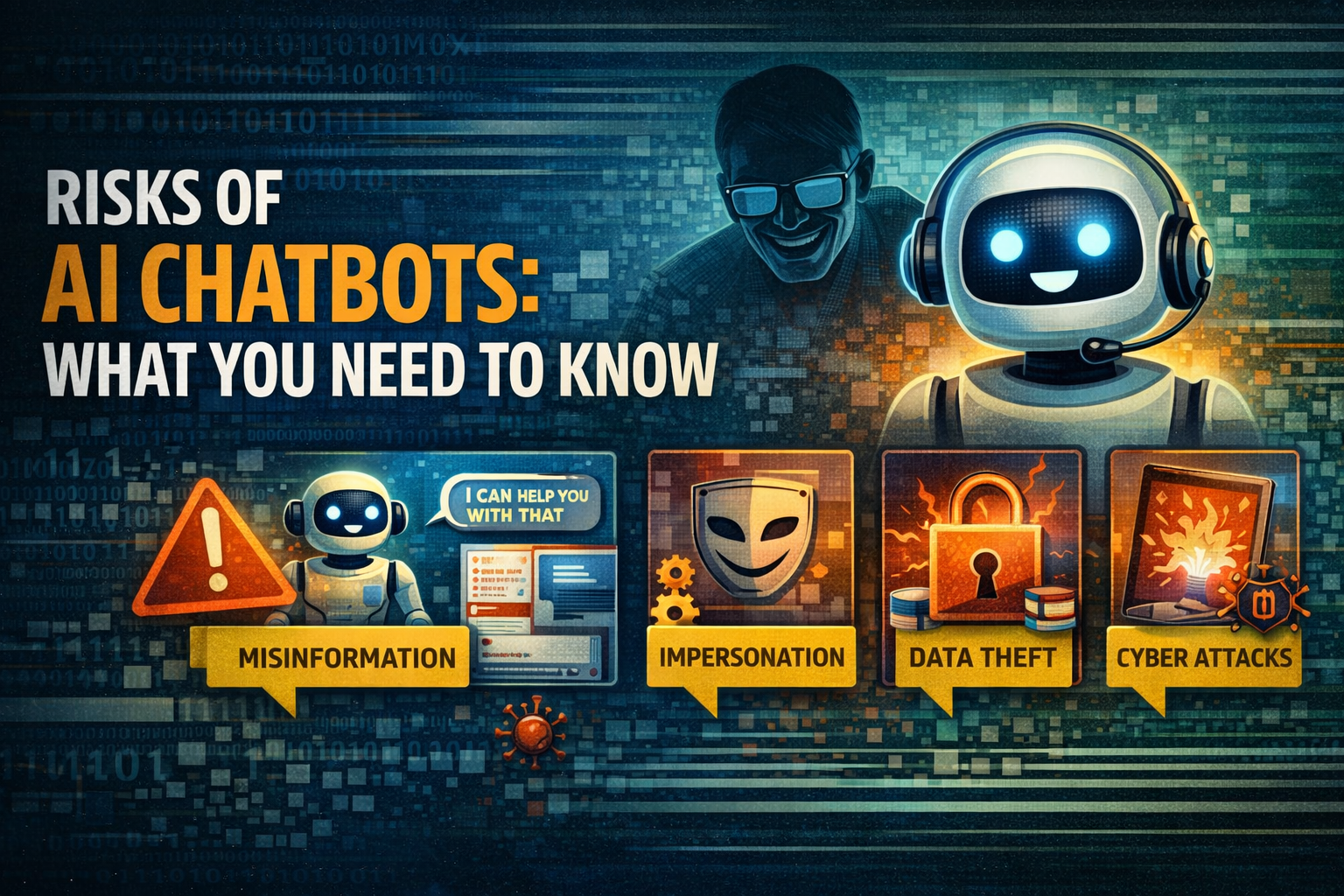
If you are using AI chatbots regularly or planning to rely on them for work, business, or personal use, it is important to understand both sides of the story. This article breaks down the major risks in a simple and human way so you can stay aware, safe, and smart.
1. Data Privacy Risks
One of the biggest concerns with AI chatbots is data privacy. When you type something into a chatbot, you may feel like you’re just having a private conversation. But in reality, your inputs can be stored, analyzed, and sometimes even used to improve the system.
Why this is risky:
- Sensitive information like passwords, business ideas, or personal details can be exposed
- Data may be stored on servers without you fully knowing how it is used
- In some cases, information could be accessed by unauthorized parties
Real-life example:
Imagine asking a chatbot to help draft a business proposal and you include confidential details. That information might not be as private as you think.
What you should do:
- Never share passwords, bank details, or private documents
- Avoid putting confidential client or company data
- Treat chatbots like a public platform, not a private diary
2. Misinformation and Wrong Answers
AI chatbots are powerful, but they are not always correct. They generate answers based on patterns and data, not real understanding. This means they can sometimes provide incorrect or misleading information confidently.
The problem:
- Chatbots may sound convincing even when they are wrong
- Users may trust answers without verifying
- In critical fields like health, law, or finance, wrong information can be dangerous
Example:
A chatbot might suggest an outdated medical treatment or incorrect legal advice. If someone follows it blindly, the consequences can be serious.
What you should do:
- Always double-check important information
- Use trusted sources for critical decisions
- Treat chatbot answers as guidance, not final truth
3. Overdependence on AI
AI chatbots make life easier, but too much dependence can reduce your own thinking ability.
The hidden impact:
- People may stop researching on their own
- Creativity and problem-solving skills can weaken
- Decision-making becomes dependent on AI suggestions
The danger:
If AI becomes your first and only source, you may lose confidence in your own judgment.
Balanced approach:
- Use AI as a helper, not a replacement
- Try solving problems yourself before asking
- Keep learning and thinking independently
4. Job Displacement Concerns
AI chatbots are already replacing certain roles, especially in customer support, content writing, and basic technical tasks.
What’s happening:
- Companies are using chatbots instead of hiring humans
- Tasks that once required people can now be automated
- Entry-level jobs are most affected
The reality:
While AI creates new opportunities, it also removes some traditional roles.
What you should do:
- Upgrade your skills continuously
- Learn how to work with AI instead of competing against it
- Focus on skills that require human creativity and emotional intelligence
5. Lack of Emotional Understanding
AI chatbots can simulate human conversation, but they do not truly understand emotions.
The issue:
- Responses may feel robotic or insensitive
- Emotional support from AI is limited and sometimes misleading
- People may develop a false sense of connection
Example:
If someone shares a serious personal problem, the chatbot might respond with generic advice instead of genuine empathy.
Important reminder:
AI can assist, but it cannot replace real human relationships.
6. Security Vulnerabilities
AI chatbots can also be targets for hackers and cybercriminals.
Potential risks:
- Exploiting chatbot systems to steal user data
- Using AI tools to create phishing messages
- Manipulating chatbot responses for malicious purposes
A growing concern:
Cybercriminals are using AI to create more convincing scams, making it harder to detect fraud.
How to stay safe:
- Avoid clicking suspicious links suggested in unknown contexts
- Be cautious with AI-generated emails or messages
- Use strong security practices like two-factor authentication
7. Bias and Ethical Issues
AI systems learn from existing data, and that data can contain biases.
The problem:
- Chatbots may reflect unfair or biased opinions
- Certain groups may be represented inaccurately
- Decisions influenced by AI may not always be fair
Why it matters:
Bias in AI can affect hiring, recommendations, and even public opinion.
What you should do:
- Be aware that AI is not neutral
- Question responses that seem one-sided
- Use multiple perspectives before forming opinions
8. Lack of Accountability
When something goes wrong with AI, it is often unclear who is responsible.
The challenge:
- Is it the developer?
- The company?
- Or the user?
Example:
If a chatbot gives harmful advice, there may not be a clear system to hold anyone accountable.
Why this matters:
Without accountability, it becomes harder to trust AI systems completely.
9. Content Manipulation and Deepfakes
AI chatbots and tools can generate highly realistic text, images, and even voices.
The risk:
- Fake news can spread quickly
- People can create misleading content easily
- Trust in online information decreases
Example:
Someone can use AI to generate fake conversations or impersonate individuals.
What you should do:
- Verify information before sharing
- Be cautious of content that feels too perfect or suspicious
- Trust reliable sources over viral content
10. Reduced Human Interaction
As AI chatbots become more common, human interaction is slowly decreasing.
The concern:
- People may prefer chatting with AI over real conversations
- Social skills can decline over time
- Emotional connections may weaken
Long-term effect:
Humans are social beings. Replacing human interaction with AI can impact mental and emotional health.
Final Thoughts
AI chatbots are powerful tools, and there is no doubt they are transforming the way we live and work. They save time, improve productivity, and open new possibilities. But like any technology, they come with risks. The key is not to fear AI, but to use it wisely. Think of AI as a smart assistant sitting beside you. It can help, guide, and support, but it should not control your decisions or replace your thinking.
Simple rules to remember:
- Do not share sensitive information
- Verify important answers
- Stay aware of bias and misinformation
- Keep your human skills sharp
- Use AI as a tool, not a dependency
At the end of the day, technology should serve you, not the other way around. The smarter you use AI, the safer and more powerful it becomes in your hands.

