In today’s digital world, almost everything we do is connected to a device. Whether it is a laptop, smartphone, tablet, or even a smart printer, these devices act as entry points to larger networks. This is exactly where endpoint security becomes important. Endpoint security is the process of protecting these devices from cyber threats so that hackers cannot use them to gain access to sensitive data or systems.
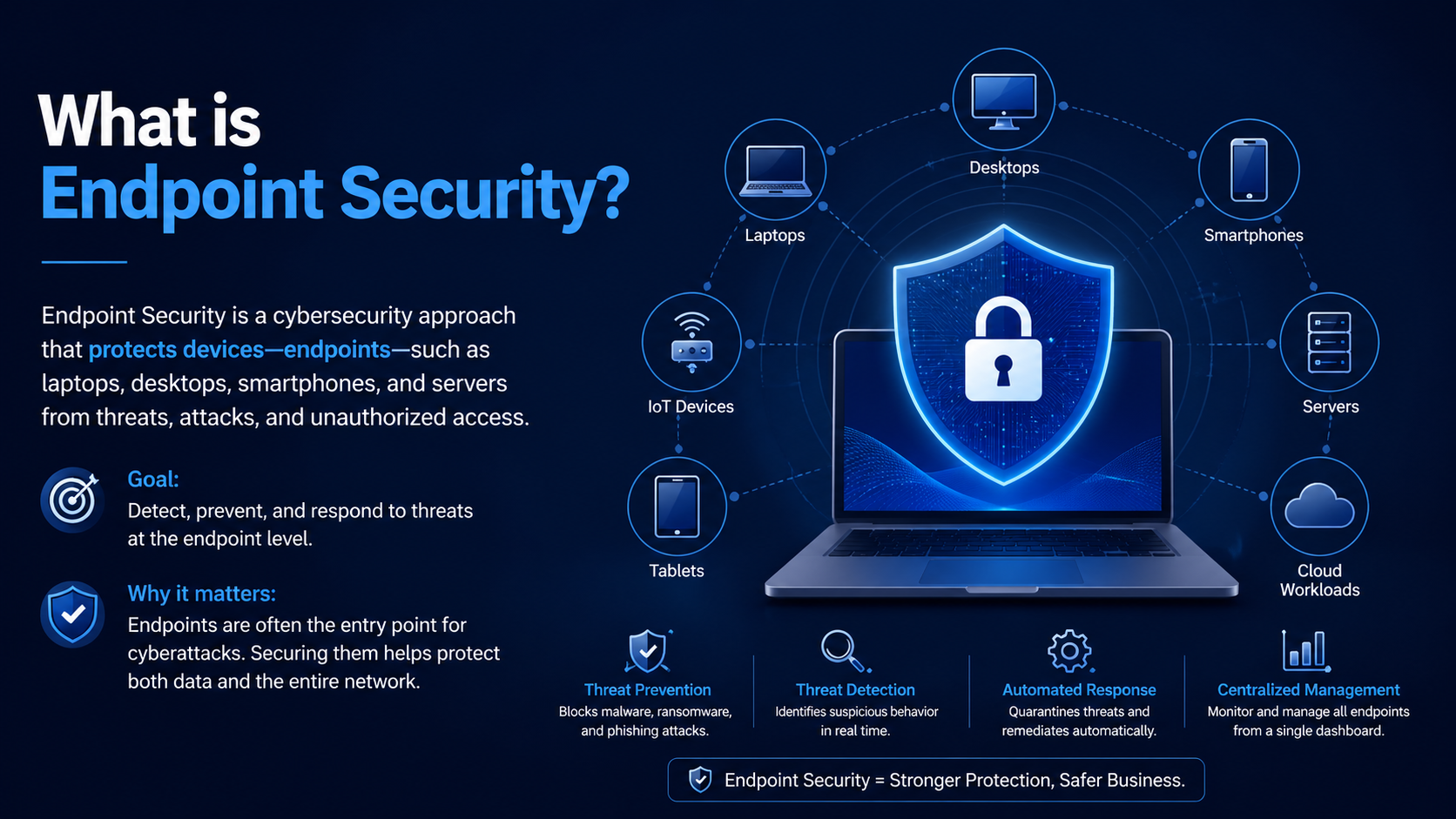
Think of every device you use as a door to your digital life. If that door is left unlocked, anyone with the right tools can walk in. Endpoint security is like a strong lock, alarm system, and guard all combined into one, ensuring that every device connected to a network is safe and monitored.
Understanding the Basics of Endpoint Security
At its core, endpoint security is about safeguarding endpoints, which are the devices that connect to a network. These endpoints include desktops, laptops, mobile phones, servers, and even Internet of Things devices. Each of these endpoints can be a target for cybercriminals.
In the past, security was mainly focused on protecting a central network or server. But as technology evolved, people began working remotely, using personal devices, and connecting from different locations. This shift made traditional security methods less effective. Endpoint security emerged as a modern solution that focuses on protecting every individual device instead of just the network.
Why Endpoint Security Matters More Than Ever
The rise of remote work and cloud computing has made endpoint security more important than ever. Employees are no longer working only from secure office networks. They are accessing company systems from home Wi-Fi, public hotspots, and personal devices. Each of these situations increases the risk of cyber attacks.
Cybercriminals are constantly looking for weak points. A single infected laptop or compromised smartphone can give attackers access to an entire organization’s data. This can lead to data breaches, financial losses, and damage to reputation. Endpoint security helps reduce these risks by ensuring that every device follows strict security rules. It monitors activity, blocks suspicious behavior, and responds quickly to potential threats.
How Endpoint Security Works
Endpoint security works by combining multiple technologies and strategies to protect devices. It is not just one tool but a system that includes antivirus software, firewalls, intrusion detection, and more.
When a device connects to a network, endpoint security software checks its status. It ensures that the device is updated, secure, and free from malware. If anything suspicious is detected, the system can block access or take action to remove the threat. Modern endpoint security solutions often use artificial intelligence and machine learning. These technologies help identify new and unknown threats by analyzing patterns and behaviors. This means that even if a threat has never been seen before, the system can still detect and stop it.
Key Features of Endpoint Security
Endpoint security includes several important features that work together to keep devices safe. Antivirus protection is one of the most basic features. It scans files and programs to detect and remove harmful software. Another important feature is a firewall, which controls incoming and outgoing network traffic. It acts as a barrier between the device and potential threats from the internet. Encryption is also a key part of endpoint security. It ensures that data stored on a device is protected and cannot be easily accessed by unauthorized users.
Device control is another useful feature. It allows organizations to manage what devices can connect to their network. For example, they can block unknown USB drives or restrict access from unapproved devices.
Types of Endpoint Security Solutions
There are different types of endpoint security solutions available, each designed to meet specific needs. Traditional antivirus software is the most common type. It focuses on detecting known threats and removing them.
Endpoint Detection and Response, often called EDR, is a more advanced solution. It continuously monitors devices for suspicious activity and provides detailed insights into potential threats. Another type is Extended Detection and Response, or XDR. This goes beyond individual devices and provides a broader view of security across the entire network, including servers and cloud systems. Mobile endpoint security is also becoming increasingly important. With more people using smartphones for work, protecting these devices is essential.
Benefits of Endpoint Security
Endpoint security offers several benefits that make it essential for both individuals and organizations. One of the biggest advantages is improved protection against cyber threats. By securing every device, the chances of a successful attack are greatly reduced.
It also helps protect sensitive data. Whether it is personal information or business data, endpoint security ensures that it remains safe and confidential.
Another benefit is better visibility. Security teams can monitor all devices and quickly identify any unusual activity. This allows them to respond faster and prevent potential damage. Endpoint security also supports compliance with regulations. Many industries have strict data protection requirements, and using endpoint security helps meet these standards.
Common Threats to Endpoints
Endpoints face a wide range of threats, and understanding these threats is important for effective protection. Malware is one of the most common threats. It includes viruses, worms, and ransomware that can damage systems or steal data. Phishing attacks are another major threat. These attacks trick users into clicking on malicious links or sharing sensitive information. Once a device is compromised, attackers can gain access to the network.
Zero-day attacks are particularly dangerous because they exploit unknown vulnerabilities. Since these vulnerabilities are not yet discovered or fixed, they can be difficult to defend against. Insider threats are also a concern. These occur when someone within an organization misuses their access, either intentionally or accidentally.
Challenges in Endpoint Security
While endpoint security is essential, it also comes with challenges. One of the biggest challenges is managing a large number of devices. In a modern organization, there can be hundreds or even thousands of endpoints. Another challenge is keeping software up to date. Outdated systems are more vulnerable to attacks, but ensuring regular updates across all devices can be difficult.
User behavior is also a challenge. Even the best security systems can be compromised if users ignore security practices, such as using weak passwords or clicking on suspicious links. Balancing security and usability is another issue. Strong security measures can sometimes make systems harder to use, so finding the right balance is important.
Best Practices for Endpoint Security
To get the most out of endpoint security, it is important to follow best practices. Regular software updates are essential. Keeping systems up to date helps protect against known vulnerabilities. Using strong passwords and enabling multi-factor authentication adds an extra layer of security. This makes it harder for attackers to gain access. Employee training is also important. Educating users about common threats and safe practices can significantly reduce risks.
Monitoring and logging activity helps detect suspicious behavior early. This allows for quick response and minimizes potential damage. Backing up data regularly ensures that information can be recovered in case of an attack, such as ransomware.
Endpoint Security for Businesses
For businesses, endpoint security is not just an option but a necessity. Companies handle large amounts of sensitive data, including customer information, financial records, and intellectual property.
A single security breach can have serious consequences, including financial losses, legal issues, and loss of trust. Endpoint security helps protect against these risks by ensuring that all devices used within the organization are secure. Businesses often use centralized endpoint security solutions that allow them to manage all devices from one platform. This makes it easier to enforce security policies and monitor activity.
Endpoint Security for Individuals
Endpoint security is not only important for businesses but also for individuals. Personal devices contain valuable information such as photos, passwords, and financial details.
Using antivirus software, keeping devices updated, and being cautious online can go a long way in protecting personal data. Even simple steps like avoiding unknown downloads and using secure Wi-Fi networks can make a big difference. As more people rely on digital devices for everyday tasks, personal endpoint security becomes increasingly important.
The Future of Endpoint Security
The future of endpoint security is evolving rapidly. With the rise of artificial intelligence, security systems are becoming smarter and more proactive. They can detect threats faster and respond automatically. The growth of the Internet of Things is also shaping the future. As more devices become connected, the number of endpoints continues to increase. This makes endpoint security even more critical.
Cloud-based security solutions are also gaining popularity. They offer flexibility and scalability, making it easier to manage security across different locations. Zero Trust security models are becoming more common. This approach assumes that no device or user can be trusted by default, and every access request must be verified.
Final Thoughts on Endpoint Security
Endpoint security is a vital part of modern cybersecurity. As technology continues to evolve, so do the threats that target our devices. Protecting these endpoints is essential for safeguarding data, maintaining privacy, and ensuring smooth operations.
Whether you are an individual or a business, investing in endpoint security is one of the smartest decisions you can make. It is not just about preventing attacks but also about building a strong foundation for a secure digital future. In a world where every device is a potential entry point, endpoint security acts as the first line of defense. By understanding its importance and taking the right steps, you can stay one step ahead of cyber threats and protect what matters most.

