In today’s digital world, cybersecurity is no longer just a concern for large corporations or governments. Anyone connected to the internet is part of a vast, constantly evolving network where threats exist at every level. Among the most serious and sophisticated of these threats are Advanced Persistent Threats, often referred to as APTs. These are not your typical cyberattacks that appear suddenly and disappear just as quickly. Instead, they are carefully planned, highly targeted, and designed to stay hidden for long periods while causing damage from within.
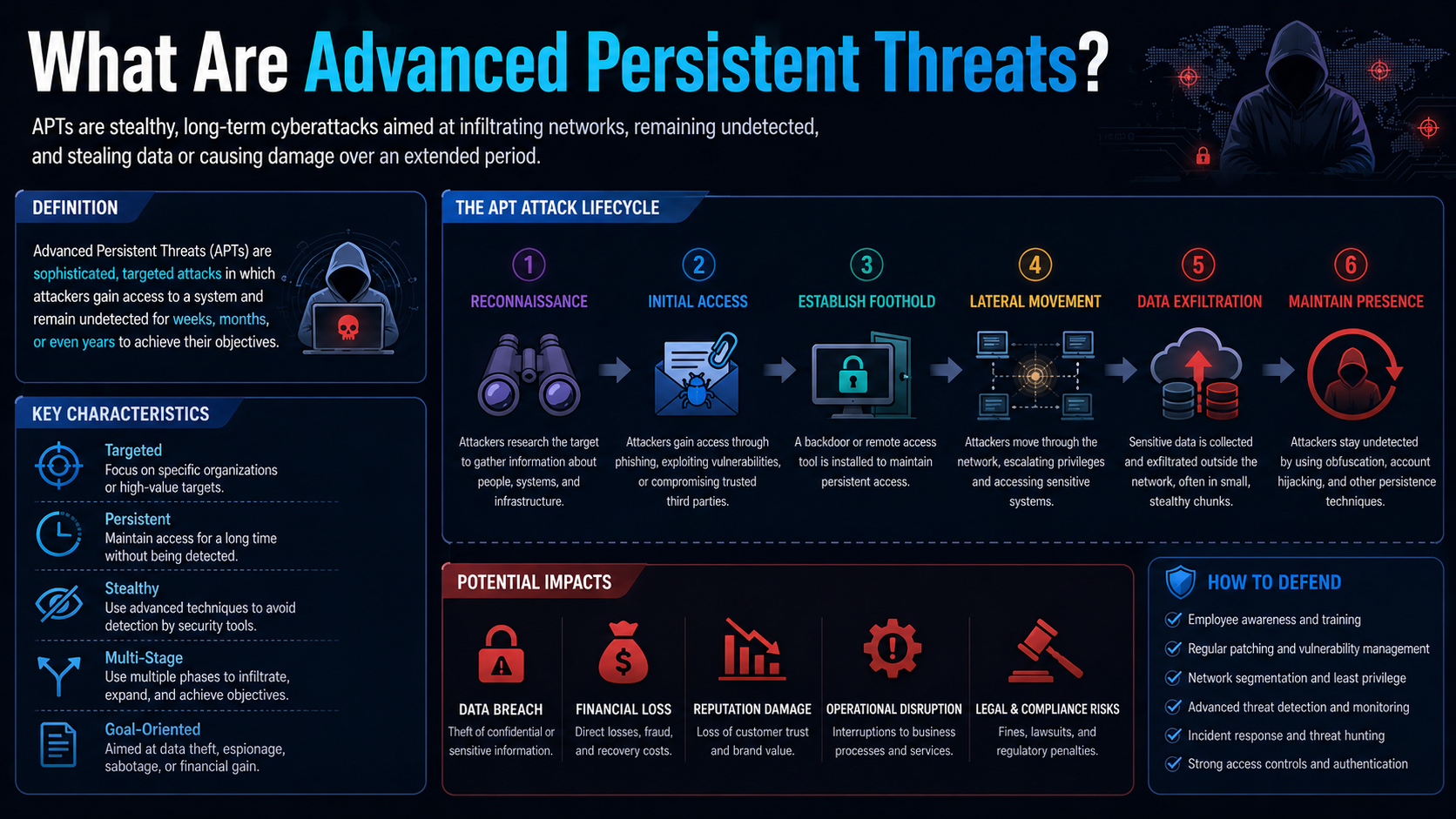
Understanding what Advanced Persistent Threats are is essential if you want to grasp how modern cyber warfare and data breaches really work. These attacks represent a shift from quick, opportunistic hacking to long-term strategic operations carried out by skilled and determined attackers.
The Meaning Behind Advanced Persistent Threats
The term itself gives a clear insight into how these attacks function. “Advanced” means that the attackers use sophisticated techniques, tools, and strategies. They are often well-funded and highly skilled, sometimes even backed by nation-states or large organizations. “Persistent” refers to the long-term nature of the attack. Instead of breaking in and leaving immediately, attackers stay inside the system for weeks, months, or even years. “Threat” highlights the serious risk they pose to data, systems, and operations.
An Advanced Persistent Threat is not a single action but a continuous process. Attackers carefully infiltrate a system, avoid detection, and quietly gather information or manipulate systems over time. Their goal is not just to disrupt but to gain valuable access and maintain it for as long as possible.
How Advanced Persistent Threats Work
Unlike common cyberattacks that rely on brute force or random attempts, APTs follow a structured approach. It usually begins with reconnaissance. During this phase, attackers gather as much information as possible about their target. They study employees, systems, networks, and potential vulnerabilities. Once they have enough information, they move to the initial access phase. This often involves tactics like phishing emails, malicious attachments, or exploiting software vulnerabilities. The attacker gains entry into the system, usually through a weak point such as an unsuspecting user or outdated software.
After gaining access, the attackers do not immediately act. Instead, they establish a foothold. They install malware or create backdoors that allow them to return whenever they want. This is where the “persistent” nature becomes clear. Even if one entry point is closed, they often have multiple ways to re-enter the system.
The next stage involves lateral movement. Attackers explore the network, moving from one system to another while escalating their privileges. They aim to access more sensitive areas, such as databases, servers, or administrative controls. Finally, they begin data collection and exfiltration. This might involve stealing confidential data, intellectual property, financial information, or even sensitive government records. The data is then sent out of the network, often in small amounts to avoid detection. Throughout this entire process, the attackers remain hidden, making detection extremely difficult.
Why Advanced Persistent Threats Are So Dangerous
One of the main reasons APTs are considered so dangerous is their stealth. Traditional security systems are designed to detect obvious threats, such as malware or unusual spikes in activity. However, APTs are designed to blend in with normal operations. Because attackers move slowly and carefully, their actions often go unnoticed. They may use legitimate credentials, making their activities appear as normal user behavior. This makes it incredibly challenging for security teams to identify the threat before significant damage is done.
Another reason is the level of damage they can cause. Since attackers have long-term access, they can gather vast amounts of data. They can also manipulate systems, disrupt operations, or even prepare for larger attacks in the future. In many cases, organizations do not even realize they have been compromised until months later. By that time, the attackers have already achieved their objectives.
Common Targets of Advanced Persistent Threats
Advanced Persistent Threats are usually not random. Attackers carefully choose their targets based on value and strategic importance. Government agencies are among the most common targets, as they hold sensitive information related to national security. Large corporations are also frequent targets, especially those involved in technology, finance, healthcare, and energy. These organizations often possess valuable intellectual property and financial data.
Critical infrastructure, such as power grids, transportation systems, and communication networks, is another major target. Attacks on these systems can have serious consequences, affecting entire populations. Even smaller businesses are not completely safe. While they may not be the primary target, they can be used as entry points to larger networks. Attackers may compromise a smaller company to gain access to a bigger partner or client.
Real-World Examples of Advanced Persistent Threats
Over the years, several high-profile incidents have highlighted the impact of APTs. These attacks have shown how sophisticated and damaging they can be. In some cases, attackers have infiltrated government networks and remained undetected for years, collecting sensitive information. In others, large corporations have suffered massive data breaches that exposed millions of customer records. These incidents demonstrate that no organization is completely immune. They also highlight the importance of strong cybersecurity measures and constant vigilance.
How Advanced Persistent Threats Differ from Other Attacks
It is important to understand how APTs differ from more common cyber threats. Most cyberattacks are opportunistic. Hackers scan for vulnerabilities and exploit them quickly. Their goal is often immediate financial gain, such as stealing credit card information or deploying ransomware.
APTs, on the other hand, are targeted and strategic. Attackers invest significant time and resources into planning and execution. They are not looking for quick wins but long-term access and valuable information. Another key difference is the level of sophistication. APT attackers use advanced tools and techniques, including custom malware and zero-day vulnerabilities. They are constantly adapting and evolving to stay ahead of security measures.
Signs That an Advanced Persistent Threat May Be Present
Detecting an APT is not easy, but there are certain signs that may indicate its presence. Unusual network activity is one of the most common indicators. This could include unexpected data transfers or communication with unknown external servers. Another sign is the presence of unknown files or programs on systems. These may be part of the malware used by attackers to maintain access.
Unusual user behavior can also be a warning sign. For example, if a user account is accessing data or systems that it normally would not, it could indicate that the account has been compromised. Frequent system crashes or performance issues may also be linked to malicious activity. While these signs do not always confirm an APT, they should not be ignored.
How Organizations Can Protect Against Advanced Persistent Threats
Protecting against APTs requires a proactive and comprehensive approach. Traditional security measures alone are not enough. Organizations need to adopt advanced strategies that focus on prevention, detection, and response.
One of the most important steps is to keep systems and software up to date. Many attacks exploit known vulnerabilities that have already been patched. Regular updates can significantly reduce the risk. Employee awareness is also crucial. Since many attacks begin with phishing emails or social engineering, training employees to recognize and avoid these tactics can prevent initial access. Network monitoring plays a key role in detection. By continuously monitoring network activity, organizations can identify unusual patterns and respond quickly.
Implementing strong access controls is another important measure. Limiting access to sensitive data and systems reduces the potential impact of a breach. Regular security assessments and penetration testing can help identify weaknesses before attackers do. These tests simulate real-world attacks and provide valuable insights into potential vulnerabilities.
The Role of Cybersecurity Teams
Cybersecurity teams are at the forefront of defending against Advanced Persistent Threats. Their role goes beyond simply reacting to incidents. They must actively hunt for threats, analyze patterns, and stay updated on the latest attack techniques. Threat intelligence is a critical component of their work. By understanding how attackers operate, security teams can anticipate potential threats and take preventive measures.
Incident response is another key responsibility. When a threat is detected, quick and effective action is essential to minimize damage. This includes isolating affected systems, removing malicious elements, and restoring normal operations. Cybersecurity is not a one-time effort but an ongoing process. As threats continue to evolve, so must the strategies used to combat them.
The Future of Advanced Persistent Threats
As technology continues to advance, so do cyber threats. Advanced Persistent Threats are becoming more sophisticated, making them even harder to detect and prevent. The rise of artificial intelligence, cloud computing, and the Internet of Things has created new opportunities for attackers.
At the same time, these technologies also provide new tools for defense. Artificial intelligence can be used to analyze large amounts of data and identify patterns that may indicate a threat. Automation can help respond to incidents more quickly and efficiently. The battle between attackers and defenders is constantly evolving. Organizations must stay ahead by adopting new technologies and continuously improving their security measures.
Why Awareness Matters More Than Ever
One of the most effective ways to combat Advanced Persistent Threats is through awareness. Understanding how these attacks work and recognizing their potential impact can make a significant difference.
Individuals and organizations alike need to take cybersecurity seriously. Simple actions, such as using strong passwords, updating software, and being cautious with emails, can go a long way in preventing attacks. At a larger scale, collaboration between organizations, governments, and cybersecurity experts is essential. Sharing information about threats and vulnerabilities can help create a stronger defense against APTs.
Conclusion
Advanced Persistent Threats represent one of the most serious challenges in modern cybersecurity. They are not just attacks but long-term operations carried out with precision and patience. Their ability to remain hidden while causing significant damage makes them particularly dangerous.
Understanding what APTs are and how they work is the first step in defending against them. While the threat is complex, it is not impossible to manage. With the right strategies, tools, and awareness, organizations can reduce their risk and protect their valuable data. In a world where digital systems are deeply integrated into everyday life, staying informed and prepared is no longer optional. It is essential.

