Cloud computing has changed how businesses operate, scale, and deliver services. From startups to global enterprises, organizations now rely heavily on cloud platforms to run applications, store data, and manage digital infrastructure. But as cloud adoption grows, so do security risks. Traditional security tools are no longer enough to protect dynamic and distributed environments. This is where cloud workload protection becomes essential.
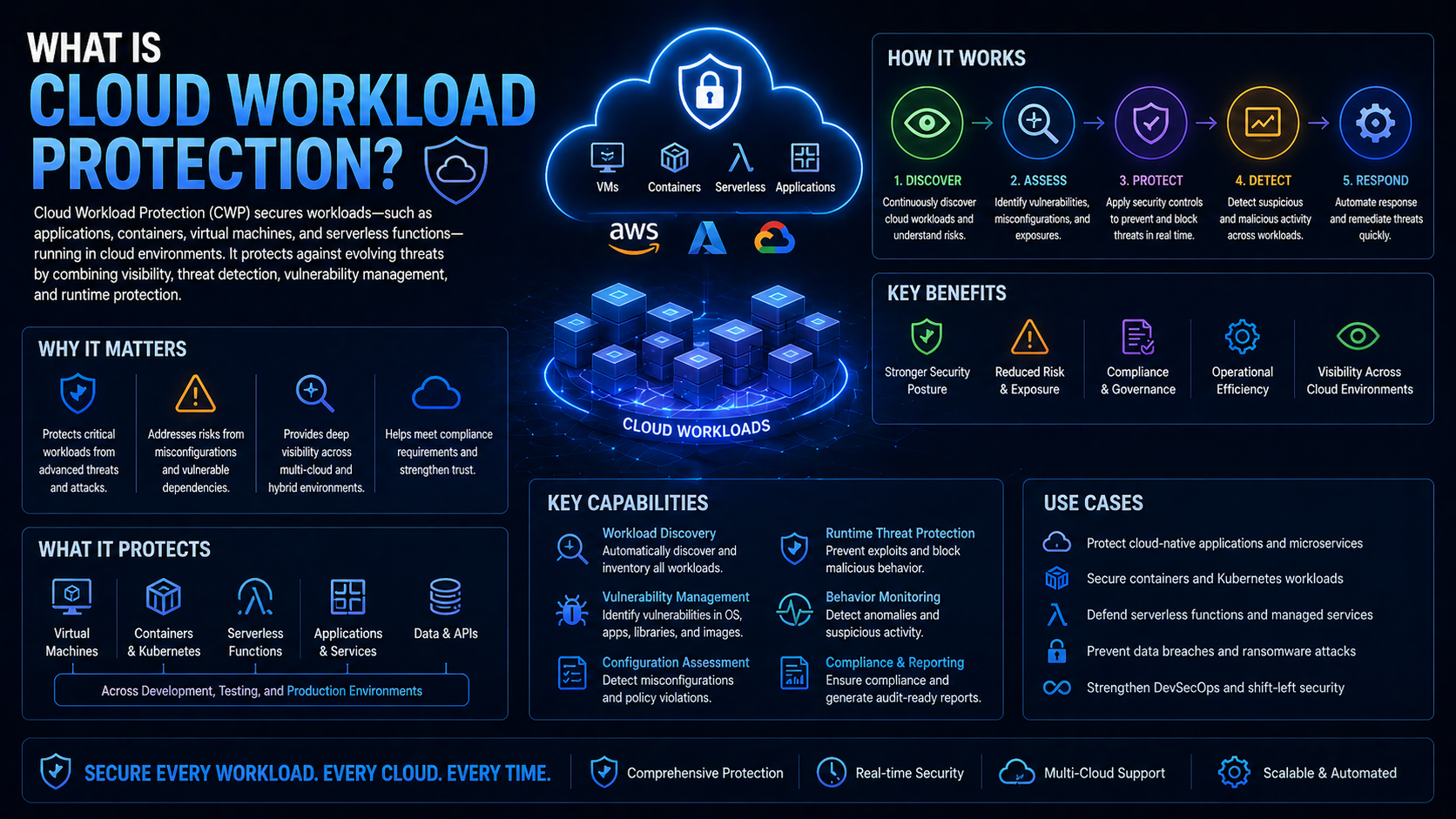
Cloud workload protection focuses on securing the workloads that run in the cloud. These workloads include virtual machines, containers, serverless functions, and applications that process and store critical data. Understanding this concept is crucial for anyone managing or using cloud environments today.
Understanding Cloud Workloads
Before diving into protection, it is important to understand what a workload actually is. In simple terms, a workload refers to any application, service, or process running in the cloud. This could be a website hosted on a virtual machine, a mobile app backend running in containers, or a data processing function triggered automatically.
Workloads are the core of cloud operations. They handle user requests, process information, and deliver services. Because they are constantly active and exposed to the internet, they become attractive targets for cyber threats.
Why Cloud Workload Protection Matters
As businesses move to the cloud, they often assume that cloud providers handle all aspects of security. While providers secure the infrastructure, the responsibility for protecting workloads lies largely with the user. This shared responsibility model creates gaps if not properly managed.
Cloud workloads face multiple risks such as malware, unauthorized access, misconfigurations, and insider threats. Unlike traditional systems, cloud environments are highly dynamic. Resources can be created or destroyed in seconds, making it harder to monitor and secure them using conventional methods.
Cloud workload protection ensures that every workload is continuously monitored, protected, and compliant with security standards. It helps prevent data breaches, service disruptions, and financial losses.
How Cloud Workload Protection Works
Cloud workload protection uses a combination of tools, policies, and automation to secure workloads. It operates across different layers, including the operating system, applications, and network.
One of the key aspects is real-time monitoring. Security systems continuously observe workload behavior to detect unusual activity. For example, if a workload suddenly starts communicating with unknown servers, it may indicate a potential attack. Another important feature is vulnerability management. Cloud workload protection scans workloads for known vulnerabilities and helps fix them before attackers can exploit them. This is especially important in environments where new workloads are frequently deployed.
Access control also plays a major role. Only authorized users and services should be allowed to interact with workloads. Strong identity and access management policies help reduce the risk of unauthorized access.
Key Components of Cloud Workload Protection
Cloud workload protection is not a single tool but a combination of several components working together. Threat detection is one of the most critical elements. It identifies malicious activities such as unauthorized login attempts, suspicious file changes, or abnormal network traffic.
Another component is configuration management. Misconfigurations are one of the leading causes of cloud security breaches. Proper configuration ensures that workloads are set up securely from the beginning. Encryption is also essential. Data should be encrypted both in transit and at rest to prevent unauthorized access. Even if attackers gain access to data, encryption ensures it remains unreadable.
Automation enhances security by reducing human error. Automated systems can respond to threats instantly, such as isolating a compromised workload or blocking malicious traffic.
Types of Cloud Workloads That Need Protection
Different types of workloads require different security approaches. Virtual machines are one of the most common workloads. They behave like traditional servers but run in the cloud. They need protection against malware, unauthorized access, and vulnerabilities.
Containers are lightweight and widely used in modern applications. However, their fast deployment and scaling can create security challenges. Each container must be secured without slowing down performance.
Serverless workloads, such as functions triggered by events, are another category. These workloads are short-lived but still require protection against threats like code injection or unauthorized execution. Applications themselves also need protection. Secure coding practices, regular updates, and runtime protection are essential to keep them safe.
Challenges in Cloud Workload Protection
Securing cloud workloads is not easy. One of the biggest challenges is visibility. In large cloud environments, it can be difficult to track all workloads and their activities. Another challenge is complexity. Cloud systems often involve multiple services, regions, and configurations. Managing security across such environments requires advanced tools and expertise.
Rapid scaling is another issue. New workloads can be created automatically based on demand. Without proper security controls, these workloads may be exposed to risks from the moment they are deployed. Compliance is also a concern. Many industries require strict security standards. Ensuring that all workloads meet these requirements can be challenging.
Benefits of Cloud Workload Protection
Despite the challenges, cloud workload protection offers significant benefits. mIt improves security by detecting and preventing threats in real time. This reduces the risk of data breaches and cyber attacks. It also enhances visibility. Organizations gain a clear understanding of their workloads, including their behavior and potential risks.
Another benefit is compliance. Cloud workload protection helps meet regulatory requirements by ensuring that workloads follow security standards. Operational efficiency is also improved. Automated security processes reduce the need for manual intervention, saving time and resources.
Best Practices for Cloud Workload Protection
To effectively protect cloud workloads, organizations should follow certain best practices. Regular monitoring is essential. Continuous observation helps detect threats early and respond quickly. Keeping systems updated is equally important. Regular updates and patches fix known vulnerabilities and improve security. Strong access control should be implemented. Only necessary permissions should be granted to users and services.
Using encryption ensures that sensitive data remains protected. Both data in transit and at rest should be secured. Security should be integrated into the development process. This approach, often called DevSecOps, ensures that security is considered from the beginning rather than added later.
The Role of Automation and AI
Modern cloud workload protection relies heavily on automation and artificial intelligence. These technologies help analyze large volumes of data and identify threats more accurately. Automation allows security systems to respond instantly to threats. For example, if suspicious activity is detected, the system can automatically isolate the affected workload.
Artificial intelligence improves threat detection by identifying patterns and anomalies that may not be visible to human analysts. This makes security more proactive rather than reactive.
Future of Cloud Workload Protection
As cloud technology continues to evolve, so will security strategies. Future cloud workload protection solutions will become more intelligent, automated, and integrated. Zero trust security models are expected to play a major role. In this approach, no user or system is trusted by default. Every request is verified before access is granted.
Another trend is the integration of security into every stage of the cloud lifecycle. From development to deployment and operation, security will be a continuous process. Organizations will also focus more on unified security platforms that provide complete visibility and control over all workloads.
Conclusion
Cloud workload protection is no longer optional. It is a critical part of modern cybersecurity. As businesses continue to rely on the cloud, protecting workloads becomes essential to ensure security, performance, and reliability.
By understanding what cloud workload protection is and how it works, organizations can take the right steps to secure their cloud environments. With the right tools, strategies, and practices, it is possible to stay ahead of threats and build a secure digital future. Cloud computing offers incredible opportunities, but only when combined with strong security measures. Cloud workload protection ensures that these opportunities can be explored safely and confidently.

