Software has changed the way businesses operate, communicate, and grow. Instead of installing programs on individual computers or managing complex on-premise systems, companies now rely heavily on cloud-based tools. This shift has given rise to Software as a Service, commonly known as SaaS. From email platforms and project management tools to accounting systems and customer relationship software, SaaS applications are now deeply integrated into everyday business workflows.
But with this convenience comes a critical question: how secure are these cloud-based applications? This is where SaaS security becomes essential. Understanding SaaS security is not just important for IT teams but for anyone using cloud-based tools, whether you are running a startup or managing enterprise-level systems.
Understanding SaaS Security in Simple Terms
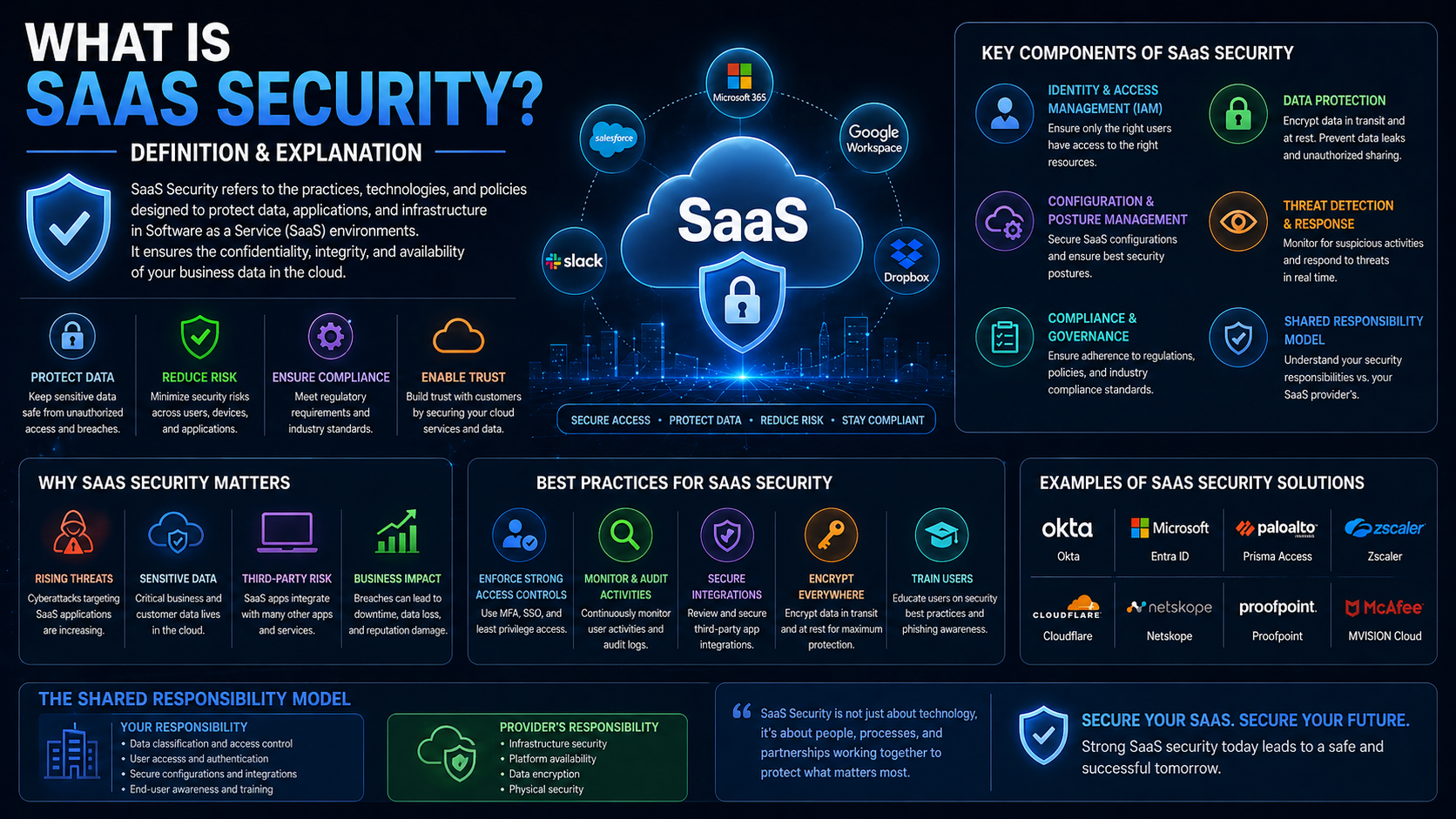
SaaS security refers to the measures, policies, and technologies used to protect data, users, and applications within cloud-based software environments. Unlike traditional software, SaaS applications are hosted and maintained by third-party providers. This means your data is stored outside your physical control, usually in remote data centers.
Because of this setup, security becomes a shared responsibility between the service provider and the user. The provider is responsible for securing the infrastructure, while the user must ensure proper access control, safe usage, and data protection practices.
At its core, SaaS security is about protecting sensitive information from unauthorized access, data breaches, and misuse while ensuring that systems remain reliable and accessible.
Why SaaS Security Matters More Than Ever
The rapid adoption of SaaS applications has made businesses more efficient, but it has also expanded the attack surface for cyber threats. Employees can access applications from anywhere, often using multiple devices. While this flexibility improves productivity, it also introduces new risks.
Cybercriminals target SaaS platforms because they often contain valuable business data such as customer records, financial information, and internal communications. A single misconfiguration or weak password can lead to serious consequences.
Another challenge is the growing number of SaaS tools used within a single organization. Many companies use dozens or even hundreds of applications, sometimes without proper oversight. This creates shadow IT, where employees use unauthorized apps that may not meet security standards. Without proper SaaS security, businesses risk data leaks, compliance violations, financial losses, and damage to their reputation.
Key Components of SaaS Security
To understand SaaS security better, it helps to break it down into its main components. Each plays a role in protecting applications and data. Identity and access management is one of the most important aspects. It ensures that only authorized users can access specific systems and data. Strong authentication methods, such as multi-factor authentication, add an extra layer of protection.
Data protection is another critical element. This involves encrypting data both in transit and at rest so that even if it is intercepted, it cannot be easily read or misused. Proper backup and recovery systems also ensure that data is not lost in case of an incident.
Application security focuses on protecting the software itself from vulnerabilities. SaaS providers regularly update their platforms to fix security issues, but users must also keep configurations secure and avoid risky integrations. Monitoring and threat detection help identify suspicious activities early. Advanced systems can detect unusual login patterns or data transfers, allowing organizations to respond quickly.
Compliance and governance ensure that SaaS usage meets industry regulations and standards. This is especially important for sectors like healthcare, finance, and e-commerce, where data protection laws are strict.
Common Risks in SaaS Environments
Despite its benefits, SaaS comes with several security risks that organizations must address carefully. One of the most common risks is weak authentication. If users rely on simple passwords or reuse them across platforms, attackers can easily gain access. Phishing attacks often target SaaS users to steal login credentials.
Misconfigurations are another major issue. Incorrect permission settings can expose sensitive data to unauthorized users. Sometimes, employees unintentionally share files publicly without realizing the risk. Data loss can occur due to accidental deletion, malicious actions, or system failures. Without proper backups, recovering this data can be difficult.
Third-party integrations can also introduce vulnerabilities. Many SaaS applications connect with other tools, and if one of them is compromised, it can affect the entire system. Insider threats should not be overlooked. Employees or contractors with access to sensitive data can misuse it, either intentionally or accidentally.
How SaaS Security Works in Practice
In real-world scenarios, SaaS security is implemented through a combination of tools, policies, and user behavior. Organizations start by selecting reputable SaaS providers that follow strong security standards. These providers invest heavily in protecting their infrastructure, including physical data centers, network security, and regular audits.
Next comes user management. Businesses define who can access what, ensuring that employees only have the permissions they need. This principle is known as least privilege access. Security teams also implement monitoring tools to track user activity and detect anomalies. If an employee logs in from an unusual location or downloads large amounts of data, the system can trigger alerts.
Regular training is another important part of SaaS security. Employees are often the weakest link, so educating them about phishing, password hygiene, and safe usage is crucial. Organizations also conduct periodic security reviews to identify gaps and improve their defenses over time.
The Role of SaaS Providers
SaaS providers play a major role in ensuring security, but they do not handle everything. Their responsibilities typically include securing the application infrastructure, maintaining uptime, and implementing basic protections like encryption and firewalls. However, users are responsible for how they use the software. This includes managing access controls, protecting login credentials, and ensuring that data is handled properly.
This shared responsibility model is a key concept in SaaS security. Understanding where the provider’s role ends and the user’s role begins is essential for avoiding security gaps.
Best Practices for Strong SaaS Security
Building a strong SaaS security strategy does not require complex systems, but it does require consistency and awareness. Using strong passwords and enabling multi-factor authentication should be the first step. This simple measure can prevent many common attacks.
Access should be limited based on roles. Not everyone needs full access to all data, and restricting permissions reduces risk. Regular audits help identify unused accounts, outdated permissions, and potential vulnerabilities. Cleaning up these issues improves overall security.
Data should always be encrypted, and backups should be maintained to prevent loss. Even if a system is compromised, backups ensure business continuity. Organizations should also monitor third-party integrations and only allow trusted applications. Each integration should be reviewed for security risks. Employee training should be ongoing, not a one-time event. As threats evolve, users need to stay informed about new risks and best practices.
Challenges in Managing SaaS Security
While SaaS security offers many benefits, it also comes with challenges that organizations must overcome. One of the biggest challenges is visibility. With multiple SaaS applications in use, it can be difficult to track where data is stored and who has access to it.
Another challenge is managing access across different platforms. Each application may have its own settings and policies, making it harder to maintain consistency. Compliance requirements can also be complex, especially for global organizations. Different regions have different data protection laws, and ensuring compliance across all SaaS tools can be demanding.
Rapid adoption of new tools can outpace security measures. Employees often start using new applications without proper approval, creating hidden risks. Despite these challenges, organizations that invest in proper SaaS security can significantly reduce their exposure to threats.
The Future of SaaS Security
As technology continues to evolve, SaaS security is becoming more advanced and intelligent. Artificial intelligence and machine learning are now being used to detect threats in real time and automate responses. Zero trust security models are gaining popularity, where no user or device is trusted by default, even if they are inside the network. Every access request is verified before being granted.
Automation is also playing a bigger role. Security systems can now automatically enforce policies, detect misconfigurations, and respond to incidents without human intervention. As more businesses move to the cloud, SaaS security will remain a top priority. Organizations that take it seriously will not only protect their data but also build trust with their customers.
Final Thoughts
SaaS security is no longer optional in today’s digital world. It is a fundamental part of using cloud-based applications safely and effectively. While SaaS platforms offer convenience and scalability, they also require careful management to ensure that data remains secure.
By understanding the risks, implementing best practices, and staying proactive, businesses can enjoy the benefits of SaaS without compromising on security. Whether you are a small business owner or part of a large organization, investing in SaaS security is an investment in your future stability and success.

