The way businesses use technology has changed dramatically over the past decade. Companies no longer rely on a single server or even a single cloud provider to run their operations. Instead, many organizations spread their applications, data, and services across multiple cloud platforms. This approach is known as multicloud, and while it brings flexibility and performance advantages, it also introduces a new layer of complexity when it comes to protecting everything.
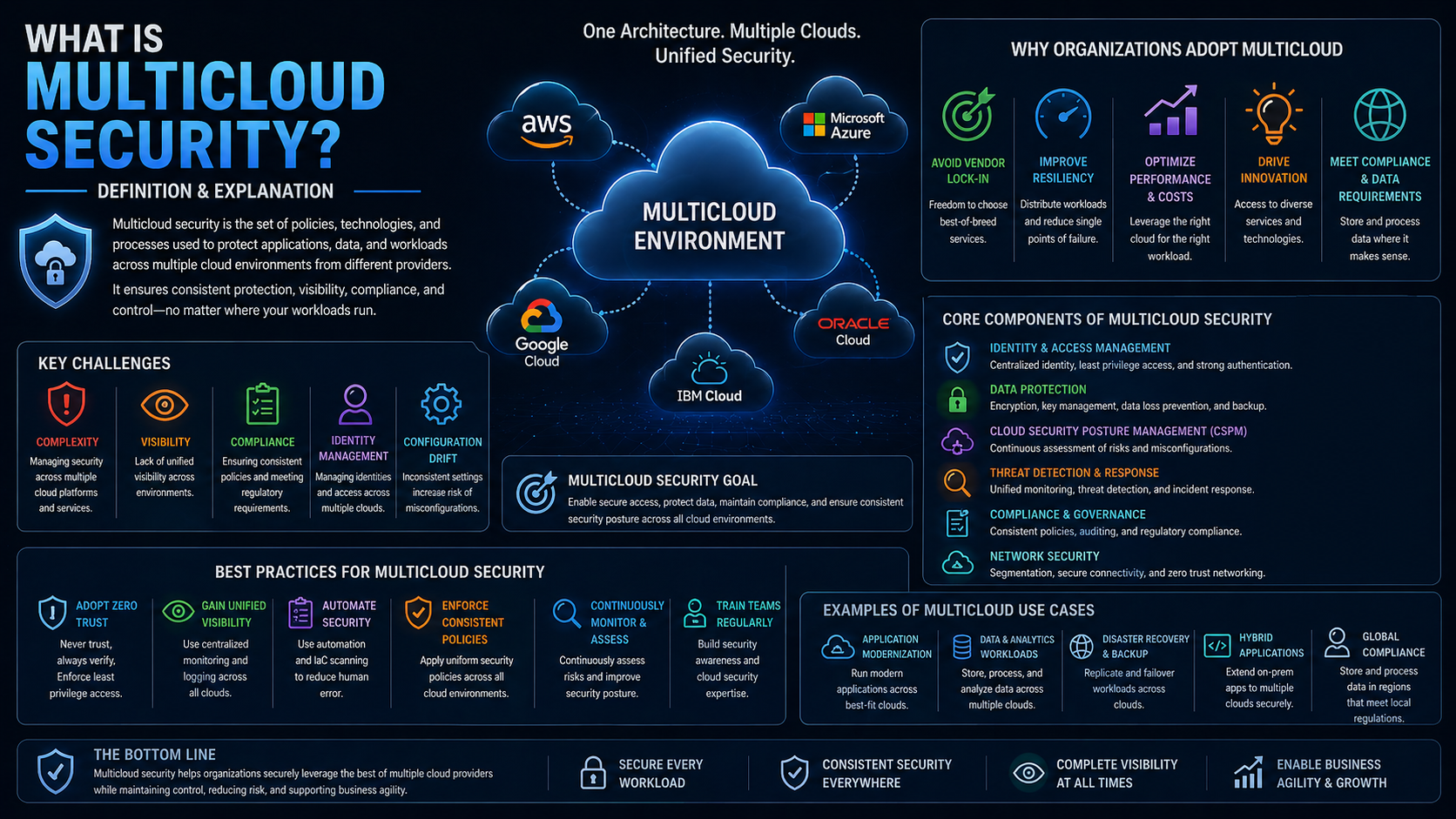
Multicloud security is the practice of protecting data, applications, and infrastructure that exist across more than one cloud environment. It ensures that no matter where your digital assets are stored or processed, they remain safe from threats, breaches, and unauthorized access. In simple terms, it is about creating a unified security strategy for a distributed cloud world.
Understanding the Multicloud Environment
To fully grasp multicloud security, it helps to first understand what a multicloud environment looks like. Imagine a company using one cloud provider for storing customer data, another for running applications, and yet another for analytics. Each platform may have its own rules, tools, and security settings.
This setup is often chosen to avoid dependency on a single provider, improve reliability, or take advantage of specific features offered by different platforms. While this strategy is smart from a business perspective, it also means that security teams must manage multiple systems at once. Instead of dealing with one set of security policies, they now have to handle several, often with different configurations and risks. That is where multicloud security becomes essential.
Why Multicloud Security Matters
The more complex your cloud environment becomes, the greater the chances of something going wrong. Misconfigurations, weak access controls, and inconsistent policies can create gaps that attackers may exploit.
Multicloud security matters because it brings consistency. It ensures that all cloud platforms follow a unified security approach, reducing the chances of vulnerabilities slipping through unnoticed. It also helps organizations maintain visibility across their entire infrastructure, making it easier to detect and respond to threats. Without a strong multicloud security strategy, businesses risk data breaches, compliance issues, and operational disruptions. In today’s digital world, even a small security gap can lead to significant consequences.
Key Challenges in Multicloud Security
One of the biggest challenges in multicloud security is visibility. When resources are spread across multiple platforms, it becomes difficult to see everything in one place. Security teams may struggle to monitor activity, identify risks, or track unauthorized access. Another challenge is inconsistency. Different cloud providers often use different security models, which can lead to gaps if not managed properly. What works for one platform may not work for another, creating confusion and potential weaknesses.
Identity and access management is also a major concern. Managing who has access to what becomes more complicated in a multicloud setup. Without proper controls, users may end up with more permissions than they need, increasing the risk of insider threats or accidental data exposure. Compliance adds another layer of complexity. Organizations must ensure that their data handling practices meet regulatory requirements, even when that data is spread across multiple cloud providers.
How Multicloud Security Works
Multicloud security works by creating a unified approach to protecting all cloud environments. Instead of treating each platform separately, organizations implement tools and policies that work across all systems. This often involves using centralized dashboards that provide visibility into all cloud resources. These dashboards allow security teams to monitor activity, detect threats, and respond quickly.
Automation also plays a key role. Security tools can automatically identify misconfigurations, enforce policies, and even fix certain issues without human intervention. This reduces the chances of errors and improves overall efficiency. Another important aspect is encryption. Data is protected both at rest and in transit, ensuring that even if it is intercepted, it cannot be easily accessed or used.
The Role of Identity and Access Management
One of the most critical components of multicloud security is identity and access management. This involves controlling who can access resources and what they can do with them.
In a multicloud environment, users may need access to multiple platforms. Without a centralized system, managing these permissions can quickly become overwhelming. A strong identity and access management strategy ensures that users only have access to what they need. It also includes features like multi factor authentication, which adds an extra layer of protection. By controlling access effectively, organizations can significantly reduce the risk of unauthorized activity and data breaches.
Importance of Data Protection
Data is often the most valuable asset for any organization. Protecting it is a top priority, especially in a multicloud environment where it may be stored in multiple locations.
Multicloud security focuses on ensuring that data remains secure regardless of where it is stored. This includes encryption, backup solutions, and strict access controls. It also involves monitoring data movement. Understanding how data flows between different cloud platforms helps identify potential risks and ensures that sensitive information is not exposed.
Threat Detection and Response
In today’s cyber landscape, threats are constantly evolving. Multicloud security must include advanced threat detection and response capabilities.
This means using tools that can identify unusual behavior, detect potential attacks, and respond quickly to minimize damage. Artificial intelligence and machine learning are often used to analyze patterns and identify threats that might otherwise go unnoticed. A fast response is crucial. The sooner a threat is detected, the easier it is to contain and resolve. Multicloud security solutions are designed to provide real time alerts and automated responses to keep systems protected.
Best Practices for Multicloud Security
Building a strong multicloud security strategy requires careful planning and execution. It starts with understanding your environment and identifying potential risks. Consistency is key. Organizations should aim to apply the same security policies across all cloud platforms. This reduces confusion and ensures that no area is left unprotected.
Regular audits are also important. By reviewing configurations and access controls, businesses can identify and fix issues before they become serious problems. Training plays a significant role as well. Employees should be aware of security best practices and understand their role in protecting data and systems.
The Future of Multicloud Security
As more organizations adopt multicloud strategies, the importance of multicloud security will continue to grow. Technology is evolving, and so are the threats that come with it. Future solutions will likely focus on greater automation and smarter threat detection. Artificial intelligence will play an even bigger role in identifying risks and responding to them in real time. There will also be a stronger emphasis on integration. Security tools will become more unified, making it easier to manage multiple cloud environments from a single platform. At the same time, regulations will continue to evolve, requiring organizations to stay updated and ensure compliance across all their systems.
Final Thoughts
Multicloud security is not just a technical requirement. It is a critical part of modern business strategy. As organizations continue to rely on multiple cloud platforms, the need for a unified and effective security approach becomes more important than ever. By focusing on visibility, consistency, and proactive threat management, businesses can protect their digital assets and maintain trust with their customers. Multicloud security may seem complex at first, but with the right strategy and tools, it becomes a powerful way to safeguard the future of your organization.

