Ransomware attacks have become one of the most serious cybersecurity threats facing businesses today. From small companies to multinational organizations, no one is completely safe from cybercriminals who use ransomware to lock systems, encrypt valuable data, and demand payment for its release.
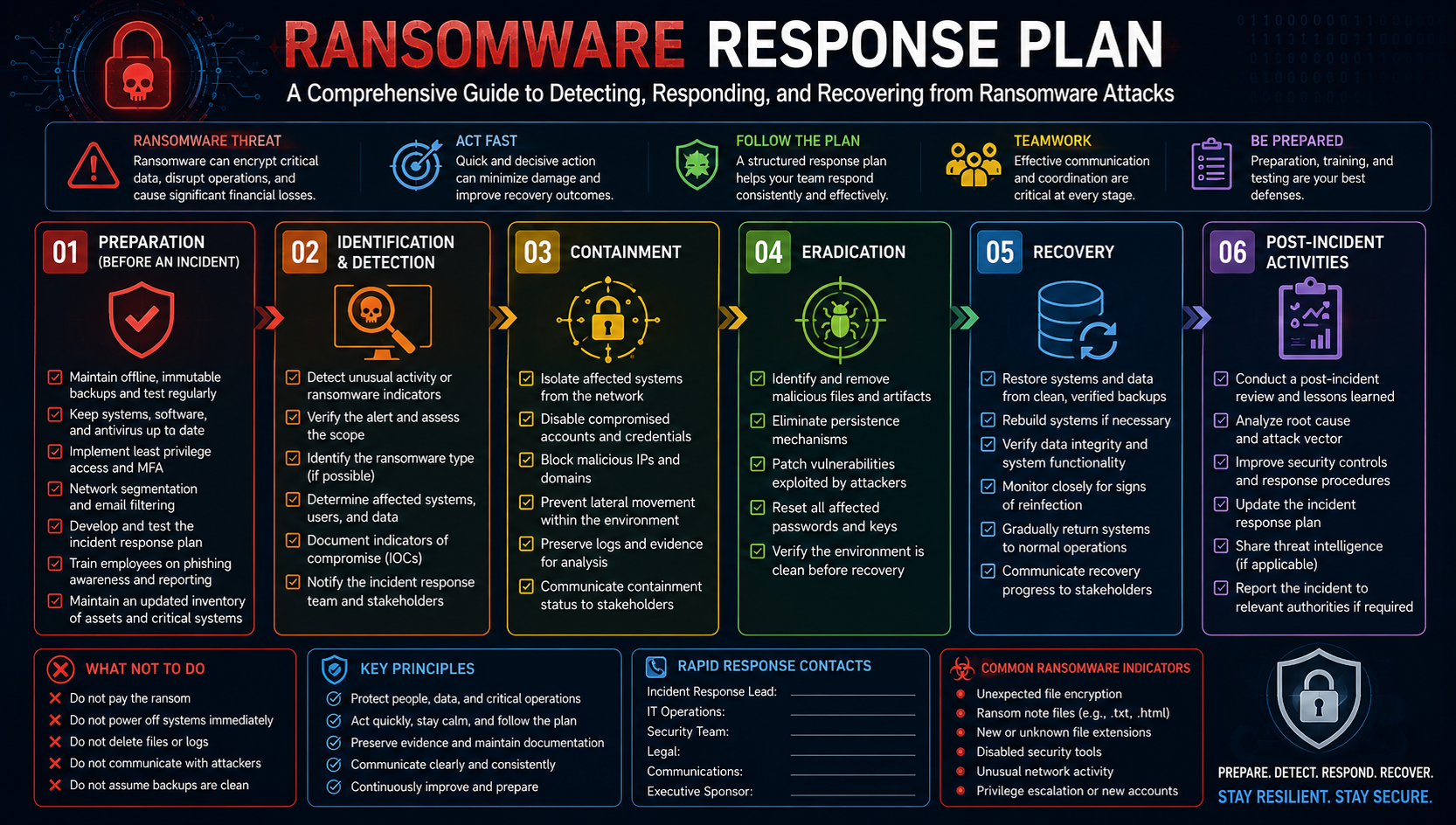
The impact of a ransomware attack goes far beyond financial losses. Businesses may experience downtime, damaged customer trust, legal complications, and long-term reputational harm. This is why every organization needs a well-structured ransomware response plan. A ransomware response plan provides a clear roadmap for detecting, containing, responding to, and recovering from ransomware incidents. Instead of making decisions under pressure, organizations can follow predefined procedures that minimize damage and accelerate recovery. This guide explains everything you need to know about creating and implementing an effective ransomware response plan.
What Is a Ransomware Response Plan?
A ransomware response plan is a documented strategy that outlines how an organization should react when ransomware infects its systems. The plan identifies responsibilities, communication procedures, technical response steps, recovery processes, and post-incident activities.
The primary goal of a ransomware response plan is to reduce business disruption while protecting sensitive information and ensuring a fast recovery.
Without a plan, organizations often waste valuable time during an attack trying to determine what happened and who should take action. Those delays can allow ransomware to spread further across networks and cause more extensive damage.
Why Every Business Needs a Ransomware Response Plan
Ransomware attacks have evolved significantly over the past decade. Modern ransomware groups often use double extortion tactics, where they not only encrypt data but also steal sensitive information and threaten to publish it if a ransom is not paid. Many attacks begin with a seemingly harmless phishing email, compromised password, or software vulnerability. Once attackers gain access, they move through the network, identify critical systems, and deploy ransomware at the most damaging moment.
Organizations that have a ransomware response plan can respond quickly and confidently. They know how to isolate infected devices, notify stakeholders, preserve evidence, and begin recovery procedures. A prepared organization is far more likely to minimize losses than one reacting without a strategy.
Common Signs of a Ransomware Attack
Recognizing ransomware early can significantly reduce its impact.
Some common warning signs include:
Unexpected file encryption across multiple systems, inaccessible files, ransom notes appearing on devices, unusual network activity, disabled security software, sudden system slowdowns, and unauthorized administrative actions. Employees may also report being unable to access shared folders or business applications. The faster these warning signs are identified, the faster security teams can begin containment efforts.
Building an Effective Ransomware Response Plan
Creating a ransomware response plan requires careful preparation before an incident occurs. Organizations should begin by identifying critical systems, sensitive data, key personnel, and communication channels. The plan should clearly define roles and responsibilities for IT teams, cybersecurity staff, executives, legal advisors, public relations personnel, and business leaders. Everyone involved should understand their responsibilities during a ransomware incident.
Establish an Incident Response Team
A dedicated incident response team plays a crucial role in managing ransomware attacks. This team should include cybersecurity professionals, system administrators, legal representatives, executive leadership, and communication specialists. Each member should understand how to respond during different stages of an attack. Regular training exercises help ensure team members remain prepared for real-world incidents.
Identify Critical Assets
Not all systems have the same level of importance. Organizations should maintain an inventory of critical assets, including servers, databases, applications, cloud services, and backup systems. Knowing which assets are essential allows teams to prioritize recovery efforts during an attack. A detailed asset inventory also helps investigators determine the scope of a compromise.
Create a Communication Plan
Communication becomes extremely important during ransomware incidents. Employees need clear instructions, customers may require updates, and leadership must stay informed throughout the response process. The communication plan should specify who is responsible for delivering messages and how information will be shared. Organizations should prepare communication templates in advance to avoid confusion during emergencies.
Steps to Follow During a Ransomware Attack
A ransomware response plan should provide step-by-step guidance for handling an active incident.
Detection and Analysis
The first phase involves identifying suspicious activity and confirming whether ransomware is present.
Security teams should collect logs, review alerts, examine affected systems, and determine how the attack entered the environment.
Understanding the scope of the incident helps guide subsequent actions.
Investigators should identify which systems are infected, what data has been affected, and whether attackers still have access.
Containment
Once ransomware is confirmed, immediate containment becomes the highest priority.
Affected devices should be disconnected from the network to prevent further spread.
Network segments may need to be isolated, compromised accounts disabled, and remote access connections terminated.
Containment actions help protect unaffected systems while response teams continue their investigation.
Rapid containment often makes the difference between a localized incident and a company-wide disaster.
Eradication
After containment, organizations must eliminate the ransomware and remove any malicious tools used by attackers.
This may involve deleting malware, patching vulnerabilities, resetting credentials, and strengthening security controls.
Security teams should ensure that attackers no longer have access before recovery efforts begin.
Failing to fully eradicate the threat can lead to reinfection later.
Recovery
Recovery focuses on restoring normal business operations.
Organizations should restore clean backups, verify system integrity, and carefully monitor for signs of recurring malicious activity.
Recovery should occur in phases, starting with the most critical business functions.
Each restored system should undergo security validation before being returned to production.
A controlled recovery process reduces the risk of further disruptions.
The Importance of Secure Backups
Backups are one of the most powerful defenses against ransomware.
Organizations should maintain regular backups of critical data and store copies in secure, isolated environments.
Following the 3-2-1 backup strategy remains a widely recommended practice. This approach involves keeping three copies of data, using two different storage media, and maintaining one copy offline or offsite.
Backup restoration procedures should also be tested regularly.
Many organizations discover backup issues only when they need them most.
Regular testing ensures backups can support recovery efforts during actual incidents.
Should Organizations Pay the Ransom?
One of the most difficult decisions during a ransomware attack is whether to pay the ransom.
Law enforcement agencies and cybersecurity experts generally discourage payment because there is no guarantee attackers will provide working decryption keys.
Paying a ransom may also encourage future criminal activity.
Organizations should evaluate legal considerations, regulatory requirements, business impacts, and available recovery options before making decisions.
Having reliable backups often eliminates the need to consider ransom payments.
A strong ransomware response plan should address this decision-making process before an incident occurs.
Employee Awareness and Training
Human error remains one of the leading causes of ransomware infections.
Employees should receive regular cybersecurity awareness training that covers phishing emails, suspicious links, malicious attachments, and password security.
Training programs should include realistic simulations that help employees recognize common attack techniques.
A well-trained workforce serves as an additional layer of defense against ransomware.
Security awareness should become an ongoing process rather than a one-time activity.
Working with External Experts
Some ransomware incidents require assistance from external specialists.
Cybersecurity consultants, digital forensic investigators, incident response firms, and legal advisors can provide valuable expertise during complex attacks.
Organizations should establish relationships with trusted service providers before incidents occur.
Having contacts readily available can save valuable time during emergencies.
External experts often help identify attacker techniques, preserve evidence, and guide recovery efforts.
Regulatory and Legal Considerations
Many industries have specific requirements for reporting cybersecurity incidents.
Organizations may need to notify regulators, customers, business partners, or law enforcement agencies depending on the nature of the attack.
Legal teams should participate in ransomware response planning to ensure compliance obligations are addressed.
Failure to meet reporting requirements can result in penalties and additional reputational damage.
A comprehensive ransomware response plan should clearly document notification procedures.
Conducting Post-Incident Reviews
The response process does not end when systems are restored.
Organizations should conduct a detailed post-incident review to identify lessons learned and improve future preparedness.
The review should examine how attackers gained access, which controls failed, what response actions worked effectively, and where improvements are needed.
Findings should be documented and incorporated into updated security policies and response procedures.
Continuous improvement strengthens organizational resilience against future attacks.
Best Practices for Ransomware Preparedness
Organizations that successfully defend against ransomware often follow several key practices.
They maintain strong backup strategies, implement multi-factor authentication, regularly patch systems, monitor networks continuously, conduct employee training, restrict user privileges, and test incident response plans through exercises.
Cybersecurity is not a one-time project.
It requires ongoing commitment, investment, and adaptation to evolving threats.
The more prepared an organization becomes, the better positioned it is to respond when an attack occurs.
Conclusion
A ransomware response plan is an essential component of modern cybersecurity. Ransomware attacks can disrupt operations, damage reputations, and create significant financial challenges. However, organizations that prepare in advance can significantly reduce the impact of these threats.
An effective ransomware response plan provides clear guidance for detection, containment, eradication, recovery, communication, and continuous improvement. Combined with strong backups, employee awareness, proactive security controls, and regular testing, a well-designed plan helps organizations navigate ransomware incidents with confidence. Cyber threats will continue to evolve, but preparation remains one of the strongest defenses. By investing time in developing and maintaining a ransomware response plan today, organizations can improve their resilience and protect their future against tomorrow’s ransomware attacks.

