Cybersecurity is no longer just about building walls and hoping nothing breaks through. The digital world has changed, and so have the threats. Organizations today operate across cloud platforms, remote devices, third party tools, and complex networks. This expansion has created more opportunities for attackers, and traditional security approaches often fail to keep up.
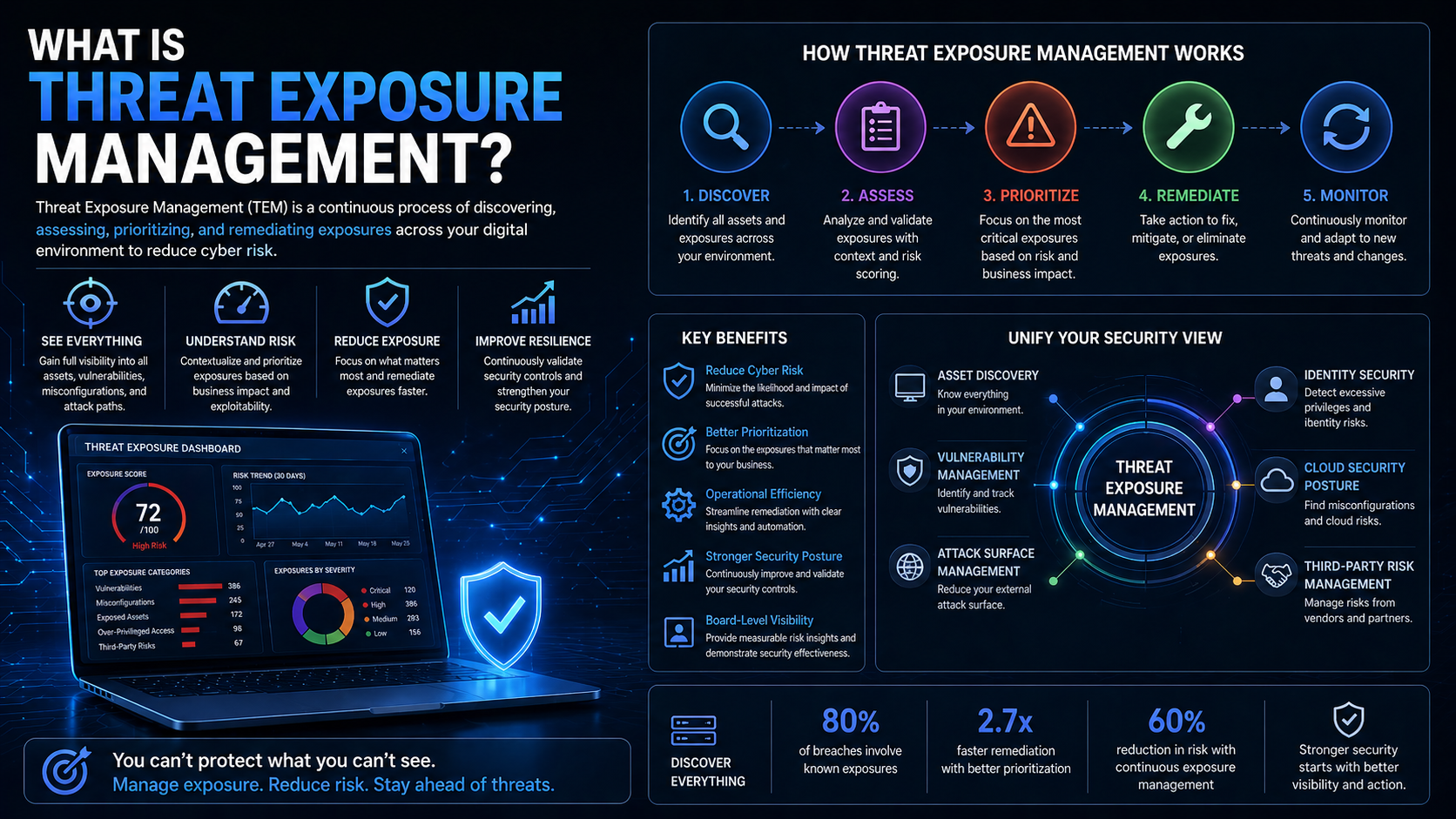
This is where threat exposure management comes into the picture. It represents a shift from reactive defense to proactive awareness. Instead of waiting for an attack to happen, it focuses on continuously identifying, understanding, and reducing the ways an organization could be attacked.
At its core, threat exposure management is about visibility and control. It helps organizations see where they are vulnerable, understand how those vulnerabilities could be exploited, and take action before damage occurs.
What Threat Exposure Management Really Means
Threat exposure management is the process of continuously discovering and analyzing security gaps across an organization’s entire digital environment. It goes beyond simple vulnerability scanning by connecting the dots between assets, threats, and real world attack paths.
Imagine your digital infrastructure as a city. Traditional security might focus on locking doors and installing cameras. Threat exposure management, on the other hand, studies the entire city layout, identifies weak points in the design, and predicts how a criminal might move through it. This approach gives security teams a much clearer picture of risk. Instead of dealing with thousands of alerts, they can focus on the exposures that truly matter.
Why Traditional Security Falls Short
For years, organizations relied on tools like firewalls, antivirus software, and periodic vulnerability scans. While these tools are still important, they often work in isolation. They generate alerts but do not provide context.
This creates several problems. Security teams become overwhelmed with information. Critical issues get lost among less important alerts. Decision making becomes slower and less effective. Threat exposure management solves this by prioritizing risks based on real impact. It helps answer important questions such as which vulnerabilities are actually exploitable and which ones pose the greatest threat to the business.
The Growing Importance of Continuous Visibility
One of the biggest challenges in modern cybersecurity is the constant change in digital environments. New devices are added, software is updated, and configurations change regularly. Each change can introduce new risks.
Threat exposure management provides continuous visibility. It does not rely on one time scans or periodic checks. Instead, it constantly monitors the environment and updates risk assessments in real time. This ongoing awareness is essential for staying ahead of attackers. Cyber threats evolve quickly, and organizations need to adapt just as fast.
Connecting Assets, Vulnerabilities, and Threats
A key strength of threat exposure management is its ability to connect different pieces of information. It brings together data about assets, vulnerabilities, and threat intelligence to create a complete picture of risk.
For example, a vulnerability on its own might not seem critical. But if that vulnerability exists on a system that stores sensitive data and is exposed to the internet, the risk becomes much higher. By understanding these relationships, organizations can prioritize their efforts more effectively. They can focus on fixing the issues that have the greatest potential impact.
Real World Attack Path Analysis
One of the most powerful aspects of threat exposure management is attack path analysis. This involves mapping out how an attacker could move through a network to reach valuable targets.
Instead of looking at vulnerabilities in isolation, this approach shows how they can be combined in an actual attack scenario. It helps security teams think like attackers and identify the most likely routes of compromise. This insight is incredibly valuable. It allows organizations to break attack paths before they can be exploited, reducing the risk of successful breaches.
Reducing Noise and Improving Focus
Security teams often struggle with alert fatigue. They receive thousands of alerts, many of which are low priority or false positives. This makes it difficult to focus on what truly matters.
Threat exposure management reduces this noise by providing context and prioritization. It highlights the exposures that are most likely to be exploited and have the greatest impact. This focused approach improves efficiency and ensures that resources are used where they are needed most.
The Role of Automation and Intelligence
Modern threat exposure management relies heavily on automation and intelligent analysis. With the scale and complexity of today’s environments, manual processes are no longer sufficient.
Automation helps continuously scan and analyze systems without human intervention. Intelligence, often powered by advanced algorithms, helps interpret the data and identify meaningful patterns. This combination allows organizations to respond faster and more effectively to emerging risks.
Aligning Security with Business Goals
Cybersecurity is not just a technical issue. It is a business concern. Data breaches can lead to financial losses, reputational damage, and legal consequences.
Threat exposure management helps align security efforts with business priorities. By understanding which assets are most critical, organizations can focus on protecting what matters most. This alignment ensures that security investments deliver real value and support overall business objectives.
Challenges in Implementing Threat Exposure Management
While the benefits are clear, implementing threat exposure management is not without challenges. Organizations may face difficulties in integrating different tools, managing large volumes of data, and building the necessary expertise.
There can also be resistance to change. Moving from a reactive approach to a proactive one requires a shift in mindset and processes. However, these challenges can be overcome with the right strategy and commitment. The long term benefits far outweigh the initial effort.
Building an Effective Threat Exposure Strategy
To successfully implement threat exposure management, organizations need a clear strategy. This starts with understanding the digital environment and identifying all assets. Next, they need to establish continuous monitoring and analysis. This involves using tools that can provide real time visibility and insights.
It is also important to integrate threat intelligence. Knowing about emerging threats helps in assessing which exposures are most relevant. Finally, organizations must prioritize remediation efforts. Not all vulnerabilities need to be fixed immediately. The focus should be on those that pose the highest risk.
The Human Element in Cybersecurity
While technology plays a crucial role, the human element should not be overlooked. Security teams need to interpret data, make decisions, and respond to incidents.
Training and awareness are essential. Teams must understand how threat exposure management works and how to use it effectively. Collaboration is also important. Security is not just the responsibility of one team. It requires coordination across the entire organization.
Looking Ahead: The Future of Threat Exposure Management
As cyber threats continue to evolve, threat exposure management will become even more important. Organizations will need more advanced tools and techniques to stay ahead.
We can expect greater use of artificial intelligence and machine learning to enhance analysis and prediction. There will also be more integration between different security systems to provide a unified view of risk. The goal will remain the same: to reduce exposure and prevent attacks before they happen.
Why Businesses Can No Longer Ignore It
Ignoring threat exposure management is no longer an option. The cost of cyber attacks is rising, and the impact can be devastating. Organizations that adopt this approach gain a significant advantage. They are better prepared, more resilient, and more capable of handling the challenges of modern cybersecurity. It is not just about avoiding losses. It is about building trust with customers, partners, and stakeholders.
Final Thoughts
Threat exposure management represents a smarter and more effective way to approach cybersecurity. It shifts the focus from reacting to incidents to preventing them.
By providing continuous visibility, connecting critical data, and prioritizing risks, it empowers organizations to make better decisions and take proactive action. In a world where cyber threats are constantly evolving, staying ahead is the only way to stay secure. Threat exposure management offers a path forward, helping organizations protect their digital assets and maintain confidence in an increasingly connected world.

