In today’s digital world, security is no longer something businesses can treat as optional. Whether you run a small website, manage client projects, or operate a growing tech startup, the risks are real and constantly evolving. Hackers don’t wait for the right moment—they look for the weakest point, and that often comes down to unpatched vulnerabilities. This is where vulnerability scanning tools step in. They act like silent guardians, continuously checking systems, applications, and networks for weaknesses before attackers can exploit them. Instead of reacting after damage is done, these tools help you stay one step ahead.
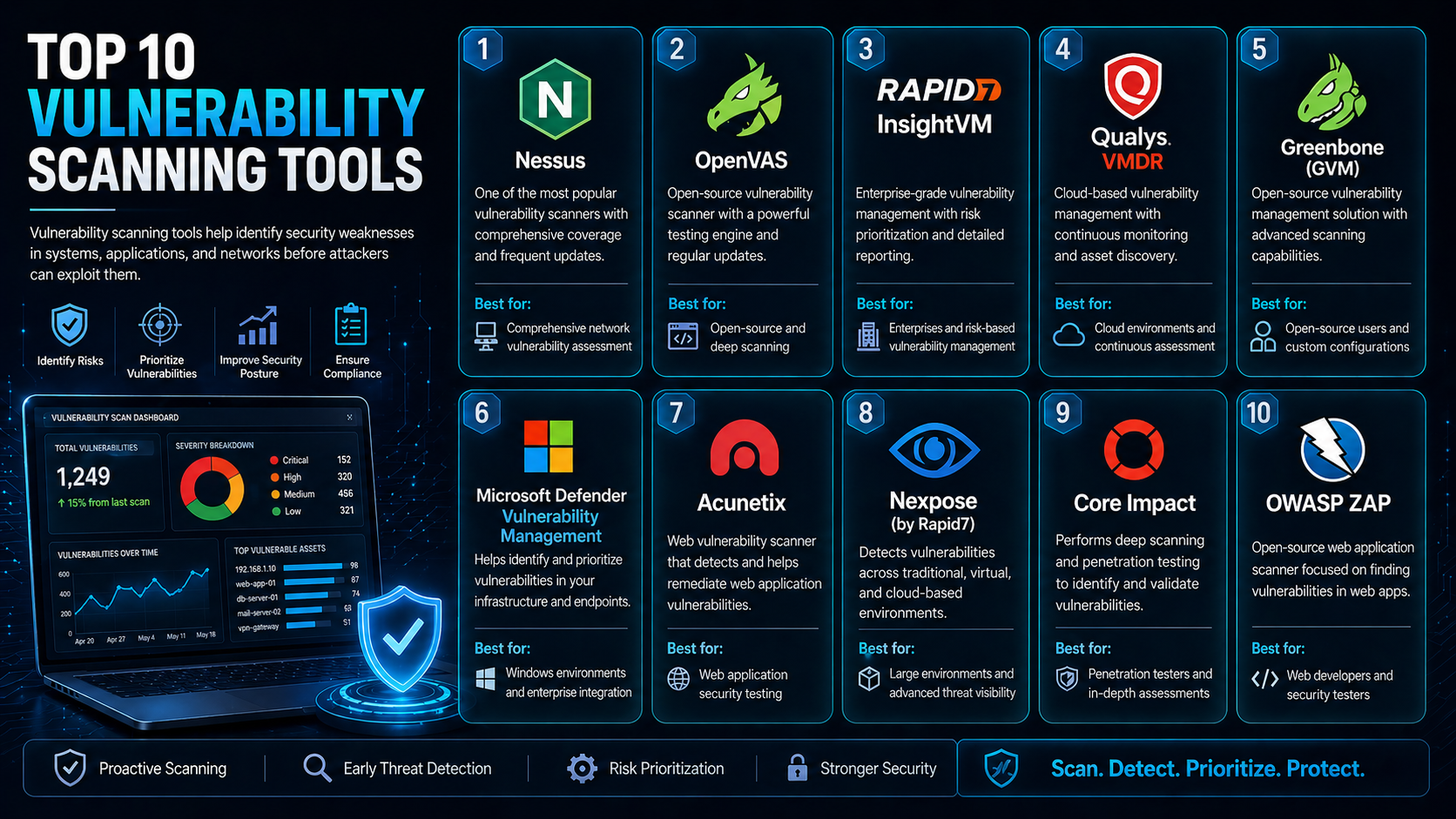
Let’s explore the top vulnerability scanning tools that are widely trusted in 2026, and understand how they help secure digital environments in a practical and reliable way.
Understanding Vulnerability Scanning in Simple Terms
Before diving into the tools, it helps to understand what vulnerability scanning really means. Think of it like a health check-up for your systems. Just as a doctor identifies early signs of illness, these tools scan your infrastructure to detect issues like outdated software, misconfigurations, weak passwords, or exposed services. The goal is simple: identify and fix problems before someone else finds them.
Why Vulnerability Scanners Are Essential Today
Cyber threats have become more automated and intelligent. Attackers use bots that scan thousands of systems in minutes, searching for known vulnerabilities. If your system hasn’t been updated or configured properly, it becomes an easy target. Using a vulnerability scanner regularly ensures that your systems are not silently exposed. It also helps in compliance, builds trust with clients, and reduces the risk of costly breaches.
1. Nessus: A Reliable Industry Standard
Nessus has built a strong reputation over the years as one of the most dependable vulnerability scanners. It is known for its deep scanning capabilities and regularly updated database of vulnerabilities. What makes Nessus stand out is its accuracy. It doesn’t overwhelm users with false positives, which saves time and effort. Whether you are scanning a small network or a large enterprise environment, Nessus provides detailed insights that are easy to understand and act upon. It feels like having a seasoned security expert quietly analyzing your system behind the scenes.
2. OpenVAS: A Powerful Open Source Alternative
OpenVAS is often the go-to choice for those who prefer open source solutions. It offers a comprehensive vulnerability scanning engine without the need for expensive licensing. Despite being free, OpenVAS is highly capable. It performs deep scans, supports a wide range of configurations, and is constantly updated by the community. For startups or individuals who want strong security without heavy investment, OpenVAS delivers real value. There is a sense of flexibility and control when using it, especially for those who like to customize their tools.
3. Qualys: Cloud-Based and Scalable
Qualys brings vulnerability scanning into the cloud, making it easy to scale without worrying about infrastructure. It allows users to scan systems across different environments, including on-premise networks, cloud platforms, and remote devices. One of the biggest advantages of Qualys is its centralized dashboard. Everything is visible in one place, which makes managing security across multiple assets much simpler. It is especially useful for businesses that are growing quickly and need a solution that can expand with them.
4. Rapid7 InsightVM: Visibility and Intelligence Combined
Rapid7 InsightVM is more than just a scanner. It provides a deeper level of insight into vulnerabilities by combining scanning with analytics and risk prioritization. Instead of just listing issues, it helps you understand which vulnerabilities matter the most. This is important because not every issue carries the same level of risk. Using InsightVM feels like having a smart assistant that not only finds problems but also tells you what to fix first.
5. Acunetix: Focused on Web Application Security
Web applications are one of the most common targets for cyberattacks. Acunetix specializes in scanning websites and web apps for vulnerabilities like SQL injection, cross-site scripting, and misconfigurations. What makes Acunetix effective is its ability to simulate real-world attacks. It tests how your application behaves under different scenarios, helping uncover hidden weaknesses. For anyone managing websites or SaaS platforms, this tool becomes incredibly valuable.
6. Nikto: Lightweight and Fast
Nikto is a simple yet powerful web server scanner. It focuses on identifying outdated software, dangerous files, and common vulnerabilities in web servers. It may not have the advanced interface of modern tools, but it gets the job done quickly. It is often used by security professionals for quick checks or as part of a broader testing process. Sometimes, simplicity is exactly what you need.
7. Burp Suite: A Favorite Among Security Professionals
Burp Suite is widely used for web application testing. While it is often associated with penetration testing, it also includes strong vulnerability scanning features. The tool allows users to manually test applications while also running automated scans. This combination makes it highly effective for finding complex vulnerabilities. Using Burp Suite feels more interactive compared to other tools. It gives you control and visibility into how applications behave under testing conditions.
8. Tenable.io: Modern and Cloud-Driven
Tenable.io is the cloud-based version of the popular Tenable ecosystem. It offers continuous monitoring, real-time insights, and strong reporting features. One of its strengths is its ability to integrate with other systems. This makes it easier to include vulnerability scanning as part of a larger security strategy. It is designed for modern environments where systems are constantly changing and need ongoing monitoring.
9. Nexpose: Detailed Risk Analysis
Nexpose, developed by Rapid7, focuses on providing detailed vulnerability analysis and risk scoring. It continuously updates its findings based on new threats and system changes. This dynamic approach ensures that you are always aware of your current risk level. Instead of static reports, Nexpose gives a living view of your security posture. It is especially useful for organizations that want to stay proactive rather than reactive.
Intruder: Simple Yet Effective
Intruder is designed with simplicity in mind. It offers powerful vulnerability scanning without overwhelming users with technical complexity. The platform focuses on identifying high-impact vulnerabilities and provides clear guidance on how to fix them. It is ideal for teams that want strong security without needing deep technical expertise. There is something reassuring about tools that don’t overcomplicate things.
Choosing the Right Tool for Your Needs
Not every tool is the right fit for every situation. Some are better suited for large enterprises, while others work perfectly for small teams or individual developers. The key is to understand your environment. If you are managing multiple web applications, a tool like Acunetix or Burp Suite may be the right choice. If you need network-wide scanning, Nessus or Qualys might be more suitable. It is also important to consider ease of use. A tool is only effective if you actually use it regularly.
The Human Side of Cybersecurity
While these tools are powerful, they are not a complete solution on their own. Security is not just about technology—it is about awareness, habits, and consistency. Running scans regularly, applying updates, and staying informed about new threats all play a role. Even the best tools cannot help if they are ignored or misconfigured. There is a certain discipline required to maintain security, and vulnerability scanners are just one part of that journey.
Staying Ahead in a Changing Landscape
Cybersecurity is always evolving. New vulnerabilities are discovered every day, and attackers constantly adapt their methods. Using vulnerability scanning tools helps create a strong foundation, but staying ahead requires continuous effort. It is about building a mindset where security becomes part of everyday operations rather than an afterthought. When used correctly, these tools don’t just protect systems—they build confidence. They allow businesses and individuals to focus on growth, knowing that their digital environment is being actively monitored.
Final Thoughts
Vulnerability scanning tools are no longer optional in 2026. They are a necessity for anyone who values their digital presence. From powerful enterprise solutions to simple and accessible tools, there is something available for every need. Choosing the right tool depends on your goals, your environment, and how deeply you want to engage with security. But one thing is clear: taking action today is always better than dealing with a breach tomorrow. Security is not about fear. It is about preparation. And with the right vulnerability scanning tools, you are already moving in the right direction.

